2026 --
SEP 20
The Last Shall Be First
SEP 13
We Shall Not Trespass
SEP 06
Forgiveness and Reconciliation
AUG 30
May He Guide Us Down the True Path
AUG 23
May We Discern the Will of God
AUG 16
Love Without Exception
AUG 9
Hearing His Voice
AUG 2
His Mission of Reconciliation
JUL 26
His Love and Guidance
JUL 19
Of What Is And Isn't Needed
JUL 12
We Shall Pray So We May Know
JUL 5
Faithful, We Are Unburdened By Ego
JUN 28
What Truly Sets Us Free
JUN 21
The Courage to Trust in Him
JUN 14
To be Enduring and Compassionate
JUN 7
The Power of Our Faith
MAY 31
To Love Him, One Another, and Oneself
MAY 24
His Gift That We Shall Share
MAY 17
In the Comfort He Gives Us, We Pray
MAY 10
Living in the Love He Placed in Our Hearts
MAY 3
Sharing a Place in His House of Love
APR 26
The Meaning of "the Good Shepherd"
APR 19
The Form of the Lord and His Love For Us
APR 12
What He Has Entrusted To Us
APR 5
The Holy Journey
MAR 29
In the Mind of Christ
MAR 22
To Be Unbound: More than Freedom
MAR 15
Through Him, Believing is Seeing
MAR 8
With Humility and Trust Comes Grace
MAR 1
Placing Faith in His Help
FEB 22
Trust, Obedience, and Grace
FEB 15
To Become Our Glorious Selves
FEB 8
Liberty to be True, Generous, and Sincere
FEB 1
The Authentic Way of Love
JAN 25
Know That God is At Work
JAN 18
Dispelling Darkness, Around Ourselves and Others
JAN 11
In Loving All, We Fulfill Our Covenant
JAN 4
All Experiences to Bring His Kingdom Near
2025 --
DEC 28
To Become as He Is
DEC 21
His Love Never Rejects Us
DEC 14
Abundance; Our Part in His Promised Kingdom
DEC 7
What It Means To Repent
NOV 30
When One Must Be Ready
For previous years: ---
2025 Reflections
2024 Reflections
2023 Reflections
2022 Reflections
2021 Reflections
2020 Reflections
2019 Reflections
2018 Reflections
2017 Reflections
2016 Reflections
|
|

The Last Shall Be First
This Sunday's Reflection - Septmber 20, 2026
Get it in PDF form with calendar
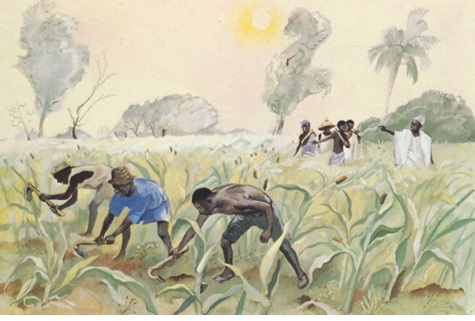
THE DOWNSIDE UP KINGDOM
If asked what comes to your mind first when you think of God’s governance or reign, many of us will probably say things like “bliss, harmony, joy, unconditional love, justice, inclusion, and perfect communion.” All of these (and probably others) are part of what our Christian hope is, and we have the certitude they will be fulfilled in God’s kingdom.
However, as I was reading this Sunday’s scriptures I realized there is one striking feature of God’s kingdom that we often miss: its downside up character.
What I mean by this term is that the kingdom that Jesus announced and gave signs of during his earthly lifetime appears contrary to the way we assume things are in life.
This can be perceived already in the Old Testament, as in the Book of Jonah, for instance. This book is listed as part of the prophets, but a deeper analysis shows it is more a parable than a typical prophetic book.
The main theme in the book is Jonah being sent by God to Nineveh, a sinful city (and one the Israelites greatly despised because its rulers had taken them captives in the past) to prophesy its destruction. Jonah tries in vain to run away from this mission. He explicitly states that he was almost sure God would not destroy the city if its inhabitants repented, and this is in fact what happens.
Jonah is really angry. In all justice, according to human standards, Nineveh deserved to be destroyed. Jonah is also angry because he feels personally disgraced as a prophet. His prophecy was not fulfilled. He values his personal prestige more than the thousands of inhabitants in the city, including the animals. This is what God is trying to teach him: mercy is the number one value. The rest is subordinate to His loving mercy.
In his Letter to the Philippians, chapter 1, St. Paul speaks about his personal preference for being in the Lord’s presence and live in perfect communion with Him already, but he also understands that for the time being, even if being in the flesh implies suffering and toil, he must continue to be in the body for the progress and joy of the converts he is upholding.
St. Paul has understood that in God’s reign what is really valuable is not what we might prefer, no matter how wonderful it may seem, but what is most useful for God’s purposes.
And in this Sunday’s Gospel reading (Matthew 20:1-16) we find a parable that I need to confess that took me some time to digest. In this parable there is a landowner hiring laborers for his vineyard at different times of the day, but in the end, contrary to the laborers’ expectations, they are all paid the same wage. And the landowner does not hide to do it. On the contrary, he pays those who worked only one hour first, before everyone, and so on, until he comes to the ones who worked the most hours. It is clear he wants to make a point here.
When those who worked the most hours complain, he reminds them they had agreed to work for that amount, but then he adds, “Take what belongs to you and go; I choose to give this last the same as I give to you. Am I not allowed to do what I choose with what belongs to me? Or are you envious because I am generous?”
It is clear that this is probably not a good system to apply in salary policy. However, what the parable teaches has nothing to do with salary policy, but with God’s extravagant generosity. Should we feel offended by God’s generosity?
The concluding remark by Jesus is the clue: “So the last will be first, and the first will be last.” In other words, in the kingdom Jesus proclaims values are often downside up in relation to the values of this world.
Fr. Carlos Expósito, Rector
|
RETURN TO TOP
We Shall Not Trespass
This Sunday's Reflection - Septmber 13, 2026
Get it in PDF form with calendar
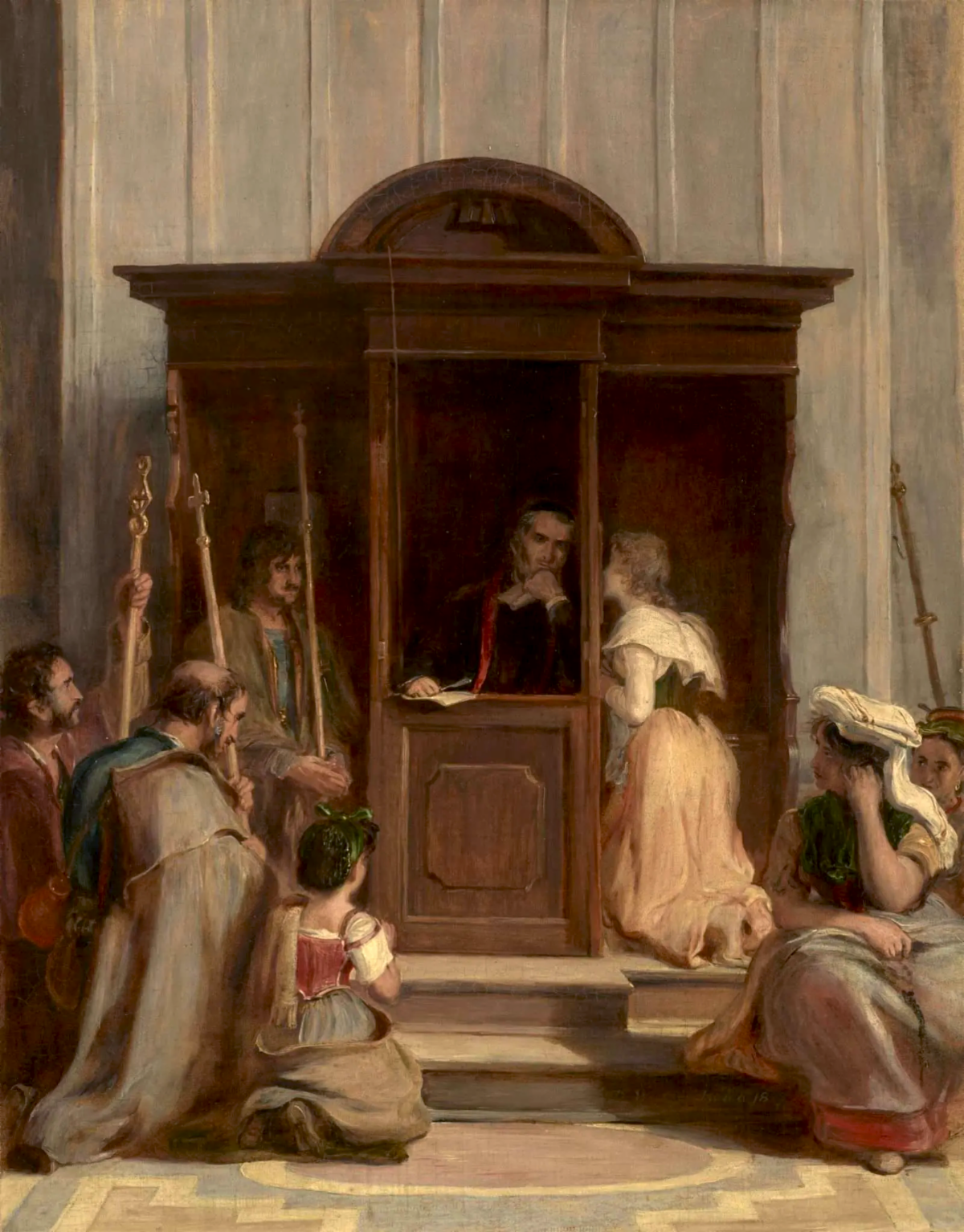
THE SPIRIT OF RECONCILIATION
Last Sunday’s readings pointed to mutual forgiveness and reconciliation within the faith community, and this Sunday the theme gravitates over the same sphere, making it even more outstanding and central.
It goes without saying that this theme was central in Jesus’ teaching. In last Sunday’s sermon we pointed out that when Jesus taught His followers to pray, giving them what we know as the Lord’s Prayer, the only topic He elaborated further on was forgiveness. Jesus insisted on the need to forgive those who sin against us if we are to be forgiven by our Heavenly Father.
When I was a boy, I often heard people in my hometown in Cuba say, “let God who is divine forgive them; I can’t,” (In Spanish, of course). I later learned how universal the idea put forward in this saying is. It is like stating that in order to forgive those who have wronged you, you must possess a quasi-divine nature.
“To err is human, to forgive divine” is a well-known saying in the English language. However, the way it is used points in a different direction. It is the acknowledgement of human error while, at the same time, highlighting the great virtue of those who forgive others.
We all know that some people are more prone to forgive than others. We also know how hard it is is to forgive someone who has hurt us in horrible ways, like murdering someone we love, for instance. Pretending to forgive because it is “the Christian thing to do” will not work, simply because God knows our very being better than we do. Forgiveness may become a long and arduous process in some cases, and there may be cases when we are not able to forgive, but we must always strive to do so.
Fortunately, we have the Holy Spirit on our side to aid us in this endeavor. This Sunday’s Collect is short but really substantial. It simply asks God to “mercifully grant that your Holy Spirit may in all things direct and rule our hearts”. After acknowledging that “without you we not not able to please you.”
The Holy Spirit is God’s Spirit of Truth. It is the one who defends us from error and evil, the one who comforts us in our tribulations, and the one who sustains us in our efforts to do God’s will. Jesus Christ Our Lord taught us that the Church’s mission is God’s mission, and it is no other than the mission of reconciliation.
As long as we are still living in error, we continue to “trespass” against God and against our neighbor. In this world where we are not God’s perfect image yet, the only way we can express our mutual love is through the exercise of forgiveness, because that is the essence of the recognition that we also sin against God and our neighbor.
This Sunday’s Old Testament reading, Genesis 50:15-21, brings us the story of Joseph facing the brothers who had cruelly sold him as a slave because of envy and hatred. Now Joseph is in a position where they are subjected to his decision. Instead of taking revenge, Joseph not only forgives them, but provides for them and their descendants, thus showing God’s mercy in his actions.
Psalm 103 reminds us that God “forgives all your sins and heals all your infirmities.” The psalmist also adds, “As far as the east is from the west, so far has He removed our sins from us.”
In his Letter to the Romans, chapter 14, St. Paul insists on the need to refrain from passing judgment upon other followers of Christ because of their different ways of considering what must or must not be eaten, or some other local customs. He reminds them that we will all stand before the judgment seat of God, and be accountable to Him.
And this Sunday’s Gospel reading (Matthew 18:21-35) has Peter asking Jesus how many times he should forgive a member of the church sinning against him. Peter suggests seven as a good answer, since seven is a number indicating completion and perfection. However, Jesus shocks him with a different figure: seventy-times seven.
In fact, Jesus is not setting any specific limits here. He just uses multiples of seven pointing to a number that becomes more than anyone can foresee in terms of forgiveness.
And then He tells the well-known parable of the unforgiving servant. We all know the teaching involved here. It is the same as in the Lord’s prayer: “forgive us our trespasses as we forgive those who trespass against us.” Again, we are reminded by Him who forgave even those who crucified Him that mutual forgiveness is the cornerstone of the reconciled world God intends for us to share.
Fr. Carlos Expósito, Rector
|
RETURN TO TOP
Forgiveness and Reconciliation
This Sunday's Reflection - Septmber 06, 2026
Get it in PDF form with calendar
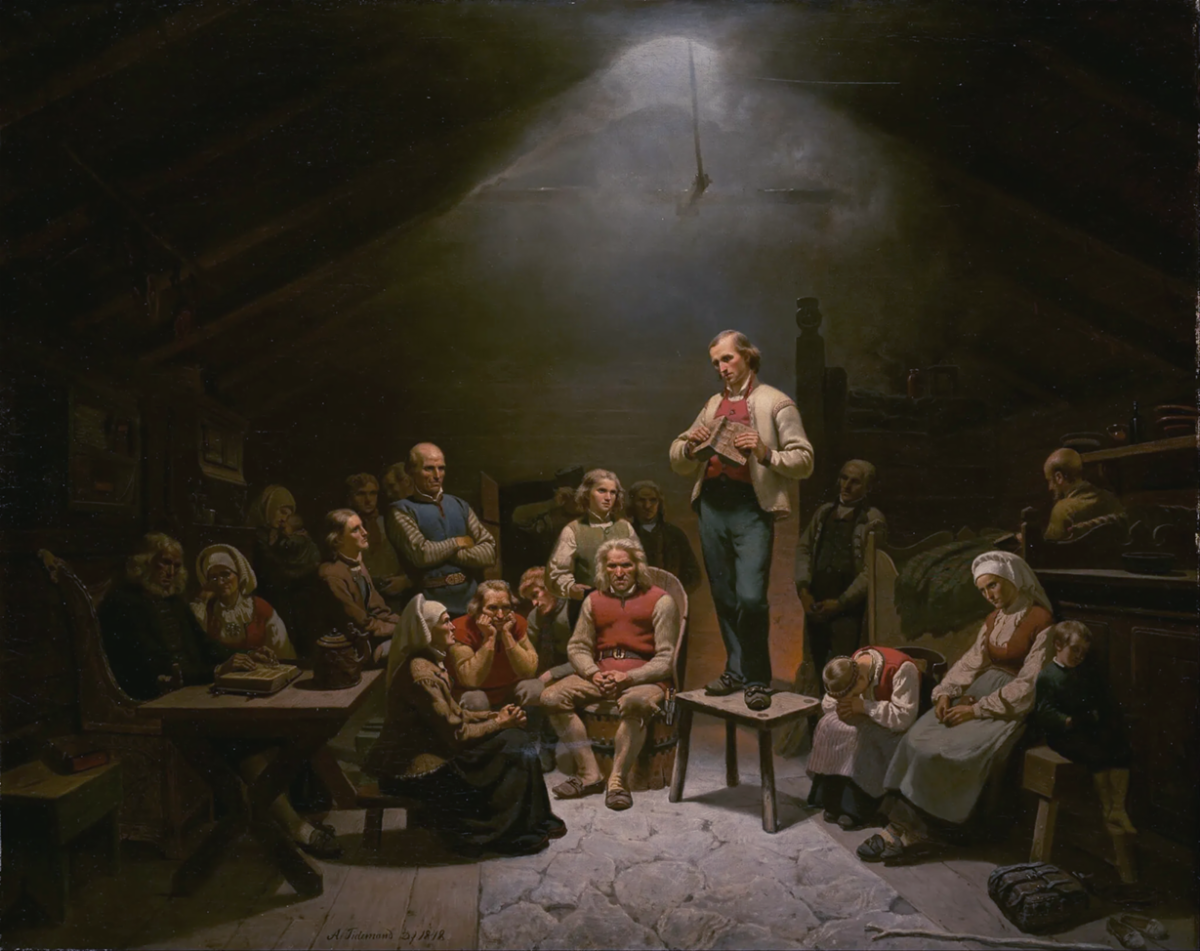
BOASTING OF GOD'S MERCY
As followers of Jesus’ Way, we often speak of God’s great mercy. We speak of it when we recall how God has forgiven our sins or those of others, and keeps on loving His creatures in spite of their transgressions. We also speak of it when we remember Christ’s sacrifice on the cross so that His followers might be led into the Way of truth and life.
We recognize that God’s mercy is one of the ways His infinite and unconditional love is manifested. But then, as followers of His way, how do we manifest this mercy in our own lives? Can we live a merciless life and claim to follow His Way of love at the same time? Not if we are congruent.
When Jesus called His followers He made it clear to them that they must be reconciled to God, as He is, but also that they needed to become agents of reconciliation in the world. It would be greatly contradictory to ask God to reconcile us to Him through forgiveness, and then refuse to forgive others when they sin against us.
In the prayer that Jesus taught His disciples He clearly told them to pray, “and forgive us our trespasses as we forgive those who trespass against us.” Notice the conjunction “as” here. It implies a consequence of what follows. First we have forgiven those who trespass against us, then our own forgiveness is granted.
We sow what we plant, and that is not a punishment, but a natural law.
God not only asks us to forgive our fellow human beings when they wrong us, either intentionally or not. He also asks us to warn against sin, which also shows that we care for one another. Once we have realized the terrible consequences of sin in our own lives, and turned to God’s ways, it would be unmerciful not to warn others of the terrible fate of sinners.
This is what the prophet Ezekiel means when, speaking in God’s name he states, in chapter 33, “You, mortal, I have made a sentinel for the house of Israel; whenever you hear a word from my mouth, you shall give them warning from me.” And he adds, “As I live, says the Lord God, I have no pleasure in the death of the wicked, but that the wicked turn from their ways and live.”
In his Letter to the Romans, chapter 13, St. Paul points out that the commandment “to love your neighbor as yourself”is the fulfillment of the law. In it are summed up all the other commandments. When we come to the full realization in our hearts, our minds, and our whole beings, that there is no real separation between one and one’s neighbor, this commandment starts to make real sense in our lives.
In chapter 18 of his gospel, St. Matthew has Jesus dealing with transgressions and reconciliation in the church, the Assembly of the Saints. He advises what to do if someone in the church sins against you. It is vital to notice here that the focus is not on the one being wronged getting retribution or “justice”, but in regaining the one who has gone astray. He insists on using different levels of reconciling procedures, starting with the one-on-one talk, and ending with the involvement of the whole community if needed. But even if none of this works, Jesus does not advise to cut off the offender completely, but “to let such a one to be to you as a Gentile and a tax collector.”
We know how Jesus dealt with Gentiles and tax collectors. He always tried to include them, to bring them back to a reconciled relationship. So the offender in this case is not cast away or considered irredeemable. He must still be considered a candidate for reconciliation.
The saying “if two of you agree on earth about anything you ask it will be done for you by my Father” must not be interpreted lightly. It is followed by “For when two or three are gathered in my name, I am there among them.”
The phrase “in my name” does not refer to someone simply uttering Jesus’ name. It means in tune with His will, with His Way of Love, with His person. It means, as St. Paul states it, “putting on the Lord Jesus Christ.” If we are really attuned to Christ’s will, if we really have the mind of Christ, then, yes, undoubtedly, everything we agree on will be fulfilled.
Fr. Carlos Expósito, Rector
|
RETURN TO TOP
May He Guide Us Down the True Path
This Sunday's Reflection - August 30, 2026
Get it in PDF form with calendar
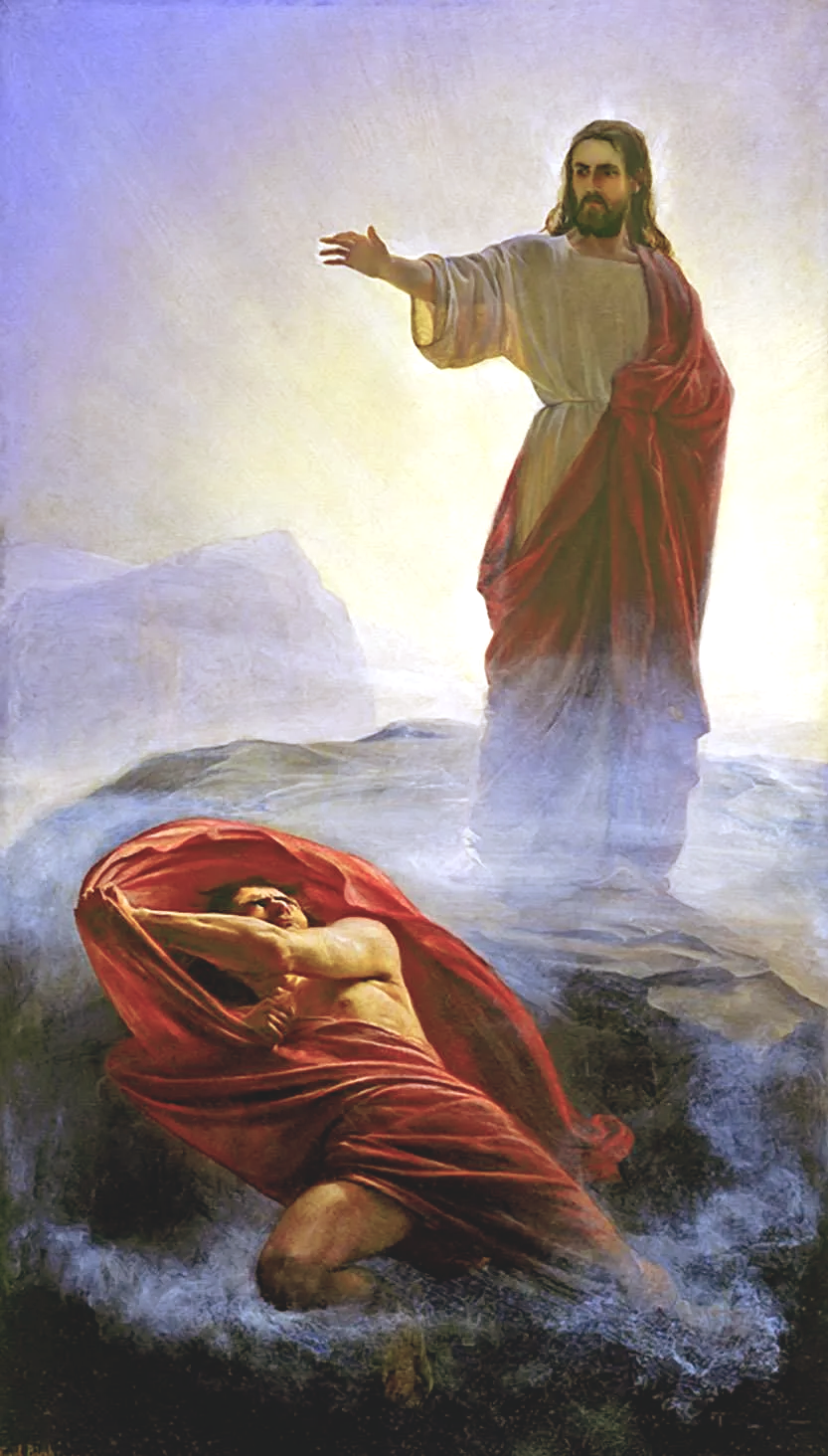
PAVED WITH GOOD INTENTIONS
We are all familiar with this old saying: “The road to hell is paved with good intentions.” It is said to have been popularized in the 19th century, and used a lot by John Wesley in his sermons, although its antecedents, with similar wording, probably date back to much earlier Christian teachings. St. Bernard of Clairvaux (1090–1153) is often credited with this earlier version of the concept: “Hell is full of good wishes or desires.”
This saying is used at present even in secular settings, as a staple of moral philosophy, serving as a reminder that the outcome of an action is often more significant than the intent behind it.
But what could it mean for us today, as 21st-century followers of Christ?
Whether we believe in Hell as a realm in the invisible world or as a state of separation from God’s loving presence, whether in this visible or other worlds, it makes little difference as to how we interpret the saying and its implications for our life of faith.
Our intentions are the prime movers of our actions, and the way we perceive these intentions may not always coincide with God’s will for our lives. Can we always be sure that what we perceive as “good” for ourselves or others is always in agreement with God’s will?
Self-preservation is a really useful instinct, and it works well most of the time. However, there are instances in our lives when if we are to be consistent with Jesus’ teachings about self-sacrifice as a real expression of love, we need to put this instinct aside, for ourselves and also for those we feel affection for.
This was the case when Jesus rebuked Peter for intending to “save” Him from the trials and horrible death He foretold that He would suffer (Matthew 16:21–28). Obviously Peter did not have any bad intentions. He was acting out of pure affection for His beloved master. He called Peter “Satan” for a reason though. It was not rejection or contempt. It was a warning: “You are a stumbling block to me; for you are setting your mind not on divine things but on human things.”
Well, are we not human after all? How can we set our minds on divine things? This is not an easy goal, but Jesus’ teachings clearly point to the reclaiming of our true being in God. Jesus always set the bar really high for those who aspired to become His followers. He did not do it to discourage them, but to let them know, from the very start, that the road to God’s kingdom is paved with more than good intentions. It is paved with self-denial and sacrifice.
In his Letter to the Romans, St. Paul also sets the mark really high for the converts. He admonishes them “to bless those who persecute them and not curse them”, and also, “not to repay anyone evil for evil, but take thought for what is noble in the sight of all.” Obviously these admonitions are not easy for anyone to fulfill. The “human” tendency is to repay others according to what they give us. But St. Paul insists, “Do not be overcome by evil, but overcome evil with good.”
The prophet Jeremiah, in chapter 15, shows us how not to let evil overcome us, when he proclaims, “Your words were found and I ate them, and your words became to me a joy and the delight of my heart.”
And the Collect for this Sunday prays, “Graft in our hearts the love of thy Name, increase in us true religion, nourish us with all goodness, and bring forth in us the fruit of good works.”
The intentions we may consider “good” are not enough. In fact, they may lead us in the wrong direction, away from God’s will. But we may trust that God will always answer our ardent prayer to lead us on the road to true and eternal life.
Fr. Carlos Expósito, Rector
|
RETURN TO TOP
May We Discern the Will of God
This Sunday's Reflection - August 23, 2026
Get it in PDF form with calendar
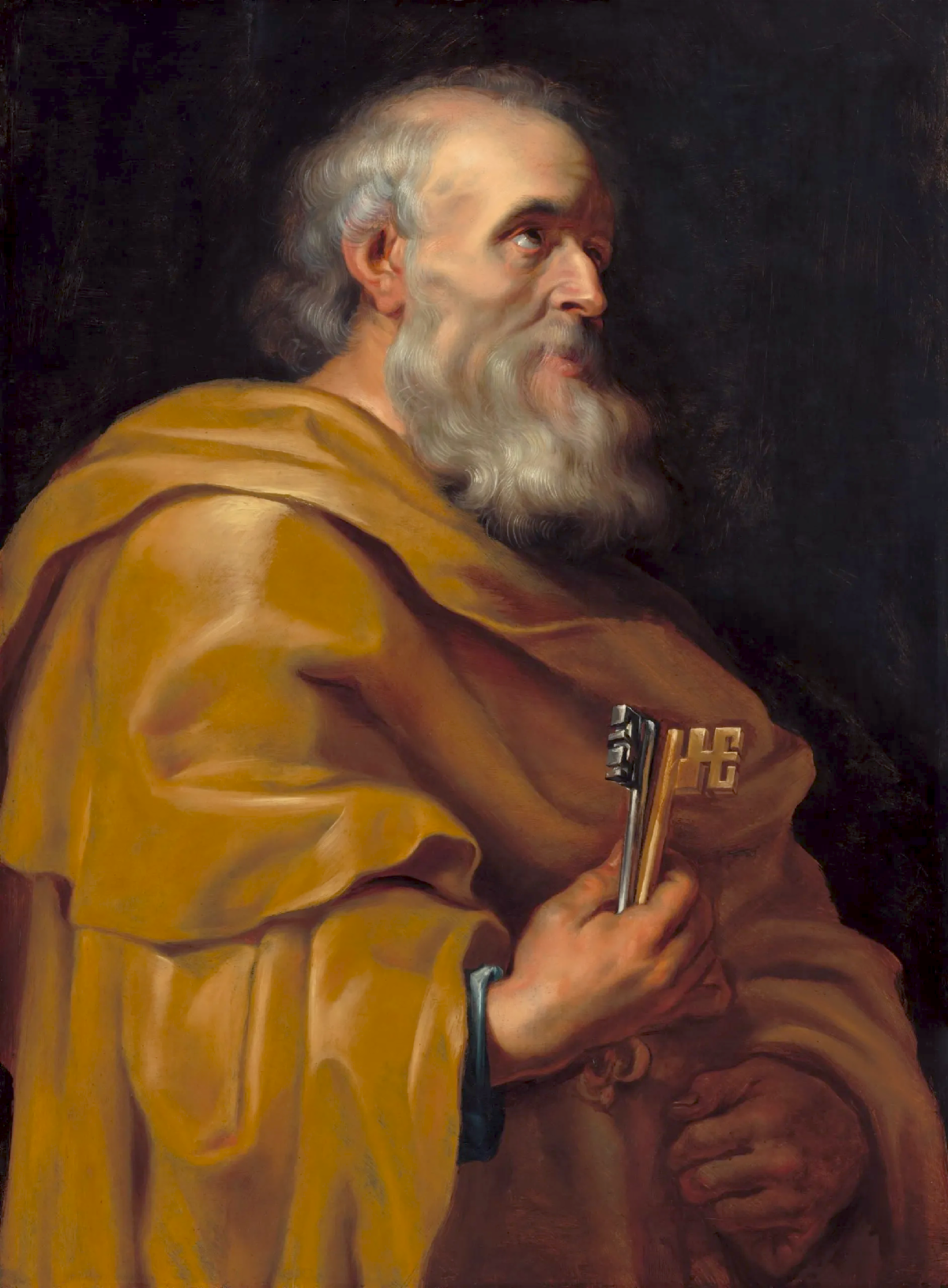
Who is Jesus for us?
This question can be asked from a pulpit, or from a public stand during an evangelistic event, or in a pamphlet or flyer. The answer may vary, according to the familiarity of the person with theological definitions, and the sincerity of their reply.
For many who have been raised in church ambiences and consider themselves believers it will not be hard to reply to this question with a theological accuracy that will surprise many: “our Savior, the Christ, the Messiah, God’s only-begotten Son, the King of kings and Lord of lords, the Second Person of the Trinity, God’s Perfect Lamb, the Way, the Life, and the Truth, etc., etc.”
All of these phrases and many others are found in the Bible, in the Creeds (the doctrinal confessions of the Church), or in theological treatises on Christology. Actually there is nothing wrong in choosing one of these defining phrases if it resonates with our convictions about Jesus’ identity. In fact, once we become familiar with them it would be hard not to make use of them in relation to our faith in Christ.
But one thing is defining and a totally different thing is living out what we define. If we declare in all honesty that Jesus is our Lord, how does this declaration correlate with the way we align our daily lives with His Way of Love?
Or if we declare without hesitation that He is our Savior, to what degree do our lives show that we live as someone who has been saved? First of all, what do we show we have been saved from? From sin and death? If that is the case, then our lives must necessarily show an authentic inner joy, an abundance of true generosity towards others, and an unquenchable endeavor to sanctify our lives.
I am not suggesting that we abstain from using these phrases unless we are able to show a 100% commitment to what they imply for our lives. One can start with an aspiration towards a goal, and gradually move purposefully toward its fulfillment. What we should try hard not to do is use such phrases lightly, especially when answering a personal question about who Jesus is for us.
In most cases it is only thanks to the revelation given to us directly by the Holy Spirit, rather than using learned phrases, that we begin to experience who Jesus actually is for our lives. This is exemplified in the Gospel reading for this Sunday (Matthew 16:13-20) when Simon replied to Jesus’ question about His identity, “You are the Messiah, the Son of the living God.” Jesus immediately answered him, “Blessed are you, Simon son of Jonah! For flesh and blood has not revealed this to you, but my Father in heaven.”
Right after that Jesus named Simon “Peter”, which means stone or rock. And He told him he would build His church on that rock, and the gates of Hades would not prevail against it.
I am not going to enter the discussion of whether this validates the Roman Catholic Church’s claim about Peter being the first bishop of Rome. There is not much historical evidence to sustain this claim. One thing is certain form the Gospels themselves and the Book of Acts though: Peter did hold a preeminent position among the first followers of Christ.
The main question for us as present-day followers, however, should be a different one. Are we also the rock? Can Jesus still count on us to continue to build His church? Can we still make it safe from the assaults of the gates of Hades?
The words of the apostle Paul to the converts in Rome are as relevant today as they were then: “I appeal to you therefore, brothers and sisters, by the mercies of God, to present your bodies as a living sacrifice, holy and acceptable to God, which is your spiritual worship.”
As he continued to admonish them, let us never be “conformed to this world, but be transformed by the renewing of our minds, so that we may discern what is the will of God—what is good and acceptable and perfect.”
Fr. Carlos Expósito, Rector
|
RETURN TO TOP
Love Without Exception
This Sunday's Reflection - August 16, 2026
Get it in PDF form with calendar

UNIVERSAL THANKFUL RECIPIENTS AND FAITHFUL DOERS
To say that the Christian faith has a universal character nowadays is something no one would object to, due to its widespread coverage and intrinsic inclusiveness of all ethnicities and nations. But for the first followers of Jesus’ Way, this was not always so clear.
When we read the Gospels, the Book of Acts, the Epistles, and the Book of Revelation of the New Testament, we realize there is tension and conflict in the way the first disciples understood the non-Jewish people as deserving of the redemption offered through Jesus Christ.
We need to understand that for centuries the Jews considered themselves as the sole legitimate recipients of God’s salvation, and the way this salvation would be offered to the rest of the nations was only through conversion to Judaism.
Thus in Isaiah 56 we find, “And the foreigners who join themselves to the Lord, to minister to Him, to love the name of the Lord, and to be His servants, …will be accepted on my altar, for my house shall be called a house of prayer for all peoples.”
This shows a genuine concern for universal salvation, and they saw themselves as the rightful bearers of this salvation for the rest of the world.
So in Psalm 67 we find these words,
“Let your ways be known upon earth, your saving health among all nations…Let the nations be glad and sing for joy, for you judge the peoples with equity and guide all the nations upon earth.”
The first followers of Jesus’ Way were Jewish, as was Jesus Himself. When Jesus and His followers quote Holy Scripture, it is the Old Testament they quote, and in the first years after Jesus’ Resurrection and Ascension they continued to keep the Sabbath, celebrate Jewish festivities, and meet regularly in synagogues, which Jesus did Himself.
Even before the destruction of Jerusalem and the dispersion of the Jewish people in the year 70 A.D., there was already tension and even conflict about how to share the redemptive Good News with the Gentiles. For some, it was only through their conformity to the Old Testament Law, whereas for St. Paul and others who followed his views, the Gospel was to be preached to all nations without demanding conformity to Judaism.
In his Letter to the Romans, chapter 11, when talking about salvation for the Gentiles and also the Jews, St. Paul states, “I ask, then, has God rejected His people? By no means! I myself am an Israelite, a descendant of Abraham, a member of the tribe of Benjamin. God has not rejected His people whom He foreknew.
Even when St. Paul himself was a relentless advocate of taking the Gospel to the Gentiles with no restrictions based on conformity to Judaism, he still declares that the Jewish people, of which he is a part, are “God’s people and the people He foreknew.”
The Gospel reading for this Sunday has the story of the Canaanite woman asking Jesus to heal her daughter. This is one of the most controversial passages in the Gospels because we find a rude and apparently non-sympathetic Jesus, urged by the disciples to send the woman away, first remaining silent and then declaring that He “was sent only to the lost sheep of Israel.” Furthermore, when the woman insists, Jesus’ answer is “it is not fair to take the children’s food and throw it to the dogs.”
Even so, the woman turns His reply in her favor in a wise and deeply faithful way by saying, “Yes, Lord, but even the dogs eat the crumbs that fall from their masters’ table.” This makes Jesus exclaim, “Woman, great is your faith.” And her daughter was instantly healed.
Matthew and Mark both present this narrative, but in Matthew the tension is felt deeper. Instead of calling the woman “Syrophoenician”, he calls her “Canaanite”, which stresses the conflict between the nations here. And in the end the tension is resolved into the inclusion of a person who was historically seen as religiously impure, and even an enemy.
The lesson is clear. All humanity without exception is included in Jesus’ Great Commission to proclaim the Good News of how we must be deeply grateful for the free salvation offered to us through His sacrifice, and how we are called to act according to His loving will so that others may also be saved.
Fr. Carlos Expósito, Rector
|
RETURN TO TOP
Hearing His Voice
This Sunday's Reflection - August 9, 2026
Get it in PDF form with calendar

THINKING AND DOING GOD'S WILL
Almost everyone normally believes they are thinking and doing what is best for them. Very few people would consciously conceive a plan of action that would lead to self-destruction and death; and yet, in most cases, most of us inadvertently follow paths in our lives that end up making our lives less wholesome, and even miserable.
The greatest misconception that has pervaded our modern society (and had already pervaded most civilizations in the past, including that of Jesus’ time) is that our self-centered ideas of self-satisfaction and self-sufficiency must be what determine our mindsets and actions in the world.
These egocentric conceptions (no matter how much we try to sugar-coat them by rationalization) eventually lead to greed, prejudice, exclusion of those who are “different”, hatred, or even worse, total lack of love for our fellow human beings and the rest of creation.
We may become so accustomed to this mindset, which in most cases is subtly sanctioned by the influential representatives of society, that it is really hard to break these patterns by our own efforts, no matter how hard we try.
This is when the words in this Sunday’s Collect become so relevant: “Grant to us, Lord, we pray, the spirit to think and do always those things that are right, that we, who cannot exist without you, may by you be enabled to live according to your will…”
Notice the affirmation about our dependence on God for our very existence here. Once we become aware of this fact, our mindset starts to shift. Then follows the idea that it is through the spirit granted to us by God’s grace that we can think and do what is right, and live according to God’s will.
This is the humble and essential recognition that we depend on God’s help to make things right for us. It will not be through our self-sufficient determination that our mindset and actions will be set right, but through God’s saving help.
This does not imply that we are just passive agents in God’s plan of restoration for His people. We are certainly free to decide whether we wish to cooperate with God’s will or not. But we are also left to face the consequences of our free and responsible decisions.
It is hard to silence the noise that constantly surrounds us, the voices that repeat arguments and try to convince us that we are the masters of our lives and we do not need divine guidance and redemption of any kind. Sometimes we expect to find God’s true voice in something that speaks louder than the voices that assail us, just as Elijah may have thought he would find God’s presence in the roaring wind, an earthquake, or a fire, in the passage from I Kings. But Elijah was only able to hear God’s true voice in the sound of sheer silence, and he heeded that voice.
It is only when we silence the inner noise of our minds that the outer useless chatter of this world has planted in them, that we can actually start to hear God’s real intent for our lives and the lives of others.
As the psalmist states so beautifully in Psalm 85, “I will listen to what the Lord is saying, for He is speaking peace to His faithful people and to those who turn their hearts to Him.”
In his Letter to the Romans, chapter 10, St. Paul reinterprets what prophets like Isaiah and Joel had stated about hearing God’s word, heeding it, believing in Him, and being saved, referring to our faith in Christ, the awaited Messiah, in whom all is recapitulated and fulfilled. Paul boldly states, “because if you confess with your lips that Jesus is Lord and believe in your heart that God raised Him from the dead, you will be saved.”
In the passage of Jesus walking on the stormy waters to help His disciples (Matthew 14:22-33) the disciples first believe Him to be a ghost, and even after His reassuring words,“Take heart, it is I; do not be afraid”, Peter insists on hearing His voice commanding him to walk on the water to Him. Hearing His command Peter is able to walk on the water towards Jesus, but then he becomes afraid because of the high wind and the waves, and starts to sink.
But Jesus reaches out to him and saves him.
Yes, even when we are able to hear the divine voice and command distinctly and heed it, there may be times when we falter, not because we are faithless, but “of little faith”. But our saving Lord will always reach out to us, because of His immeasurable love for us.
Fr. Carlos Expósito, Rector
|
RETURN TO TOP
His Mission of Reconciliation
This Sunday's Reflection - August 2, 2026
Get it in PDF form with calendar

FULFILLING GOD'S PROMISE
When we think about the Church (not the building, but the actual Assembly of the Saints) nowadays, we may wonder if we as church members are fulfilling God’s mission of reconciliation, which was the mission that we received from Jesus Christ Himself through His first followers.
This mission can only be seen as ours if we consider ourselves the channels of God’s infinite grace, and not the initiators. The church did not have the initiative. It received this Great Commission from Christ.
What does this reconciling mission actually encompass? Is it even plausible to carry it out?
The reconciliation we speak of and endeavor to accomplish as Christ’s followers of His Way implies that we as human beings be reconciled to our Creator, which means we attune ourselves to His loving will for us as members of the human family, and the rest of creation.
So this reconciliation is not just an act of forgiveness and a commitment to live in harmony—although we know from experience that forgiveness can be really hard in certain cases. It implies a profound transformation in the way we relate to God, to one another, and to creation in general.
This new way of relating can no longer be based on self-centered impulses and wishes. As much as the self-preservation instinct is useful in its own right, we cannot let our lives be governed by its extension to the rest of our relational life, and let egocentrism become the ruler of our lives.
When this happens we are prone to be exclusionary in our relationships. We are only interested in relating to those who can be of service to us. Even worse, we refuse to relate lovingly to those who differ from us, who think differently, who question our cherished ideologies or beliefs. We can even become indifferent to the suffering of those we consider outsiders or of no concern to us.
Even when we may claim to believe in God or be a part of His Church, our attitudes and actions speak much louder to identify how involved we really are in His reconciling mission. But this mission can only be carried out with the constant aid of the Holy Spirit, the Defender, the Counsellor, the Spirit of Truth.
This Sunday’s Collect reminds us of this truth when it states, “Let your continual mercy, O Lord, cleanse and defend your Church; and, because it cannot continue in safety without your help, protect and govern it always by your goodness…”
In the words of the prophet Isaiah we read how the Lord God Himself has taken the initiative to make a covenant of salvation with His people: “I will make with you an everlasting covenant, my steadfast, sure love for David.”
And St. Paul the Apostle, in his letter to the Romans laments the fact that the people of Israel, the people that God had made the depository of His reconciling covenant for all nations, have rejected His true Messiah. So much is his anguish and sorrow as an Israelite himself, that he says, “For I could wish that I myself were accursed and cut off from Christ for the sake of my own people, my kindred according to the flesh.”
In the feeding of the five thousand, according to St. Matthew, as in the other similar narratives that we find in all four Gospels, we have the key revelation of Jesus’ true identity, as the divine shepherd and new Moses, who brings God’s banquet, providing in overflowing abundance what humanity cannot provide for itself, while forming his disciples (including us here and now) to become the instruments through whom His reconciling gifts reach the world.
Fr. Carlos Expósito, Rector
|
RETURN TO TOP
His Love and Guidance
This Sunday's Reflection - July 26, 2026
Get it in PDF form with calendar

HELD FAST BY THE LOVE THAT DOES NOT LET GO
The Collect appointed for this Sunday asks for a grace that is both simple and demanding: that God, our ruler and guide, would help us "so pass through things temporal, that we lose not the things eternal." It is a prayer for perspective. We live amid the pressing concerns of each day: responsibilities, disappointments, hopes, anxieties, joys. Yet we are reminded that these passing realities are not the whole story. Beneath them, surrounding them, and drawing them toward their true end is the steadfast love of God.
That confidence reaches its fullest expression in this week's reading from Romans. St. Paul does not deny the reality of weakness; in fact, he begins there. "The Spirit helps us in our weakness," he writes, "for we do not know how to pray as we ought." There is something wonderfully liberating about that admission. We often imagine that faith requires certainty, eloquence, or spiritual strength. Paul suggests otherwise. There are seasons when words fail us, when prayer feels dry or confused, when all we can bring to God is silence, longing, or tears. Yet even then we are not abandoned. The Holy Spirit prays within us "with sighs too deep for words." Before we can find the right words, God has already heard the deepest cry of our hearts.
That assurance shapes everything that follows. Paul's declaration that "all things work together for good for those who love God" is not a promise that every event is itself good, nor that suffering is somehow desirable. Rather, it is a proclamation that God's redeeming purpose is never defeated by the brokenness of the world. Even those experiences that seem meaningless or painful can, in God's hands, become part of the patient work of shaping us into the likeness of Christ. The God who protects those who trust in Him does not always shield us from hardship; more often, he accompanies us through it, bringing life where we could see only loss.
The other readings illuminate this same truth from different angles. Solomon, standing at the beginning of his reign, asks not for wealth or victory, but for "an understanding mind." He recognizes that wisdom itself is God's gift, not a human achievement. The psalmist delights in God's commandments because they give light and direction, even while lamenting that others ignore them. And in the Gospel, Jesus gathers together a series of brief parables about the kingdom of heaven: a tiny mustard seed becoming shelter for many, a little amount of yeast quietly transforming an entire batch of dough, a treasure worth surrendering everything to possess, a pearl beyond price, a net gathering fish of every kind. Again and again, the kingdom appears almost hidden, easy to overlook, yet infinitely valuable. God's work is often quieter than we expect, but no less powerful.
Perhaps that is what the Collect invites us to notice. We spend so much of our lives navigating the temporal: deadlines, appointments, changing circumstances, the steady passing of time. These things matter; they are the ordinary fabric of our vocation as disciples. Yet they are not ultimate. The eternal is already present, often in ways as small as a mustard seed or as hidden as yeast in dough. Every act of mercy, every faithful prayer, every choice for wisdom over self-interest, every quiet confidence that Christ is with us even when we cannot see the way ahead are signs of God's kingdom at work.
Paul's final words have comforted generations of Christians because they answer one of the deepest fears of the human heart: Can anything separate us from God's love? His answer is unequivocal. Not hardship or distress. Not persecution or danger. Not death or life. Not powers present or powers yet to come. Not anything in all creation. The foundation of our hope is not our ability to hold tightly to God, but God's unbreakable hold on us in Christ Jesus.
As we move through another week in the season after Pentecost, perhaps this is the perspective we most need. We pray for wisdom like Solomon's, delight in God's ways with the psalmist, seek the kingdom above all treasures with the disciples, and trust, even in weakness, that the Spirit is praying within us. We ask, with the Church, that God would guide us through the passing realities of this world without losing sight of the eternal life already begun in Christ.
For in the end, it is not our strength that carries us. It is the love of God from which nothing and no one can ever separate us.
Fr. Carlos Expósito, Rector
|
RETURN TO TOP
Of What Is And Isn't Needed
This Sunday's Reflection - July 19, 2026
Get it in PDF form with calendar

ASKING FOR WHAT WE NEED
It has often been argued that there should be no need for prayers of petition, since God already knows what our needs are, even better than we do. This appears to be a truthful statement. However, Jesus Himself encourages His followers to ask, not once or twice, but insistently for what they need.
In Luke 11 Jesus even states, “ask and it will be given you”, but then we realize in the verses that follow that He is actually referring to the gift of the Holy Spirit (Luke 11:13). (We have similar verses in Matthew 7:11, although the reference here is broader. Jesus refers to “good things”, which may include daily provisions, wisdom, peace, and ultimately, spiritual blessings).
The fact is that God does not need our prayers, but we do need to pray to God. Prayer is one of the main ways we relate to our Creator, in a personal way, by putting into words or mental images what we would like to say to Him. Prayer can also be communal, when we join our voices in petitions that include our own needs and those of others, and intercessory, even when they are individual, if we ask for the needs of others.
Asking for what we believe we or others need puts us in the vulnerable mood that opens our hearts and minds to God’s loving will. Those who believe they are their own gods do not pray. They believe they can only get what they want or need through their own doing. They see prayerful petitions as nonsensical weakness. Unfortunately those with a shallow faith can also lose it if they believe their petitions are unanswered
But as we mature in our faith we must also learn to ask for what we actually need from God, rather than try to use God as a wizard who will make all our whimsical wishes come true. Knowing what we actually need is not always clear to us, and might take a lot of prayerful discernment and inspiration from the Holy Spirit.
Maturity in Christianity is not so much about making less petitions, but rather, about petitioning what we actually need and we simply do not realize we do need. Think honestly about the petitions you make. What are they mostly about?
Even if we honestly believe that our petitions are altruistic enough because we are asking for someone else’s physical or mental healing, we should not take for granted that if these petitions are not granted there is no God, or God is cruel. After all, this material world, as it is manifested at present, follows the natural laws of decay and death for all creatures, although in his Letter to the Romans, chapter 8, St. Paul hints that all of creation will be redeemed when the glory of the children of God will be revealed.
Shouldn’t we instead ask for peaceful discernment, for steadfast faith and strength even in the face of the death of those we love? Shouldn’t we ask for the gift of being prayerfully present with those who mourn, and the willingness to do what those who are suffering need in the moment?
Knowing what God’s loving will in each moment of our lives should be our incessant prayer. Psalm 86 states this in a wonderfully beautiful image when the psalmist says, “Teach me your ways, oh Lord, and I will walk in your truth; knit my heart to you that I may fear your name.” The notion of “fear” here is more related to due respect and worship than to being afraid.
But following Jesus’ Way is a spiritual pilgrimage, and as we grow and mature on the way, like in the field in the parable of wheat and the weed (Matthew 13) there will be times when our prayer will be more self-centered, bearing little or no grain that can be useful for God’s kingdom of unconditional love, and at other times it will bear good grain that can later on multiply, with prayers that help to attune our wills to God’s, till the time of our maturity in our faith comes, and we will get rid of the former, and bear only the abundant grains of the latter.
Fr. Carlos Expósito, Rector
|
RETURN TO TOP
We Shall Pray So We May Know
This Sunday's Reflection - July 12, 2026
Get it in PDF form with calendar

WHAT WE OUGHT TO DO
The Collect appointed for this Sunday contains a prayer that is both humble and profoundly practical. We ask God to “mercifully receive the prayers of your people who call upon you, and grant that they may know and understand what things they ought to do, and also may have grace and power faithfully to accomplish them.”
Most of us recognize ourselves in those words. Knowing what to do is not always easy. We face decisions about our families, our work, our finances, our health, our communities, and our relationships. Even when the choice seems obvious, finding the courage, patience, or perseverance to act faithfully can be another matter altogether. The Collect wisely acknowledges that we need two gifts from God: wisdom to discern the way and grace to walk it.
St. Paul's words in Romans point us toward the source of both. "There is therefore now no condemnation for those who are in Christ Jesus." Those may be among the most liberating words in all of Scripture. Our lives with God do not begin with guilt or fear but with God's gracious act in Christ. We are not trying to earn God's acceptance through flawless living. Rather, because we belong to Christ, we are invited to live a new kind of life: one animated by the Holy Spirit.
Paul contrasts life "according to the flesh" with life "according to the Spirit." These words are sometimes misunderstood. Paul is not dismissing our physical bodies or the goodness of creation. Instead, he describes two fundamentally different ways of living. One is centered on the self, its fears, ambitions, resentments, and illusion of self-sufficiency. The other is centered on God, whose Spirit continually draws us toward love, hope, reconciliation, and life.
That contrast is remarkably relevant today. Every day we encounter voices competing for our attention. Some encourage anxiety, division, endless comparison, or the pursuit of success at any cost. Others invite us toward compassion, generosity, forgiveness, and trust. The Christian life is lived in the midst of these competing influences. Paul's encouragement is not that faithful people never struggle, but that God's own Spirit is already at work within them, patiently shaping hearts and minds after the pattern of Christ.
The other readings deepen this same promise. Isaiah compares God's word to rain and snow that water the earth. Just as the earth quietly produces seed for the sower and bread for the hungry, God's word accomplishes God's purposes, often in ways we cannot immediately see. The psalm celebrates creation overflowing with God's abundance: streams filled with water, fields clothed with grain, hills girded with joy, and valleys singing together. God's grace is not scarce. It is abundant, generous, and life-giving.
Jesus' familiar parable of the sower reminds us that the same life-giving word is scattered everywhere. The difference lies not in the generosity of the sower but in the condition of the soil. We are all, at different times, each type of soil Jesus describes. Sometimes our hearts are hardened by disappointment. Sometimes worries choke out hope. Sometimes enthusiasm fades when faith becomes costly. Yet the parable is ultimately a story of extravagant grace. The sower never stops sowing. God never tires of planting the seed of the kingdom in ordinary human lives.
Perhaps this is where all four readings come together. We pray to know what we ought to do. God answers not simply by handing us a list of instructions, but by giving us God's own Spirit, planting God's word within us, and nourishing us with grace as faithfully as rain waters the earth. Christian discipleship is less about striving to become someone else and more about allowing the Spirit to cultivate what God has already planted.
May we always be open to that Spirit, trusting that the God who sows so generously will also bring forth a harvest of faith, hope, and love in us.
Fr. Carlos Expósito, Rector
|
RETURN TO TOP
Faithful, We Are Unburdened By Ego
This Sunday's Reflection - July 5, 2026
Get it in PDF form with calendar
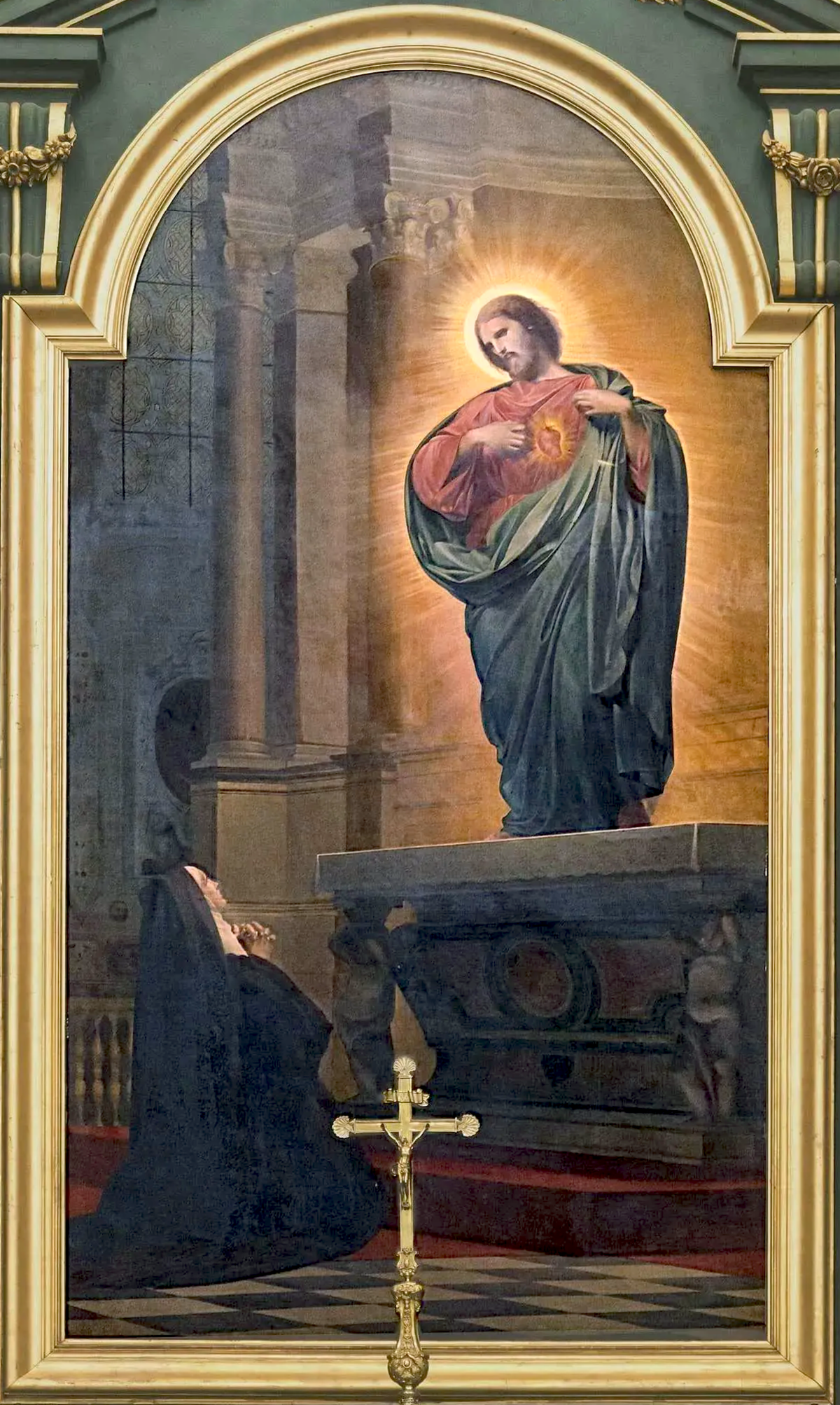
THE YOLK THAT FREES
Knowing that loving God and our neighbor is the way right to relate to our Creator and our fellow human beings is nothing new. Although often attributed to Jesus, we know that what Jesus did was to summarize the Law and the Prophets in these two commandments that already existed in the Old Testament (Matthew 22:34–40, and Mark 12:28–34). He was also reaffirming the statement of an expert of the Law that these two commandments comprised the essence of what it means to be a follower of God’s Law of love (Luke 10:25–28).
However, simply knowing this intellectually is not enough to really transform our lives and attune our wills with God’s Way of all-encompassing love. We can try, and try as hard as we can to forsake our sinful lives and aim at a life lived in humble submission to God’s Law. Recognizing our urgent need to change our ways is a tremendously significant first step in the process. But the process of transformation requires much more that that, and here is where we need a great deal of aid.
The Collect for this Sunday, after recognizing the great value of this teaching about God’s commandment, is clear in asking God to “grant us the grace of your Holy Spirit, that we may be devoted to you with our whole heart, and united to one another with pure affection…”
So we realize that it is only through the grace of His Holy Spirit that we can achieve what God’s Law requires us to do. Nothing will be done in us without our consent, of course, since God in His infinite love created us as free and responsible creatures, but aligning our wills with God’s takes more than our mere desire and effort.
Notice that the Collect makes it clear that our devotion to God should not be partial. Sometimes with our deep desire and great effort we may achieve some kind of partial devotion to our Creator. There will be times in our lives when we will be utterly and honestly devoted to doing God’s will. But then, again, there will be other times when we will be centered on our own desires and plans, when our ego will take the upper hand, and will find a thousand excuses to justify it.
The same is said in the Collect about how we should be united to one another. The phrase here is pure affection. The word pure has often been interpreted mostly in a moral sense. What is pure is morally correct. And yes, it is morally correct, but what the word pure implies is that something is not contaminated or corrupted. Something pure consists of one substance only, and is not mixed with others.
So pure affection is that kind of affection which is not diminished by or mingled with other feelings or intentions. If we love our neighbor with pure affection we are really willing to serve that person as one of our siblings in God, and this affection cannot be tinted by our personal likes, dislikes, prejudices, biases, or interests. How often does this kind of pure affection toward our neighbor really manifest in our lives?
St. Paul, in his Letter to the Romans, chapter 7, speaks about the constant inner battle between what he knows is God’s loving will and what his “flesh” (his ego) makes him do in spite of his efforts. He ends up recognizing how useless these self-help attempts can be, by exclaiming, “Wretched man that I am! Who will rescue me from this body of death?” But then he states where the help comes from: “Thanks be to God through Jesus Christ our Lord!”
Our humbleness in such recognition is our first victory. If we continue to believe that we will be able to align our wills to God’s will through our own efforts, we are only deceiving ourselves. The prophet Zechariah recognizes how dependent we are on God’s merciful love, when he writes, referring to the faithful ones in the people of Israel, “As for you also, because of the blood of my covenant with you, I will set your prisoners free from the waterless pit.”
And in Matthew 11, we read that Jesus tells the crowd listening to His teachings, “Come to me, all you that are weary and are carrying heavy burdens, and I will give you rest… For my yoke is easy, and my burden is light.”
Joining our lives to Jesus, and our will to His, as in a yoke, is the only way we can lift up the burden of our egocentric attachments and be rid of them at last!
Fr. Carlos Expósito, Rector
|
RETURN TO TOP
What Truly Sets Us Free
This Sunday's Reflection - June 28, 2026
Get it in PDF form with calendar
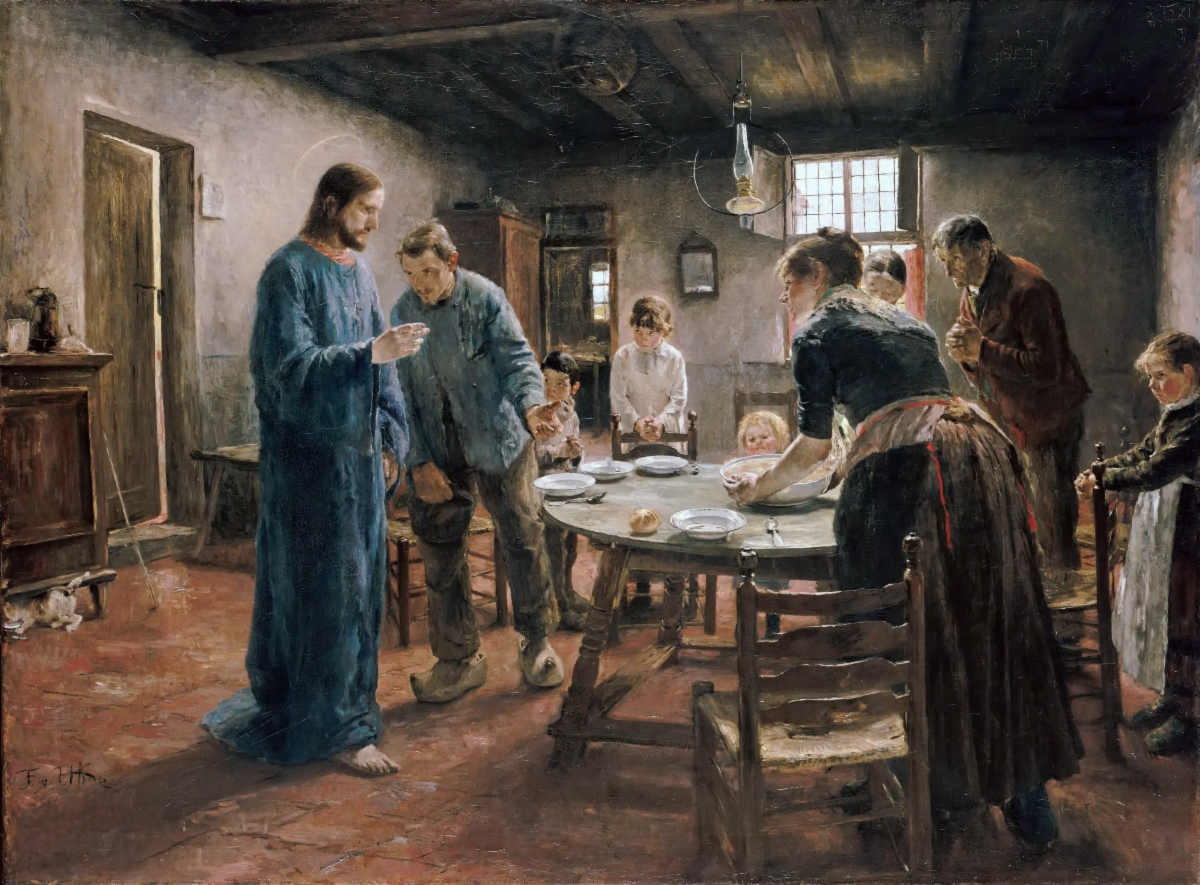
WELCOMING TRUE LIFE
It would be almost unthinkable that anyone would welcome bad things or people into their lives. But unfortunately, unwillingly or perhaps not so much so, that is what we do most of the time.
We may be deceived into allowing false “good things” into our lives by our own lack of knowledge or by ill-intentioned outer influences, but more often than not, even when we are aware of the evil that certain habits, addictions, or companies can cause us, we find it hard to get rid of them, because we somehow feel they do us “some good.”
This is the deceitful character of sin. Most of the time we sin not because we are intrinsically evil-minded, but because somehow our old habits, although we know they are not pleasing in God’s eyes, still make us feel “good.” And we procrastinate getting rid of them. We try to justify our lack of decision with phrases like “the flesh is weak, and we are in the flesh.”
In the long run, however, sin takes its toll on us. It deprives us of the true abundant life which our Creator has always meant to give us freely. What sin is doing to our lives is diminishing its fullness. Every time we let sin get the upper hand, we detach ourselves more and more from the only true source of real life. And that brings us closer to the true death: the death in the Spirit.
As Christ’s followers, we no longer have the excuse of not knowing. His teachings, which were perfectly aligned with those of the true prophets, and have been handed down to us through the apostles and the myriad of saints that have preceded us on His Way, are consistent with God’s intent for His human creatures: becoming “a holy temple acceptable to Him”, as this Sunday’s Collect proclaims.
A temple is where the divine presence dwells. Although we know that our God cannot actually be contained by temples made by human hands, these consecrated buildings are instead filled by His presence in a special way: He has chosen instead to dwell within each and every one of us, so that we need nothing or no one else to mediate His presence with us.
This is what is so beautifully expressed in the Book of Revelation when, in the vision of the New Jerusalem, John states that there was no need of temple in it, because God Himself dwells with its inhabitants.
This communion, of which Jesus Himself spoke when He insisted that we should love one another as He loves us, and that He and the Father are one, and so must we be one with one another and with Him, is the greatest and most wonderful gift anyone might ever receive. It is the very gift of true and abundant life in God’s timelessness.
The essence of this true life is love—true and unconditional love, which is freely given and freely shared, and grows incessantly the more it is given and shared.
In his Letter to the Romans, chapter 6, St. Paul warns the converts to the New Way against “letting sin exercise dominion in their mortal bodies”, and uses this convincing argument against any kind of self-deception: “When you were slaves of sin, you were free in regard of righteousness. So what advantage did you get from the things of which you are now ashamed?”
Using the concept of “freedom” as an excuse for sin is a poor argument indeed. Real freedom consists in making responsible decisions which will bring us true life.
St. Paul expresses this in a crystal clear statement in the same chapter, when he states, “For the wages of sin is death, but the free gift of God is eternal life in Christ Jesus our Lord.”
Which shall we welcome into our lives then?
Fr. Carlos Expósito, Rector
|
RETURN TO TOP
The Courage to Trust in Him
This Sunday's Reflection - June 21, 2026
Get it in PDF form with calendar

LIVING THE NEW LIFE
OF BAPTISM
As we move deeper into the season after Pentecost, the Church invites us to reflect not only on what we believe, but on how we live. The readings appointed for this Sunday speak honestly about the challenges of discipleship while reminding us of the profound source of our strength: our union with Christ.
The Collect asks God to make us “have a perpetual fear and love” of His holy Name, trusting that God never abandons those whom He has established in His steadfast love. This theme runs through all the readings.
Jeremiah faces ridicule and opposition because of his faithfulness to God's call. The psalmist cries out from a place of rejection and suffering. In the Gospel, Jesus warns His disciples that following Him may bring misunderstanding, division, and even loss. Yet underneath these difficult realities lies a deeper truth: God remains faithful, and those who belong to Christ share in a life that cannot be overcome by fear or adversity.
St. Paul expresses this truth beautifully in Romans 6. Writing to Christians who have been baptized, he reminds them that baptism is not merely a religious ceremony or a membership rite. Through baptism, believers are united with Christ in His death and resurrection. “We have died with Christ,” Paul says, and therefore we are called to “walk in newness of life.”
This is a powerful image for Christians today. Our culture often encourages us to define ourselves by success, possessions, status, or personal achievements. Yet Paul points us towards a different identity. Through baptism, our deepest identity is found in Christ. The old self, captive to sin and self-centeredness, no longer has the final word. A new life has begun: a life shaped by grace, hope, and the transforming love of God.
Of course, this new life does not exempt us from struggle. Jeremiah's experience reminds us that faithfulness can sometimes be costly. The psalmist's lament shows that believers are not strangers to disappointment or suffering. Jesus Himself tells His followers not to be surprised when discipleship demands courage and sacrifice. The Christian life has never been a promise of comfort. Rather, it is a call to trust God even when the path is difficult.
This message is especially relevant in our own time. We live in a world marked by anxiety, polarization, uncertainty, and rapid change. Many people feel pressured to conform to the values and expectations around them. Yet the baptized Christian is called to live from a different center. Because we belong to Christ, there is no need to be governed by fear. Because we have died and risen with Him, we are free to choose love over resentment, forgiveness over revenge, generosity over selfishness, and hope over despair.
The good news of Romans 6 is that the resurrection is not only a future promise; it is a present reality. Every day we are invited to live more fully into the new life that God has already given us. Every act of kindness, every prayer offered in faith, every effort towards reconciliation, every step taken in obedience to Christ becomes a sign of that resurrection life at work within us.
As we gather for worship this Sunday, we must remember our baptism and renew our commitment to Christ. The same Lord who conquered death continues to lead, strengthen, and sustain His people. United with Him, we can face the challenges of our time with confidence, knowing that we are no longer merely living for ourselves, but are truly alive to God in Christ Jesus our Lord.
Fr. Carlos Expósito, Rector
|
RETURN TO TOP
To be Enduring and Compassionate
This Sunday's Reflection - June 14, 2026
Get it in PDF form with calendar
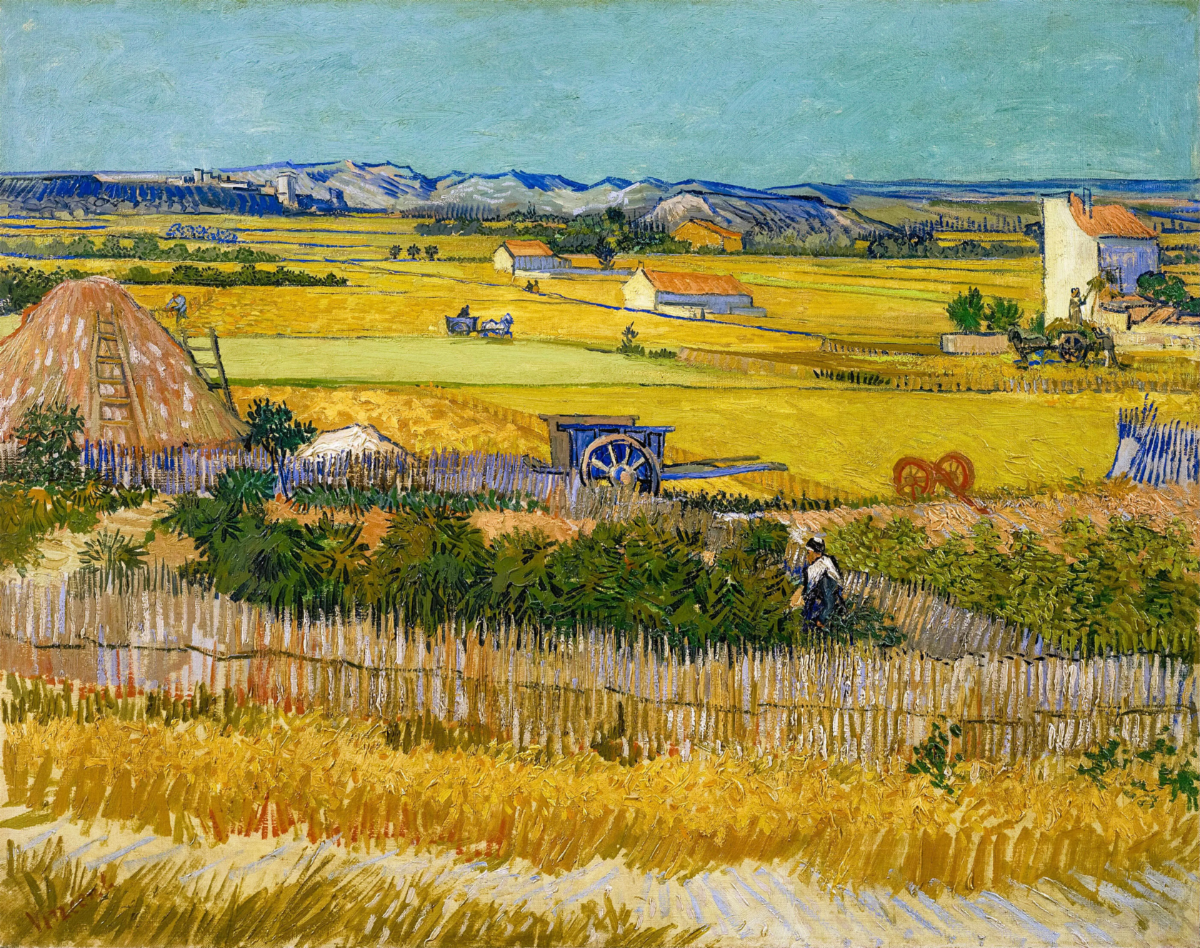
PROCLAIMING GOD'S TRUTH
As followers of Jesus Christ’s Way of Love, we feel compelled to proclaim His Good News of Salvation for us. After all, this is what He told His disciples to do right before His glorious Ascension, according to St. Matthew’s Gospel.
Proclaiming His Way was a hard task for the first disciples. We may think that because they were first-hand witnesses, their words and deeds were quite convincing, and it may be so in part. But we tend to forget all the factors that conspired against their proclamation: the strong opposition of the Jewish religious leaders, the suspicion of the Roman authorities, and the proliferation of pagan cults in the surrounding nations.
None of this stopped the first disciples though. And when St. Paul started his evangelization among the Gentiles, although things did not always go as planned, he and his assistants were ceaseless in their endeavors, and even when in prison St. Paul wrote epistles to the newly formed congregations that continue to inspire and encourage us nowadays.
But this would not have been possible without the inspiration of the Holy Spirit, which was gracefully granted to the birthing Church, and continues to encourage, guide, defend, counsel, and inspire the Church in our days.
The first thing we need to acknowledge when we endeavor to proclaim God’s truth and compassionate justice in our world today is that this is not our own doing. It was and continues to be Jesus’ commission to His followers, and He also promised He would not leave us alone in the task, but would aid us with the Spirit of Truth.
This does not imply that our willingness is of no consequence. As free creatures of God, we must willingly consent to be used as God’s agents of His reconciling mission. And not only consent, but strive to do our best towards this end.
In the reading from the Book of Exodus this Sunday (Exodus 19:2–8a), after God frees His people from the bondage in Egypt, He speaks to the people through Moses, and asks their consent to “be for me a priestly kingdom and a holy nation.” And so they do. When Moses asks them, they reply, “Everything that the Lord has spoken we will do.”
The Apostle Paul, in his letter to the converts in Rome, reminds them of the sufferings that they will likely go through when deciding to become Christ’s faithful followers. But he insists that by undergoing this suffering they will gain endurance, “and endurance produces character, and character produces hope, and hope does not disappoint us, because God’s love has been poured into our hearts by the Holy Spirit that has been given to us.” Here again we find the reaffirmation that it is through the Holy Spirit’s grace that we stand firm.
And in this Sunday’s Gospel reading (Matthew 9:35–10:8), we read how Jesus summons the twelve and sends them out, granting them authority to proclaim the nearness of God’s kingdom in words and healing deeds. He sends them out to the House of Israel. This may sound exclusionary, but it is clear that Jesus’ first mission was primarily among His own people, and then extended it to the rest of the nations, when His first followers were ready.
One clear statement by Jesus closes the excerpt for the Gospel reading this Sunday: “You received without payment; give without payment.” It is only through His grace that the disciples receive the power to proclaim the Good News. It cannot be purchased or earned by any means. And so it must be given out graciously and freely. Only compassionate love must move us to share the Good News of God’s Kingdom. No personal gain or recognition move us, or the grace will be made null.
May the Lord, as the Collect for this Sunday prays, always keep His household the Church in His steadfast faith and love, through His infinite grace.
Fr. Carlos Expósito, Rector
|
RETURN TO TOP
The Power of Our Faith
This Sunday's Reflection - June 7, 2026
Get it in PDF form with calendar
RIGHTEOUSNESS OF FAITH
When we think of righteousness we usually equate it to the quality of thinking, speaking, and doing everything according to God’s will, and we are right.
However, how can we be assured that this may be fulfilled in our own lives? We have the commandments, of course, and it would seem that striving to fulfill them would solve the issue, but what the people of Israel and all peoples have experienced throughout the centuries is that as much as we strive to be totally righteous by being strict followers of the Law, there is a flaw in our nature that hinders us from its total fulfillment.
This does not render the Law useless. In fact, Jesus Himself stated that He had not come to deny the Law, but to fulfill it to its fullness.
Throughout His earthly ministry, however, we notice how He at times clashes with the formalities of the Law that would interfere with its essential meaning. After all, the Law was given so that humankind could have the best possible relationship with the Creator, with one another, and with creation. Therefore, all the strict interpretations of the letter of the Law that would interfere with the Law of true justice, care for others, and unconditional love should be put aside.
What Jesus taught His followers was that all the commandments could be summarized in the overarching Law of true love for God and for humankind. Nevertheless, this does not make the fulfillment of God’s Law easier for us. Actually it renders it harder to fulfill. The question is no longer about fulfilling this or that specific commandment, but about how consistently we show forth God’s unconditional love for us in our own lives.
So we realize that our honest intention to align our will with God’s loving will matters. God created us in His image and likeness, which implies He created us with free and responsible will. But we also realize that our efforts alone, no matter how hard we try, will not make this alignment a reality. This is where faith plays its crucial role.
Faith is that deep trust and conviction that God’s promises for us are and will be fulfilled, not because of anything we may find reasonable according to worldly experience, but because we trust in His infinite power to make things possible, including the total transformation of our whole beings into an image that is more reconciled with God’s original intention: the righteousness that reflects God’s incarnate image in the world.
The readings for this Sunday all deal with the subject of true faith, and how this faith transforms lives for the better.
The prophet Hosea speaks of how the people, when they realize how their sins have separated them from God’s healing grace, will be healed and restored again, not with an increase of sacrifices in the temple, but with the sacrifice of thanksgiving and steadfast love.
St. Paul, in his Letter to the Romans, reminds the followers of Jesus’ Way of how Abraham followed God’s prompts, leaving everything behind him, and trusting in God’s promises, even when his human evidence would contradict all these promises. Abraham’s alignment with God’s will did not come as a result of the strict following of rules, but from the deep conviction that God’s promises would come true.
In this Sunday’s Gospel reading we have a narrative that tells us about the faith of several people. The first one is a tax collector—a person that was despised as a server of the Roman Empire, and as one who profited by exploiting the people. When Jesus asks him to follow Him, he does not hesitate, and as Jesus sits at the table with him and other tax collectors and people who were considered sinners, they listen to Jesus’ proclamation of the Good News of salvation, and their lives begin to be transformed.
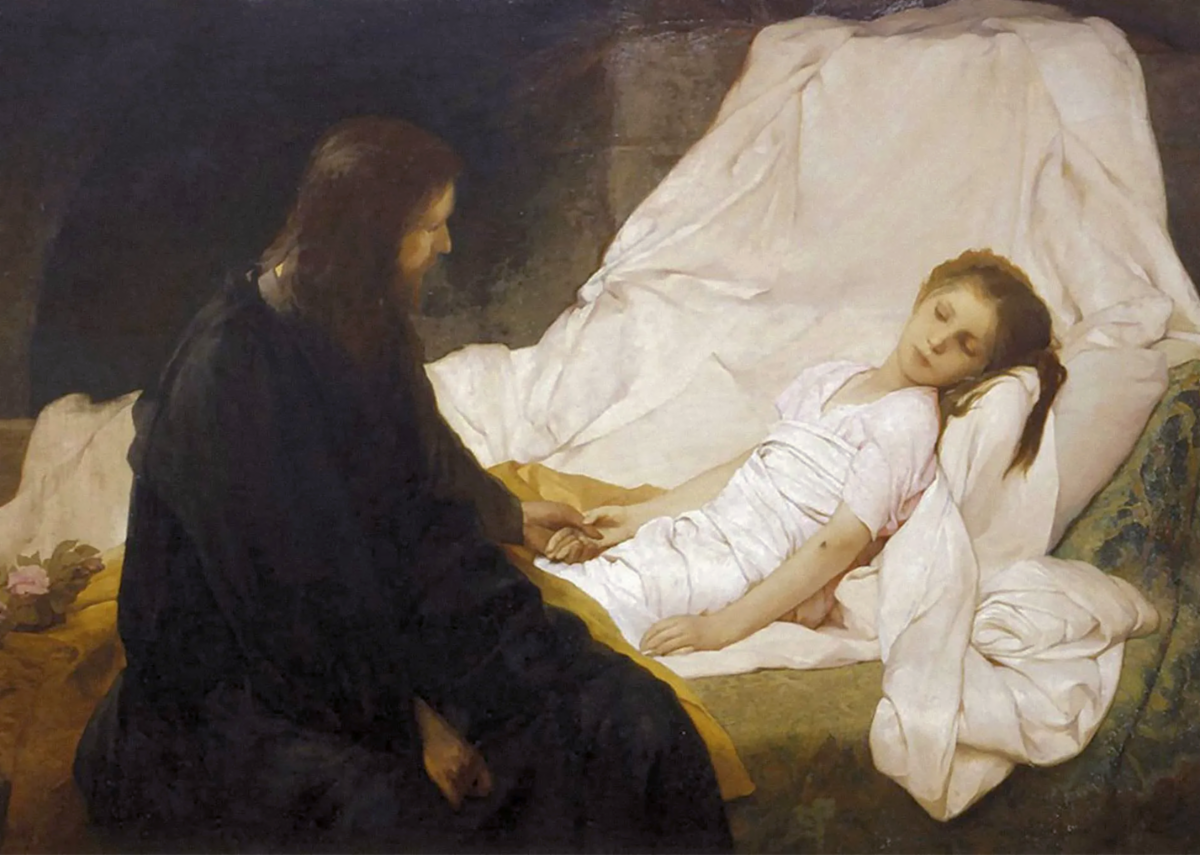
Then a leader of the synagogue begs Jesus to resurrect his daughter, who has just died. Only someone with the greatest faith in Jesus would make such a petition, which contradicts all worldly logic.
While Jesus is walking to the leader’s home, a woman who had been afflicted by hemorrhage for years has the deep conviction that if she only touches the fringe of Jesus’ cloak she will be healed, and she does so. She is instantly healed of her disease.
And when Jesus arrives at the home of this girl, the mourning crowd laughs at Jesus’ statement that the girl is not dead but asleep, but He raises her and everyone is a witness.
As a result, many people who witnessed this or heard of this sign were drawn to Jesus’ Way, through faith in Him, even if what they had witnessed or heard was contrary to all human logic or experience.
This is how true faith works towards our alignment with God’s loving will for us. May the Holy Spirit increase our faith so that we may begin to think, speak and act more rightly in our lives.
Fr. Carlos Expósito, Rector
|
RETURN TO TOP
To Love Him, One Another, and Oneself
This Sunday's Reflection - May 31, 2026
Get it in PDF form with calendar
OUR RELATIONAL GOD
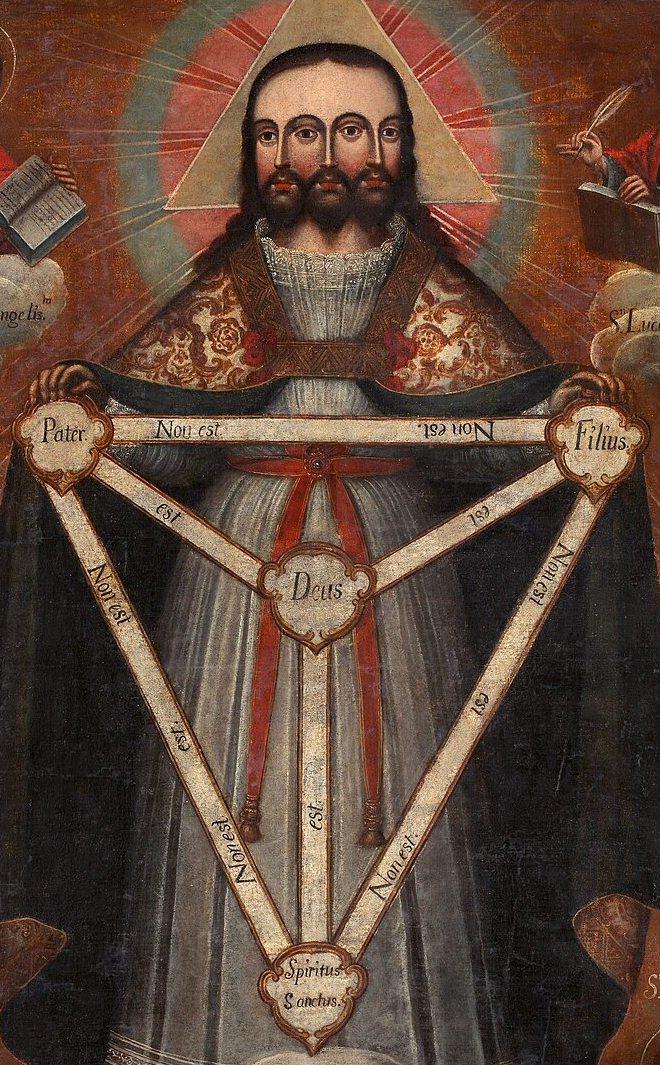
Trinity Sunday, the Sunday after Pentecost, always reminds us that the God we Christians worship is triune: Father, Son, and Holy Spirit, expressing the rationally unsolvable paradox of the One God in Three Persons.
Throughout the centuries the belief in the Triune God has stood as the unmistakable mark of orthodox Christianity as opposed to some heresies that deny the divine nature of Christ. And, as Episcopalians, we make it a point of no discussion that we may diverge in some of our personal beliefs, but belief in the Trinity is a must for all true Christians.
As humans, we need to realize that even though we have managed to enunciate this Trinitarian dogma in ways that seem reasonable enough, it still remains a mystery of faith. It escapes logic and rationality. It can only be grasped through the eyes of our faith.
What actually matters is not so much if we can grasp the concept with our limited human minds—an impossible task—but what it means for our lives as Christ’s followers.
Thinking of our God as an entity in which the unity is expressed in a relational way makes a lot of sense to us, who declare that we follow Jesus Christ, the person whose life was a constant loving relationship with God, and with those with whom He came in contact. Jesus’ way can only be defined by one word: Love. What He demands of His followers is that they “love one another as I have loved you.” And He also declares, “I and the Father are one.”
This declaration is not some abstract philosophical concept. It points to the facts that what Jesus did throughout His earthly life was God’s loving will, even to the point of self-sacrifice for the love of humankind.
The reading from the Book of Genesis this Sunday brings us the account of the creation. At its culmination, we read that God created us human beings “in His likeness”, and right after that the text says, “male and female He created them.”
God created humans with a relational intention. He put them in a world full of other creatures, of which humans would become the stewards, and He made them with the intention that they would relate to one another in the most intimate way, thus starting families, and wider circles of relationships eventually.
It would be far-fetched to state that the placing of the phrase “male and female He created them” right after “in His likeness” makes reference to God as a relational being Himself. We should not ascribe Trinitarian ideas to the Hebrew Scriptures because that is not a Hebrew concept. But what we can assure is that God’s intention in the Book of Genesis clearly shows that He was not content with being self-contained. He wanted to express His love in His diverse creation, and He wanted the creatures who most closely resembled Him to be related to Him, to one another, and to all His creation.
In his Second Letter to the converts in Corinth, the Apostle Paul calls them brothers and sisters, and encourages them to “agree with one another; live in peace…and greet one another with a holy kiss.” Finally, he bids them farewell with this phrase that we are so familiar with: “The grace of the Lord Jesus Christ, the love of God, and the communion of the Holy Spirit be with all of you.” Calling this a Trinitarian formula would not be accurate, but it certainly highlights a relational loving way of referring to the divine presence in our lives.
In the Great Commission—the final words of Jesus to His disciples before the Ascension, found in Matthew 28—Jesus commands them to baptize new converts in “the name of the Father, and of the Son, and of the Holy Spirit.” Whether these exact words were uttered by Jesus or were a later addition, as some have claimed, cannot be discussed in such a short reflection. The fact remains that this is what we have in our New Testament, and it reflects our belief in the God whose very essence is relational love, and whose main purpose for us is that we reflect this love in our own lives.
Fr. Carlos Expósito, Rector
|
RETURN TO TOP
His Gift That We Shall Share
This Sunday's Reflection - May 24, 2026
Get it in PDF form with calendar
SHEDDING THE GIFT ABROAD
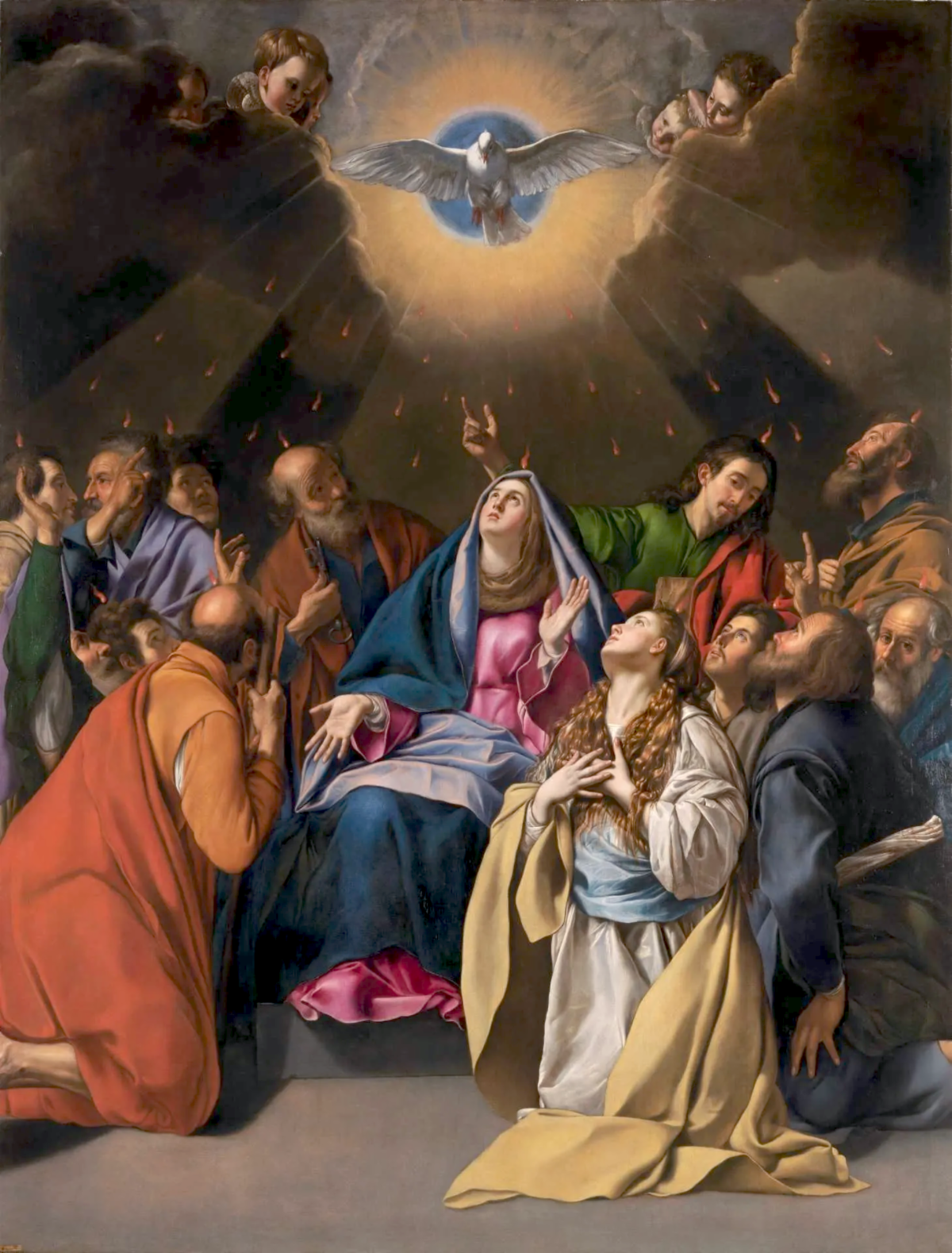
The gift of the Holy Spirit, the one who opens the way of eternal life to all, came abundantly to Jesus’ first followers so that it would be spread out to all the nations of the world. Filled with the Spirit, through their incessant preaching, both in words and in powerful loving deeds of restoration of broken lives and relationships, the disciples took Jesus’ Way to the people of Israel first, and later to the Gentiles of the nations of the known world of the time.
Jesus’ Way, which later came to be known as Christianity, reached out to different parts of Asia and Europe, transforming people’s lives and giving them a true sense of belonging in the Christian communities that were formed. All this happened in the midst of official opposition, persecution, and even death of some of the new converts, but the power of the Holy Spirit acting in the Church was greater than any obstacle, simply because the joy that finding the true meaning of abundant and eternal life that Jesus’ followers felt and shared surpassed any ordeals they might have to face.
And all this started in Jerusalem, on the Feast of Pentecost, fifty days after Jesus’ resurrection and after His ascension, according to St. Luke the Evangelist. St. John the Evangelist, however, depicts the disciples receiving the power of the Holy Spirit directly from the resurrected Jesus on the first day of the week—Sunday—while they are assembled in the upper room.
As much as we would like to have all the gospels coinciding in this, what we have gotten is these two different versions. This does not weaken the message though; on the contrary, it enriches it. It may either show two moments, or two facets of the powerful manifestation of the Spirit in the disciples.
The link between Jesus’ resurrection and the powerful manifestation of the Holy Spirit among Jesus’ followers is undeniable, whichever the time lapse between the two events may have been. It was Jesus’ ultimate victory over the powers of evil and death which unmistakably showed His followers what their own hopes and ultimate victories are, and this greatly contributed to opening their hearts and minds to be filled by God’s Spirit of Truth.
What the Holy Spirit does to Jesus’ followers is likened to a total re-creation in John’s gospel. Jesus blows upon them, which is a reminder of the Spirit blowing at the beginning of Creation, bringing order out of chaos, as depicted in the Book of Genesis. Then Jesus’ words to the disciples highlight the purpose of this re-creation: “as the Father has sent me, so I send you.”
The Holy Spirit is given to Jesus’ followers abundantly, re-creating them, and sending them out to continue Jesus’ reconciling mission in the world. Jesus’ words about forgiving or retaining sins, however we interpret them, are clearly linked to the idea of reconciliation. There can be no reconciliation without forgiveness of our sins by God, and forgiveness of our sins by others and vice versa, since we all sin.
What happened on that Feast of Pentecost, as described by St. Luke in the Book of Acts, already pointed to the universality of Jesus’ Way of Love. Each of those listening, who had come to the Feast from different nations, heard the disciples speak in their own languages. The message, therefore, was not only for the Jews, but for all who would open their hearts and minds to it, and it would be received in the language of their hearts.
The Holy Spirit does not unite us by obliterating our individuality, but by honoring it, and making the message clear to us in the language we cherish as our own. The Holy Spirit, according to St. Luke, did not manifest to the group of disciples as a common flame or cloud, but as individual tongues of fire upon each of them. Who knows if each might have shown a distinctive hue of color?
The Collect of this Sunday asks God to “shed abroad this gift throughout the world by the preaching of the Gospel that it may reach to the ends of the earth.” Some of us may not feel called to embark on a mission abroad, but wherever we are, wherever we go, even within our neighborhood, we can become agents of this wonderful gift for those with whom we come in contact, through our words and deeds of reconciling love.
Fr. Carlos Expósito, Rector
|
RETURN TO TOP
In the Comfort He Gives Us, We Pray
This Sunday's Reflection - May 17, 2026
Get it in PDF form with calendar
WE ARE NOT LEFT COMFORTLESS
The week between Ascension Day and Pentecost has a distinctive spiritual character. The great celebration of Easter has not ended, and yet there is a quietness now in the Church’s life. Christ has ascended; the Spirit has not yet come in fullness. The disciples stand in an in-between place, looking upward even as they are sent back into the world. That tension is captured beautifully in the Collect appointed for the Seventh Sunday of Easter. It begins in triumph: Christ reigns in glory. Yet immediately it turns to a plea born of human vulnerability: “Do not leave us comfortless.” The prayer understands something essential about Christian life. Faith does not remove uncertainty, fear, or suffering. Rather, it asks for God’s presence within them.
That theme runs deeply through the Epistle from 1 Peter. Peter writes to Christians who are facing hardship and social pressure, and he tells them plainly: “Beloved, do not be surprised at the fiery ordeal that is taking place among you.” Suffering is not presented as proof that God has abandoned them. Instead, Peter says that in suffering they share in the life of Christ Himself.
This is important, because the Collect does not ask God to spare us from every trial. It asks that we not be left alone in them. Christian comfort is not avoidance; it is companionship. The promise of the Gospel is not that believers will never know anxiety or loss, but that Christ remains present and faithful through all of it.
Peter continues: “Humble yourselves therefore under the mighty hand of God.” Ascension reminds us that Jesus reigns as King, but the Church responds to that kingship not with triumphalism, but with humility and trust. The disciples after the Ascension are not powerful by worldly standards. They are waiting, praying, uncertain about what comes next. The Church in every age recognizes something of itself in that posture.
Perhaps the most tender line in the Epistle is also the one most closely connected to the Collect: “Cast all your anxiety on Him, because He cares for you.” Scripture here speaks honestly about human fear. Anxiety is not dismissed or shamed. Instead, believers are invited to entrust themselves to the care of God. The confidence of faith lies not in our own steadiness, but in the One who holds us.
Peter also urges vigilance: “Discipline yourselves; keep alert.” The season after the Ascension is not passive waiting. The disciples are not told to stand gazing into heaven forever. In the reading from Acts, they ask Jesus whether this is the moment when the kingdom will finally come in fullness. Jesus redirects them away from speculation and toward witness. Then, after He ascends, they return to Jerusalem and devote themselves to prayer together.
That small detail matters. They wait communally. The answer to uncertainty is not isolation, but prayer shared in community. The Church learns to wait together.
The Gospel from John deepens this assurance. Before His departure, Jesus prays for His disciples. Even as He leaves them, He does not abandon them. The Ascension is not the story of Christ disappearing, but of His entering more fully into the glory of the Father while still holding His people in love. The disciples remain under His care.
And over all these readings sounds the joy of Psalm 47: “God has gone up with a shout.” The psalm celebrates divine kingship and victory. Yet the other readings keep that triumph from becoming shallow or sentimental. Christ reigns but the Church still waits, still suffers, still hopes. Glory and vulnerability belong together in the Christian life.
That may be why this week in the Church year feels so recognizable. We too live in an in-between time. We do not yet see the fullness of God’s kingdom. We know anxiety, uncertainty, and weariness. Yet the Collect teaches us what to pray: not simply for escape, but for the sustaining presence of God: “Do not leave us comfortless.” And the witness of these readings is that God does not. Christ reigns. Christ prays for His people. The Spirit is coming. So the Church waits as the disciples did: together, prayerfully, humbly, and with hope.
Fr. Carlos Expósito, Rector
|
RETURN TO TOP
Living in the Love He Placed in Our Hearts
This Sunday's Reflection - May 10, 2026
Get it in PDF form with calendar
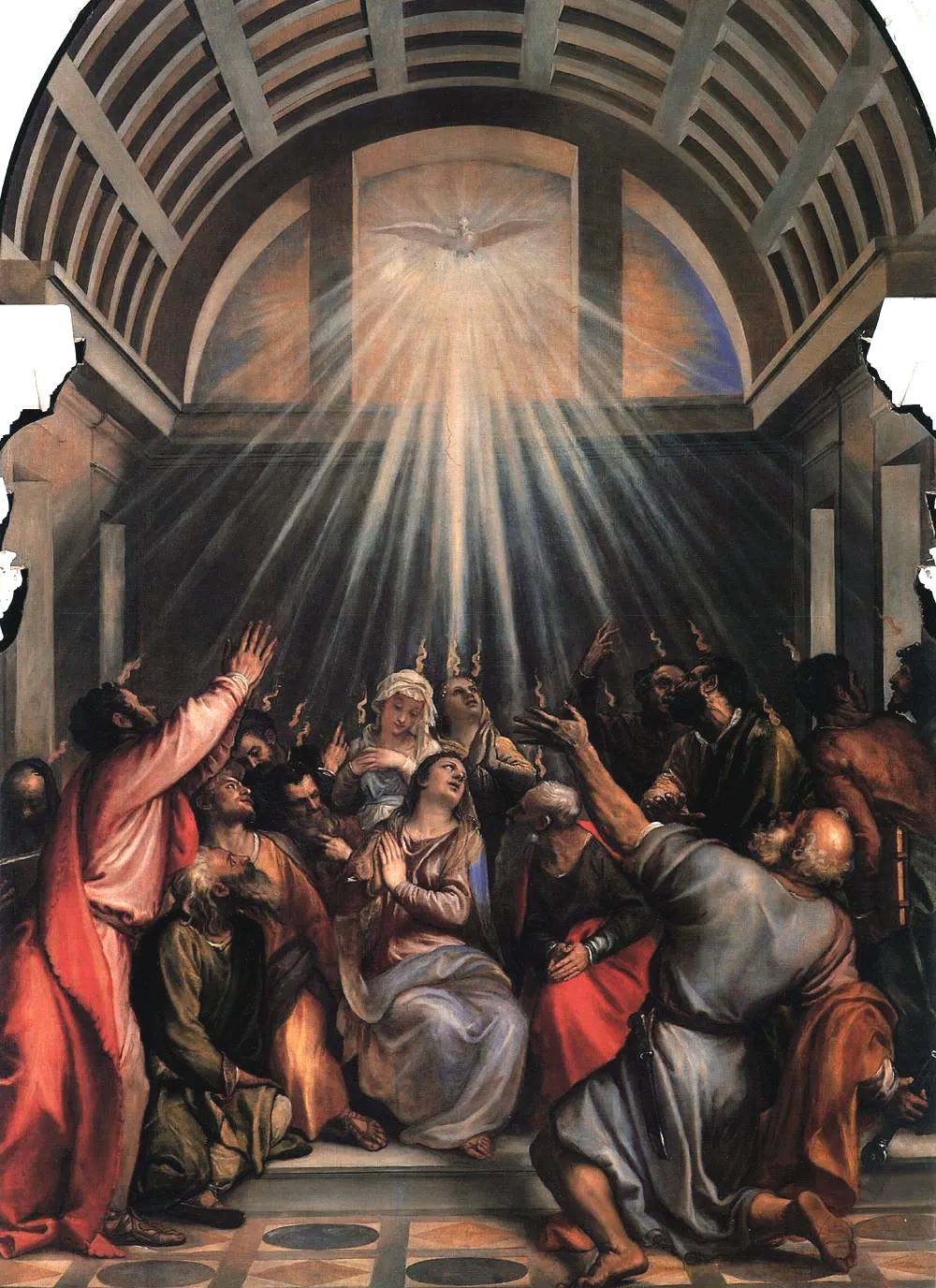
GOOD THINGS BEYOND MEASURE
The Collect appointed for this Sixth Sunday of Easter invites us to pray that God would “pour into our hearts such love toward You, that we, loving You in all things and above all things, may obtain Your promises, which exceed all that we can desire.” It is a daring prayer. It assumes that God’s promises are not only trustworthy, but abundant beyond our imagining. And it quietly challenges us to consider whether we are living as though that abundance is real.
This week’s readings sharpen that question. In the Acts of the Apostles, we encounter Paul standing in Athens, speaking to a people deeply committed to their own religious and philosophical traditions. He begins not with condemnation, but with recognition, acknowledging their searching, their altar “to an unknown god.” From there, he proclaims the God made known in Christ: not distant, not confined to temples, but the One in whom “we live and move and have our being.” This is a vision of God’s nearness and generosity that reorients everything. If God is this close, this sustaining, this life-giving, then faith is not about reaching far beyond ourselves so much as awakening to the presence already surrounding and upholding us.
Yet Paul does not stop at affirmation. He calls his listeners to transformation, to turn toward this living God, to recognize a new way of being grounded in the risen Christ. The invitation is expansive, but it is also personal. It asks for a response.
The Epistle continues in this vein, but with a different emphasis. Here, the focus is on how that response takes shape in daily life. “Always be ready to make your defense to anyone who demands from you an accounting for the hope that is in you,” we are told, but “do it with gentleness and reverence.” This is not a call to argument for its own sake, but to a way of living so marked by hope that others cannot help but notice.
And the texture of that hope matters. It is gentle. It is grounded. It is willing, if necessary, to endure suffering for doing good rather than returning harm for harm. Such a life is not driven by fear or defensiveness, but by a quiet confidence that God is at work even in difficulty. This is the Way of Love, not as an abstract ideal, but as a lived reality, costly at times, but deeply rooted in trust.
In the Gospel, Jesus draws all of this together. “If you love me, you will keep my commandments.” Love, in this sense, is not simply a feeling. It is a pattern of life, a way of being in relationship with God and with one another. And we are not left to figure this out alone. Jesus promises the Advocate, the Spirit of truth, who abides with us and in us. “I will not leave you orphaned,” he says. The life of love we are called to live is sustained by a presence that does not depart.
So the question returns: what might it look like to live as though these promises are true? It may begin with a shift in awareness, recognizing, as Paul proclaims, that God is already nearer than we often assume. It may take shape in the tone of our interactions, as the Epistle suggests, by choosing gentleness over sharpness, reverence over dismissal. And it will certainly involve action. The commandments Jesus speaks of are not abstract. They are embodied in practices of love: in patience, in forgiveness, in generosity, in truthfulness. These are the places where the Way of Love becomes visible, where faith moves from idea into reality.
It is tempting to live as if love must be measured out carefully, as if hope were a limited resource. But these readings point us elsewhere. The God we are invited to trust is not scarce, but abundant. He is closer than we imagined, more generous than we dared to hope.
To live in that trust is to begin, however imperfectly, to reflect it. And in doing so, we may find that the Collect’s promise is not distant or theoretical, but already unfolding: that God is indeed pouring love into our hearts, and that in living from that love, we begin to glimpse good things beyond measure.
Fr. Carlos Expósito, Rector
|
RETURN TO TOP
Sharing a Place in His House of Love
This Sunday's Reflection - May 3, 2026
Get it in PDF form with calendar
THE WAY
TO GOD'S HOME
“In my Father’s house there are many dwelling places” is probably one of the most quoted lines from St. John’s Gospel in Memorial Services and Requiem Masses. It is the favorite passage chosen by relatives and priests alike for the occasion.
However, these words were not uttered by Jesus in reference to someone’s passing from this world, but in anticipation of His own passion and death. He wanted to reassure His disciples that they would not be left hopeless when He would no longer be with them physically.
As I have pointed out on other occasions, the Jews, unlike the Greeks, were not prone to use abstract language. They conveyed the greatest truths using the language of this concrete physical world. Therefore, when Jesus wants to convey the idea of communion with God, He uses the image of dwelling in His house, and He refers to the disciples’ spiritual growth prompted by Him as “preparing a place for them.”
Although in Jesus’ words here there is a clear reference to eternal life, the life that cannot be contained by the short span of biological existence, it must also be clear that this communion with God can and should start in the here and now of our lives.
The way to gain the true and abundant life that has always been intended by God for us is what Jesus has shown His followers: the way of unconditional, self-giving love. When Jesus claims to be “the way”, He is not referring to a doctrinal alignment, but to a way of living our lives.
We must not forget that He also stated, “not everyone who says to me Lord, Lord, will enter the kingdom of heaven, The only people who will enter are those who do what my Father in heaven wants.” (Matthew 7:21-23)
When Jesus claims to be the way, the life, and the truth, His primary aim is to point His followers to do the Father’s will. His claim that “nobody comes to the Father except though me” is not to be understood as an exclusionary doctrinal statement, but rather as a clear statement that He is the perfect human incarnation of the Father, the Word made flesh, and He has come to show us in human form, both in His loving words and deeds, the God we cannot comprehend with our limited minds.
Following this Way of unconditional love, in which only the truth of a life lived in His love is acceptable, can and will in many cases place us in conflict with others who refuse to accept this truth. This is what happened to Stephen, the first Christian martyr, who was stoned to death for proclaiming the truth of Jesus as the Christ, as St. Luke tells us in the Book of Acts, chapter 7.
The ones who stoned him did not do so out of pure evil hatred, but because their hearts and minds were closed by their doctrinal prejudice. This was clearly shown by covering their ears—they could not stand hearing that Jesus was seated at the right hand of God, as Stephen saw in his glorious dying vision.
In his First Letter, the Apostle Peter insists that those who have wholeheartedly made the decision to follow Jesus as the true way to real life have become “a chosen race, a royal priesthood, a holy nation, God’s own people, in order that you may proclaim the mighty acts of Him who called you out of darkness into His marvelous light.”
This is who we, as present-day followers of Christ, are also called to become, and by faithfully treading on His Way we will share a dwelling place in God’s House of Love.
Fr. Carlos Expósito, Rector
|
RETURN TO TOP
The Meaning of "the Good Shepherd"
This Sunday's Reflection - April 26, 2026
Get it in PDF form with calendar
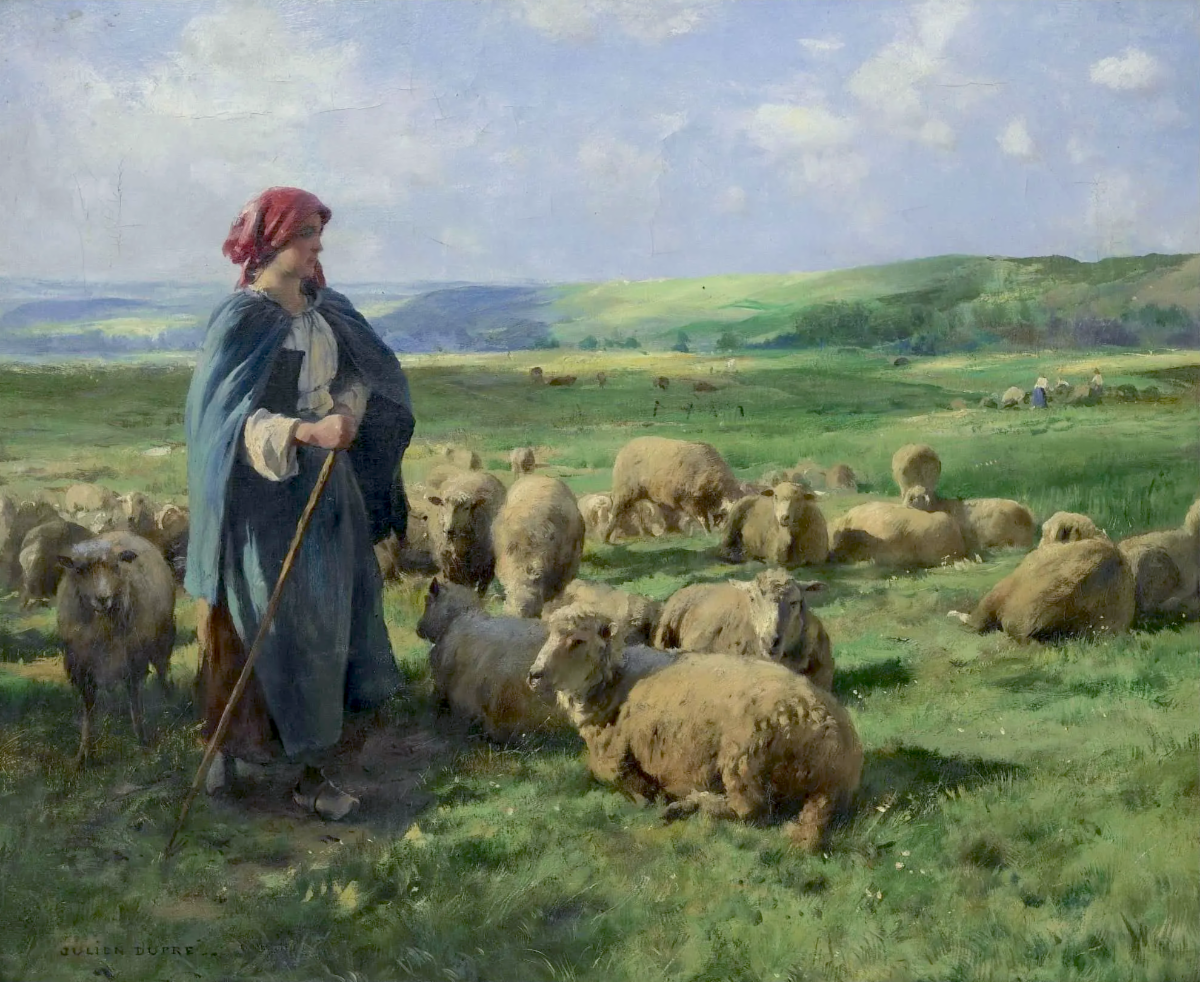
CHRIST IS OUR
TRUE GATE
The image of Jesus as the Good Shepherd is really familiar and endearing to practically all Christians. It has inspired hymns and songs, paintings and sermons throughout the centuries. In fact, this image that Jesus uses takes its inspiration from the Old Testament, where God Himself is presented as the true shepherd of His people, and the rulers and spiritual leaders of the nation were often criticized by the prophets for not shepherding the people as they should have.
The Fourth Sunday of Easter always brings us the image of the Good Shepherd, in different variants, according to the Church Year we are in. This particular Sunday’s Gospel reading highlights the imagery of Jesus as the gate to the sheepfold, an image that relates to that of the Good Shepherd, but has its own relevant message.
The gate is an entry and departure point. It is the place that leads in and out, from and to a different place or realm. It is through the gate that the sheep are led out by the shepherd to the places where they find good pasture and water, and shaded spots where they can rest. It is also through the gate that they are led back to their sheepfold to spend the night in safety. Thus the gate and the one whose voice the sheep recognize as the shepherd’s, who calls them by name and leads them through that gate, become a bonded image of safety and comfort for them.
If anyone comes to the sheepfold through another place, the sheep will not trust that person. If anyone whose voice they do not recognize calls them, they will not follow that person. The sheep instinctively do what unfortunately we sometimes fail to do. They know for sure who their true shepherd is, whereas we at times fail to recognize Him in our own lives.
How can we recognize the true gate that leads us to abundant life?
In our lives, we are presented with many different gates and leaders inviting us to go through them. There are gates which seem to lead us to success, to wealth, to things and feelings that promise to give us the greatest satisfactions in our lives. They lure and entice us, showing us glistening landscapes on the other side, and beckoning to us. These are the gates of self-centeredness and self-complacency. If we go through them, we may avoid discomfort and find temporary pleasures, but in the end, they will prove to be totally misleading, leaving us with a deep sense of emptiness and senselessness in our lives.
It is in Jesus Christ and His Way of Love that we find the true gate that will lead us to a purposeful life. He is standing at the gate and calls us by name, because He truly knows each of us personally. He knows who we truly are—created in God’s image and likeness as beloved children in spite of our sins. He knows our struggles and weaknesses, our pains and joys. And He loves each of us unconditionally.
Going through this gate will not make our lives more comfortable. We may have to “endure pain while suffering unjustly”, as St. Peter reminded the converts in his First Letter. We will have to leave our senseless life of self-centeredness behind, which is not always easy to do. But only then will we find the true joy of sharing “with glad and generous hearts, praising God and having the goodwill of all the people”, as the lives of the first followers of Christ is described in the Book of Acts.
Then, as Psalm 23 reminds us, God’s “goodness and mercy shall follow us all the days of our lives, and we will dwell in the house of the Lord for ever.”
Fr. Carlos Expósito, Rector
|
RETURN TO TOP
The Form of the Lord and His Love For Us
This Sunday's Reflection - April 19, 2026
Get it in PDF form with calendar
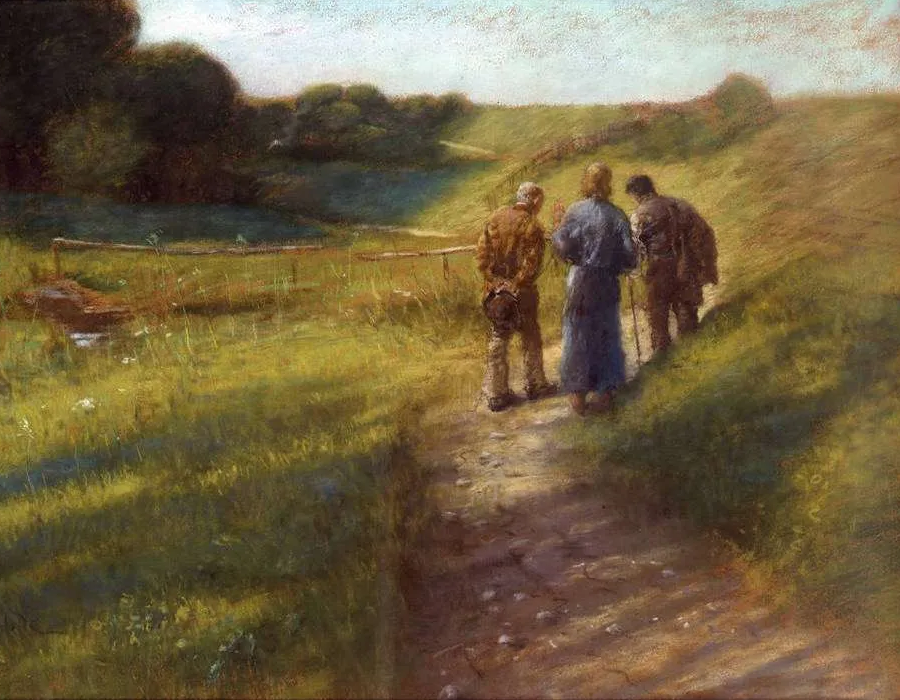
BEHOLDING CHRIST IN OUR LIVES
We Christians have often been told to recognize the face of Christ in the other, particularly in the face of those who are in greater need, and in those who suffer in body, mind, or spirit, due to sickness, poverty, or oppression.
This stems from Jesus’ own injunction that “inasmuch as you did it to one of my brothers, you did it to me.” The meaning is straightforward and clear. We are all Jesus’ brothers and sisters, since we are all God’s children. If we do not show compassion to our fellow human beings, how can we claim to be Jesus’ followers?
After His glorious resurrection, according to the Evangelists, Jesus had numerous encounters with His followers. During these encounters He brought them to a restored relationship with Him and with one another, made sure they understood the universal reconciling mission they had received from Him, urged them to fulfill this mission, and to do all in their power to ensure it would be continued throughout the centuries.
One thing we cannot fail to notice when we read about these post-resurrection encounters is the intentional elusiveness they portray in relation to Jesus’ appearance and the way His resurrected body behaves.
At times, Jesus’ closest followers do not recognize Him until He calls their name (like Mary Magdalene), or until He breaks bread with them, or summons them to breakfast.
Does that mean Jesus’ face was different from what it had been before? This is somehow hinted by the Evangelists, but in no way explicitly stated.
Does His appearing and disappearing suddenly, or when doors are closed, indicate that His resurrected body no longer obeyed physical laws? This is also hinted in the narratives, but not explicitly stated either. Showing up when the doors were locked does not necessarily mean He went through the doors as if His body had no density. He may have simply knocked and someone opened.
Appearing and vanishing suddenly does not necessarily mean materializing out of nowhere, and dematerializing into nothingness. It may have been a literary device to express that He came to a place suddenly, and then left without announcing it. It is all really elusive, and I have always suspected that the Evangelists were intentional in their elusiveness.
What if what the Evangelists were trying to tell the readers was that the appearance or the condition of Jesus’ resurrected being was not the relevant factor, but the loving relationship and intention towards His followers?
When we read the accounts of these encounters, what really stands out is the kind of relationship that the resurrected Jesus is building or restoring with the disciples: the assurance of His new resurrected life to Mary Magdalene, His commissioning of the disciples with the reconciling mission in the upper room, His reconciling dialogue with Peter, and His commissioning of him to shepherd His sheep.
In the Gospel reading for this Sunday, we hear and read about the two disciples walking to Emmaus, not recognizing Jesus by His appearance, but suddenly realizing who He is when He breaks bread with them. After that, they recall how their hearts burned when He was explaining the Scriptures to them, pointing out how the Messiah had to suffer and be raised, and what His mission is.
What all these narratives remind us is that in the resurrected life, the one to which, according to St. Peter in his First Letter, His followers have been born anew, is not “of perishable but of imperishable seed, through the living and enduring word of God.”
Our physical appearance changes through our lifetime, and so do our physical skills. In tragic cases when people have suffered terrible accidents, they can be drastically disfigured, but even so, the ones who really love that person will continue to love them.
In the new resurrected life, the one in which we are in communion with our God and Savior, our external appearance is of no importance. What really makes us who we are is how we relate to God, to one another, and to the rest of His creations. God’s Word continues to incarnate wherever true unconditional love abides in our lives and in the lives of others. And there, we can behold Christ’s true face.
Fr. Carlos Expósito, Rector
|
RETURN TO TOP
What He Has Entrusted To Us
This Sunday's Reflection - April 12, 2026
Get it in PDF form with calendar
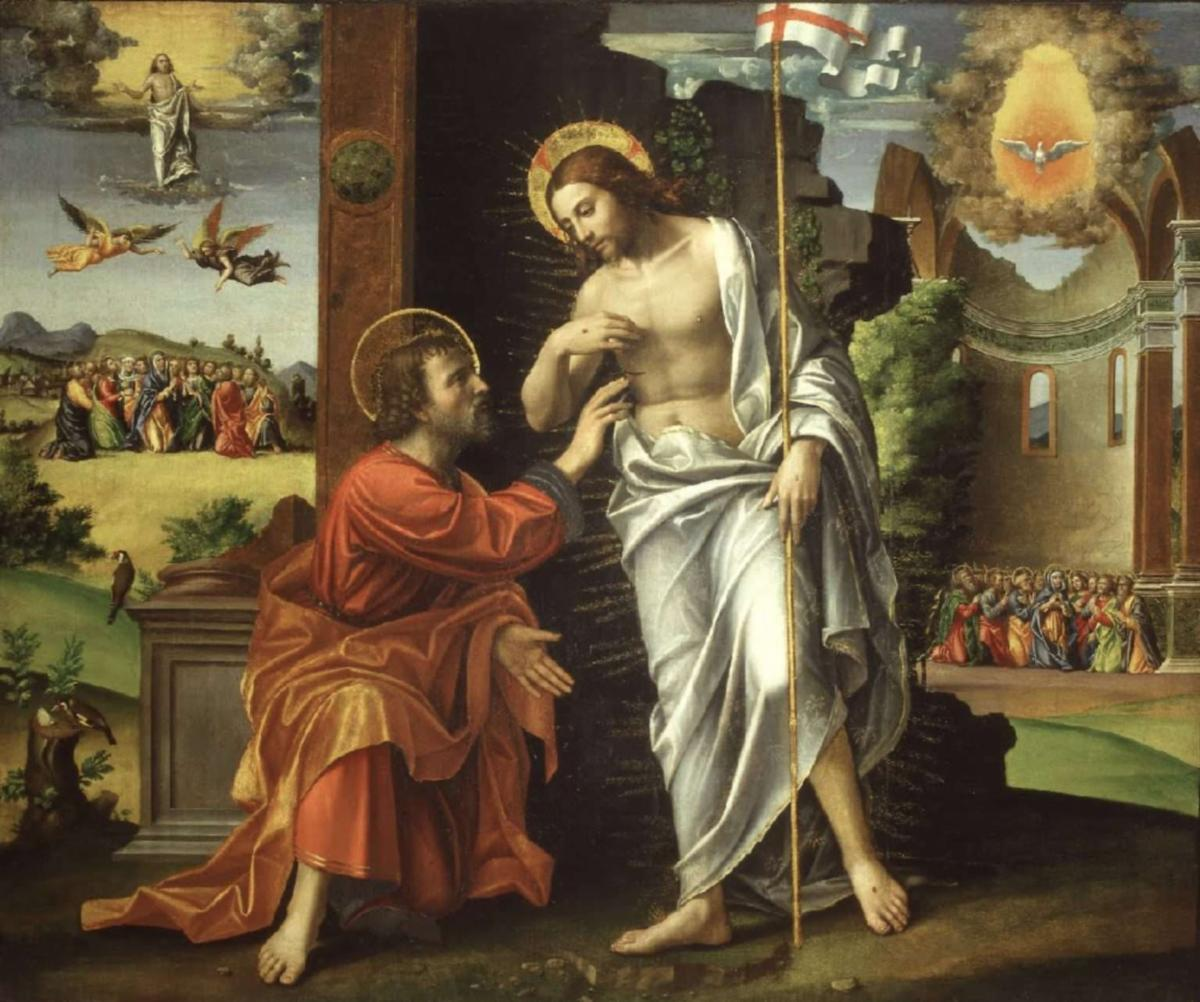
THE RECONCILING MISSION
If asked what our mission as Christ’s true followers is, the straightforward answer will always be the same: our mission is not really ours, it is God’s and Christ’s mission: to be reconciled to God, to one another, and to the whole of creation, and to promote this reconciliation in others.
The Christian people are the people of the Resurrected Christ. There would be no Christian Church without resurrection. There may have been a worthwhile corpus of ethical teachings by Jesus, and perhaps a school of followers who would proclaim the truths He set forth both with His words and deeds, but not the Body of Christ on earth, as we know it today.
It was unquestionably the resurrection event which gave rise to the powerful movement that has transformed so many people for more than twenty centuries now. Jesus’ first followers were totally transformed by His resurrection, and the powerful manifestation of the Holy Spirit in them which ensued, and this radical new movement spread like fire in a forest throughout the world in the next few decades.
This is what the Collect for this Sunday refers to when it speaks of “the Paschal mystery” that “established the new covenant of reconciliation.” The fact that Jesus was raised by God to a totally new dimension of life—a life of complete and perfect communion with the Father and the whole of creation—is the ultimate proof that the powers of evil and death of this world have been defeated by God’s unconditional love, which was perfectly manifested in His Son Jesus Christ.
But Jesus’ resurrection is not an isolated event whose sole purpose is to show us that God’s reconciling power of love is stronger than death. Jesus’ reconciling mission is to be continued by His followers. They also need to receive the transforming power from above, the one which gives them what St. Peter in his First Letter calls “”a new birth into a living hope.”
This is what the Apostle John narrates in chapter 20 of his gospel, when he talks about the events in the evening of that Resurrection Sunday. Jesus not only appeared among the frightened and confused disciples, assuring them that He was indeed risen, and gave them His peace. He also breathed the Holy Spirit of true rebirth upon them, and sent them out in the reconciling mission that He had been preparing them for.
Jesus’ words—spoken right after He tells His disciples to receive the Holy Spirit—“If you forgive the sins of any, they are forgiven them; if you retain the sins of any, they are retained,” have brought about a lot of theological controversy throughout the centuries.
Some have used them as the proof that He bestowed upon His closest followers—the predecessors of today’s ordained priests according to this interpretation—the power to pronounce the absolution of sins in God’s name.
Others argue this may have a more universal meaning, making us all responsible for the reconciled or unreconciled state of humankind, depending on our willingness to forgive one another.
In either case, the link between our new resurrected life in Christ by the graceful infusion of the Holy Spirit in us, and our reconciling mission—a mission that Jesus Christ Himself has given us—is undeniable.
We Christians are the people of the resurrection. And we are the people entrusted by Christ Himself to carry out God’s reconciling mission in the world.
Fr. Carlos Expósito, Rector
|
RETURN TO TOP
The Holy Journey
This Sunday's Reflection - April 5, 2026
Get it in PDF form with calendar
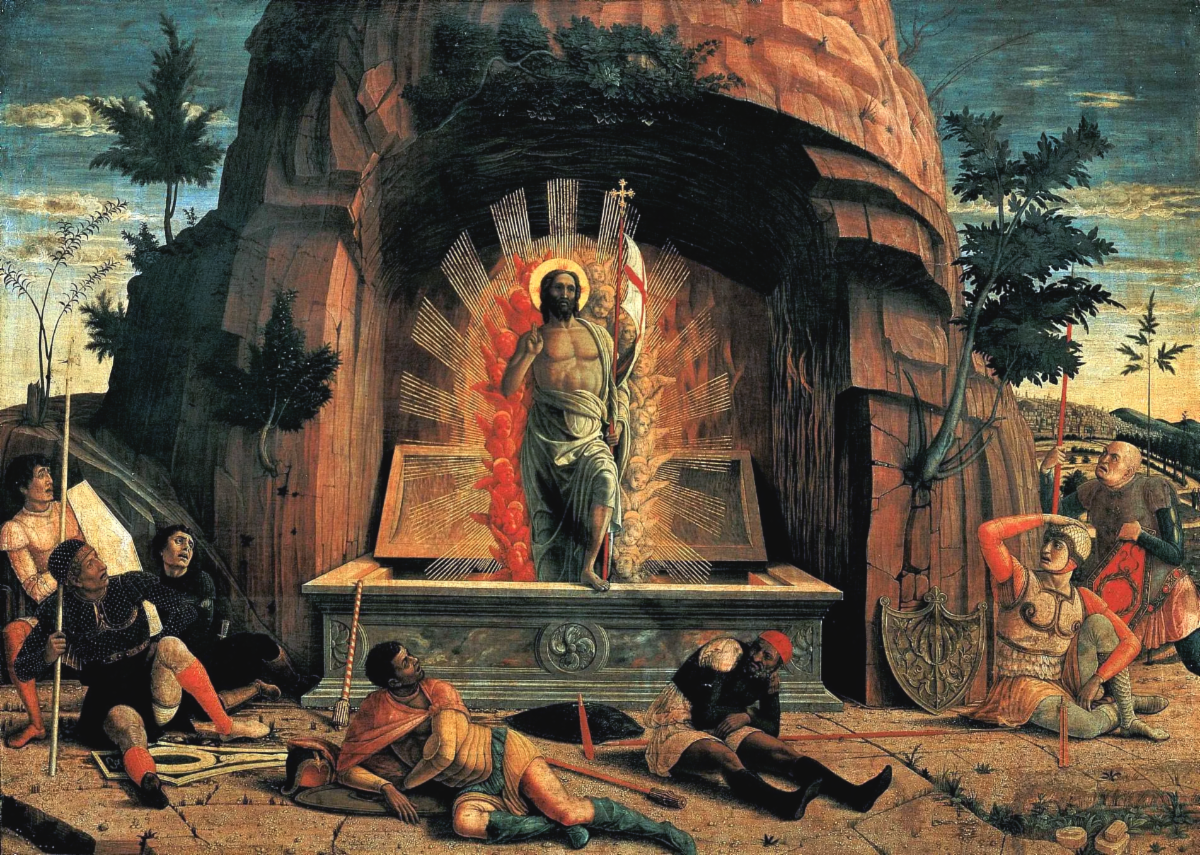
THE REAL PRESENCE OF HOLY WEEK
The following is an article from March 31st, 2026, originally written by retired priest Rev. Frank Dunn, for EDSD (the Episcopal Diocese of San Diego).
Holy Week is holy not because it is religious but because it is profoundly Real.
My first Holy Week as a new rector challenged me to line up all the necessary things and people for the Palm Sunday procession and dramatic reading of the Passion, the foot washing on Maundy Thursday, the Watch before the Blessed Sacrament on Maundy Thursday night, the Good Friday Liturgy including the Veneration of the Holy Cross, and the Great Vigil of Easter replete with two baptisms of young children. Before the Good Friday liturgy began, a choir member remarked, “You sure are making us come to church an awful lot this week!”
I was taken aback. It somehow hadn’t occurred to me that my enthusiasm for Holy Week didn’t extend to people who saw all those liturgies as a string of services that required a lot of work and a whole lot of churchgoing.
From then on, I had an annual project. Sometime early in Lent, I would begin unpacking what Holy Week was about. I’d send mailings, make announcements, encourage church school teachers to get kids on board, talk it up among parish leaders, write newsletter articles, and develop adult education courses. I guess some of those things might have had a positive effect.
But that project was nothing compared with my eventual discovery that the God we proclaim shows up in our ordinary experience. Holy Week and Easter, like the entirety of Jesus’ life and ministry, are not recollections of historical events, but paths to become aware of those themes and events in our very own experience.
Once, when my older daughter Sarah, was a little over two, she walked in the procession waving a little palm branch on Palm Sunday. I saw in a flash the Great Tradition, each generation grabbing a piece of the holy history and carrying it forward. In that way, we live Holy Week and Easter. The triumphal entry into Jerusalem is as much about you as it is about Jesus. In your life you’ve had your triumphs, perhaps when once you were on stage, applauded for your performance. Or when the air was electric with joy so palpable that even stones seemed to shout out in adulation. Sometimes such moments give way to deep disappointment, sorrow, maybe agony, as you get your own taste of Gethsemane, dreading the cup you know you must drink.
In a New England town, we had a Good Friday children’s liturgy. I would call children from the congregation and have them assume roles in the narratives of each of the stations of the cross. They would form tableaux of the scenes. Once, I called on a little tyke named Andrew to be Simon of Cyrene. I took his hand and helped him take the crude wooden cross from the acolyte, who was acting the part of Jesus. Andrew got scared after a few minutes and started to cry. The acolyte, facing away from him, turned around, bent down to console him, then whispered something in his ear, and once more took the cross, sending the sobbing Andrew back to his mama. That action has come to mean nearly the entirety of the incarnation for me: when we cannot bear what our humanity demands, down down down bends Jesus, taking the cross himself.
In another parish, I went to the day school for my very first Maundy Thursday children’s liturgy. The Director had five volunteers’ feet for me to wash. One backed out. But the remaining four children wanted both their feet washed. I taught them the first verse of that little Ghanaian folk song, “Jesu, Jesu, fill us with your love, show us how to serve the neighbors we have from you.” They squealed with delight, giggling as I poured water over their feet, and probably at the sight of the priest squatting to wash them.
I dried the last foot. The director, holding a little girl’s hand, said, “Father Dunn, Anna has taken off her shoe.” Anna was blind. Normally, when Anna came to chapel, she would often whine and cry. But here she came with her shoe and sock off her right foot, wanting me to wash it. I said, “Wonderful! Anna, we’d love to wash your foot!” The kids cheered and laughed as I poured water over her foot. Anna sucked on her pacifier and smiled. I washed and washed. Someone started singing, “Jesu, Jesu, fill us with your love,…” I could only see Jesus, the rabbi, scrunched down on the floor, washing the feet of his very blind and fearful disciples.
We touch something deep in these liturgies. And that something is the power of Life, of Resurrection, flooding us before we ever even get to “Alleluia” at the Great Vigil of Easter. Palms, foot washing, the Way of the Cross: they thread through human experience, in the lives of a Sarah, an Andrew, an Anna. Although many of my Holy Week anecdotes are about children, Holy Week is anything but a simplistic series of liturgies. They are complex, rich, suggestive.
Yet in my estimation, they are best understood as embodying Jesus’ most radical teaching: “Unless you become as children, you’ll never participate in the Kingdom of God.” Much like a warm hand that touches a knotty muscle, unleashing a flood of memories and sensations, these liturgies touch deep archetypes that flatten us with their power, yet raise us up to new visions of who we are and what we can become: whole, free, open, not unlike the children we were when we began to live.
I encourage you to attend services at your church this Holy Week. The road we travel in preparation for Easter is a holy journey that reveals God in amazing ways.
The Rev. Frank Dunn
|
RETURN TO TOP
In the Mind of Christ
This Sunday's Reflection - March 29, 2026
Get it in PDF form with calendar
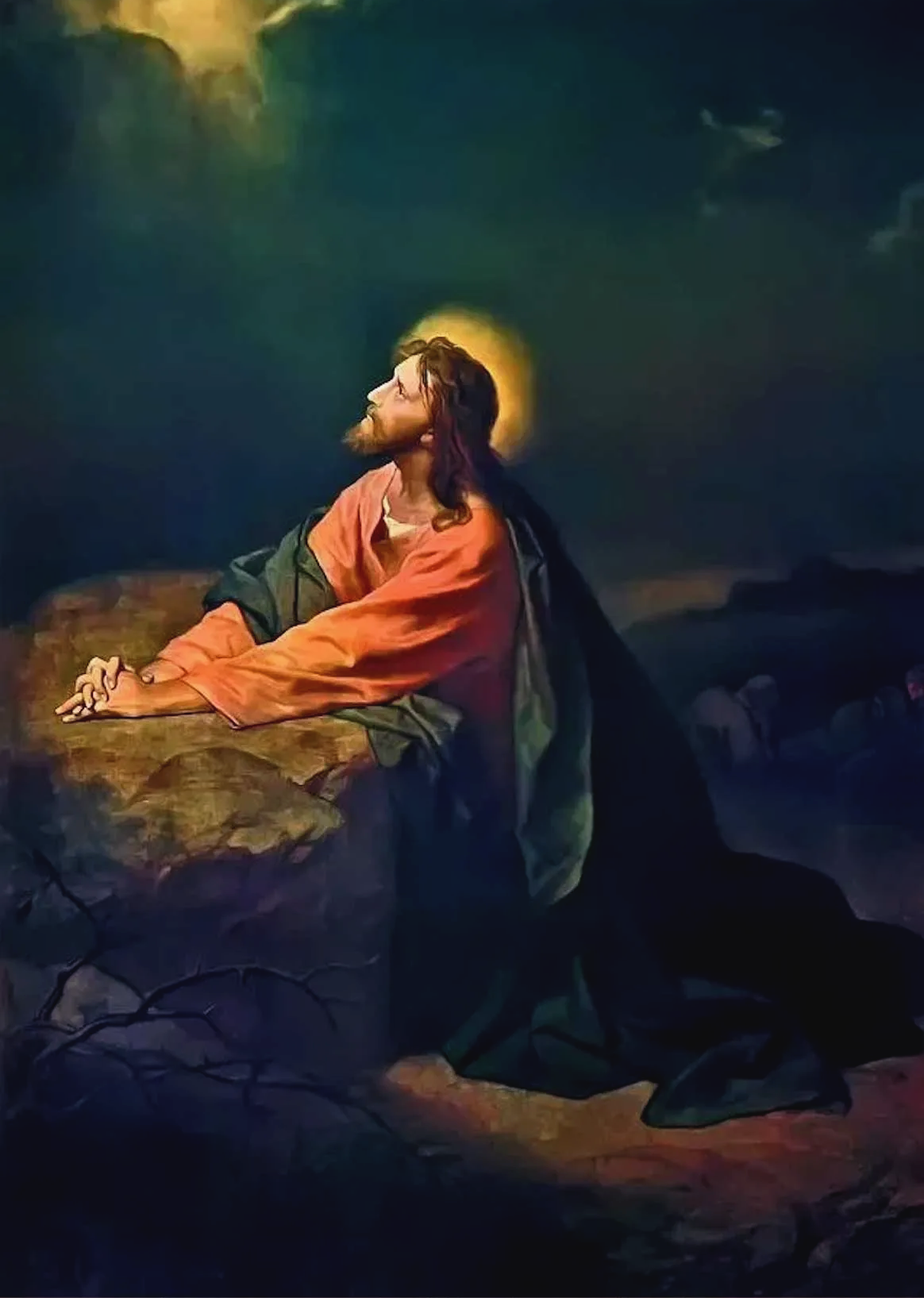
HAVING CHRIST'S MIND
Wouldn’t it be great to have Jesus Christ’s mind? We may think it to be greatly advantageous, since He was God’s beloved Son and hence wholly divine. So having His mind means to be able to understand and know all, to master the laws of the universe and how to to use them, and to understand human nature and the nature of every living being in this world.
Such great knowledge is something to be desired indeed. But wait, are we going down the right track here?
If this is so, how come Palm Sunday clearly reminds us how Jesus’ path went from “Hosannas” to “Crucify Him” practically a few hours later? Couldn’t He who knew all have averted this horrible thing from happening to Him? He certainly could, and yet, He chose not to.
Knowing “all”, or knowing the way God knows, is totally different from what we sometimes imagine. To really know is not simply to have an infinite accumulation of information at our disposal. The real knowledge is not that of the mind that accumulates information with the sole purpose of attempting to maneuver circumstances in such a way that it suits the mind’s self-centered interests, which usually include comfort, pleasure, and a sense of being in control.
But what life sooner or later teaches us is that there is no way in which the human mind can actually be in control. There will always be circumstances that overpower our human minds, and then pain, disillusionment, and frustration ensue.
In His prayer at the Garden of Gethsemane, Jesus prayed to God that the terrible passion and death that awaited Him would pass, but only if was God’s will, not His. The prayer may have been more rhetorical than a real petition, for Jesus probably already knew what the Father’s will was, but I can only make conjectures here.
Knowing the Father’s will for Him at that moment was terrible for Jesus. It would have felt better for Him to ignore it, but then, again, it is precisely this real and deep knowledge—the one which goes beyond what can be perceived as good or bad by our human minds—which made Jesus face His passion and death the way He did.
Jesus’ passion and death was not an act of suffering for the sake of suffering. It was not the whim of a cruel God who decided that His perfectly innocent beloved Son had to suffer a horrible death so that our sins might be forgiven. His sacrifice becomes meaningful as an act of humanly incomprehensible unconditional love. His knowledge of what unconditional love really means only made sense if He clearly showed that He was willing to live it out to its utmost consequences.
But His deep knowledge of God’s love also gave Him the assurance of the resurrected life that ensues after doing God’s loving will. And those who were with Him at that time witnessed to it, so that we can all know this truth, even if our human mind is limited.
Probably no one has expressed better what having the same mind as Christ means than St. Paul in his Letter to the Philippians 2:5-11, in what has been recognized as one of the first Christian hymns:
“Let the same mind be in you that was in Christ Jesus, who, though He was in the form of God, did not regard equality with God as something to be exploited, but emptied Himself, taking the form of a slave, being born in human likeness. And being found in human form, He humbled Himself and became obedient to the point of death—even death on a cross.
Therefore God also highly exalted Him and gave Him the name that is above every name, so that at the name of Jesus every knee should bend, in heaven and on earth and under the earth, and every tongue should confess that Jesus Christ is Lord, to the glory of God the Father.”
Let us bend our knees and pray we can also have His mind.
Fr. Carlos Expósito, Rector
|
RETURN TO TOP
To Be Unbound: More than Freedom
This Sunday's Reflection - March 22, 2026
Get it in PDF form with calendar
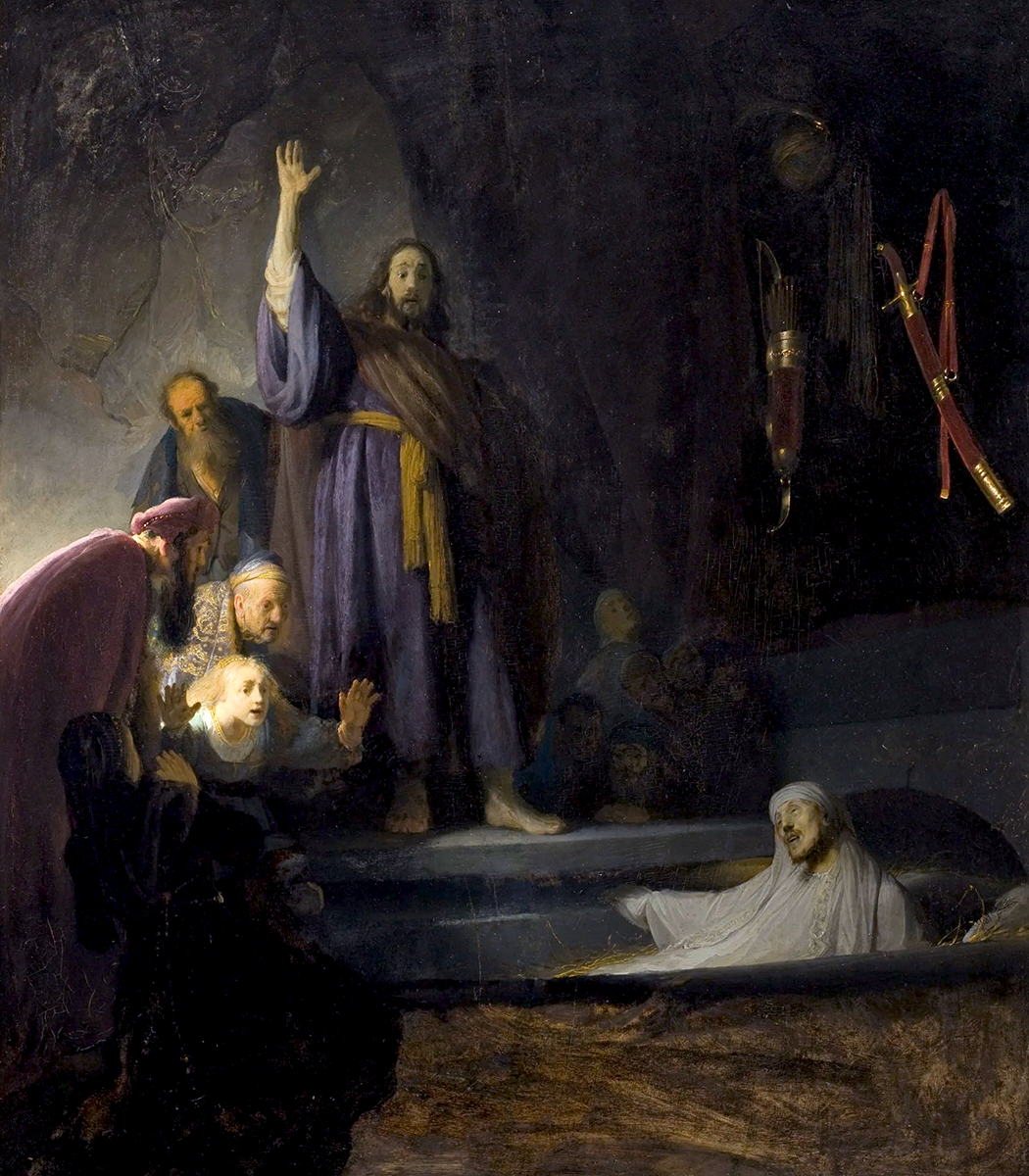
UNBOUNDED BY CHRIST'S LOVE
As we come to the last Sunday before Holy Week, the Collect reminds us that it is God’s power alone which “can bring into order the unruly wills and affections of sinners”, and that if we, through God’s grace, love what God commands and desire what He promises, then our hearts will “sure be fixed where true joys are to be found.”
This is a humble declaration of our lack of self-sufficiency to free ourselves from the powers of sin and death, and of our total reliance on God’s grace and power, through His beloved Son’s unbounded love for us, and the abundant flowing of the Holy Spirit in our lives, to affect this redemption.
Loving what God commands and desiring what He promises may sound sweet and easy, but in fact we need to realize how often our self-centered instincts and addictions prevent us from fulfilling this. Our minds have been so consistently molded to follow our impulses of self-preservation and self-gratification, to compete against others, and to reject those who look or think differently, that little space is left in our minds to follow the true teachings of Him who has come to show us the true way of unconditional love.
If we are familiar with the Sacraments of the church, we know that Baptism, the Sacrament that makes us part of God’s true family and Christ’s body—the Church—shows us that we need to die to our old self, and then be raised with Christ to our new life in Him.
The phrase “dying to our old self” may sound quite dramatic or even symbolic, but in fact unless it happens effectually there is little hope for us to be able to embrace the new joyful and abundant life we have been promised.
But here is the good news: we have to really desire this with our whole being, but Christ’s Spirit already living in us through our faith is the one who will carry out the transformation, only if we allow Him to.
The passage from the Book of Ezekiel this Sunday (Ezekiel 37:1–14) tells us about really dry bones in a valley that come back to life by the power of God’s Spirit. Though this is clearly understood to be symbolic and referring to the people of Israel in exile, and how God has promised to restore their lives, the passage is also a bold statement about God’s infinite power, surpassing our common understanding of things.
In his Letter to the Romans, chapter 8, verses 6–11, St. Paul makes a clear distinction and opposition between setting our minds on the flesh and setting them on the Spirit. The former equates death, whereas the latter means life and peace. It should be noted that the way St. Paul uses the term “flesh” here is not to refer to the body as something to be despised. The term is used by him to refer to those instincts and tendencies of our human nature that enslave us to sin and death.
Notice that he says to his readers “But you are not in the flesh; you are in the Spirit.” He does not mean his readers are no longer in the physical world—that would be illogical. What he does mean is that those who really follow Christ’s Way have the power of God’s Holy Spirit within them, already transforming their lives and giving them a foretaste of the true joys we have been promised in the fulfillment of our resurrected and glorified life in Him.
The Gospel reading for this Sunday brings us the narrative of Lazarus’s death and resurrection after four days. This is an extremely rich narrative with a multitude of aspects that could be the subject of sermons or reflections. However today I would like to call our attention to a single phrase, “Unbind him, and let him go.”
We know that it was the custom of the Jews to bind the corpses with linen stripes. The phrase may be simply taken at face value, as a command from Jesus to allow the resurrected Lazarus to have mobility and be set free. However, there might be a deeper meaning implied here. Lazarus had been bounded before his death by what our Collect this Sunday reminds us: the unruly wills and affections of sinners. His temporary physical death may have effected in him the death of his former old self, and now he needed to be unbounded to the new life given to him by Jesus Christ Himself.
May we be unbounded together with Lazarus.
Fr. Carlos Expósito, Rector
|
RETURN TO TOP
Through Him, Believing is Seeing
This Sunday's Reflection - March 15, 2026
Get it in PDF form with calendar
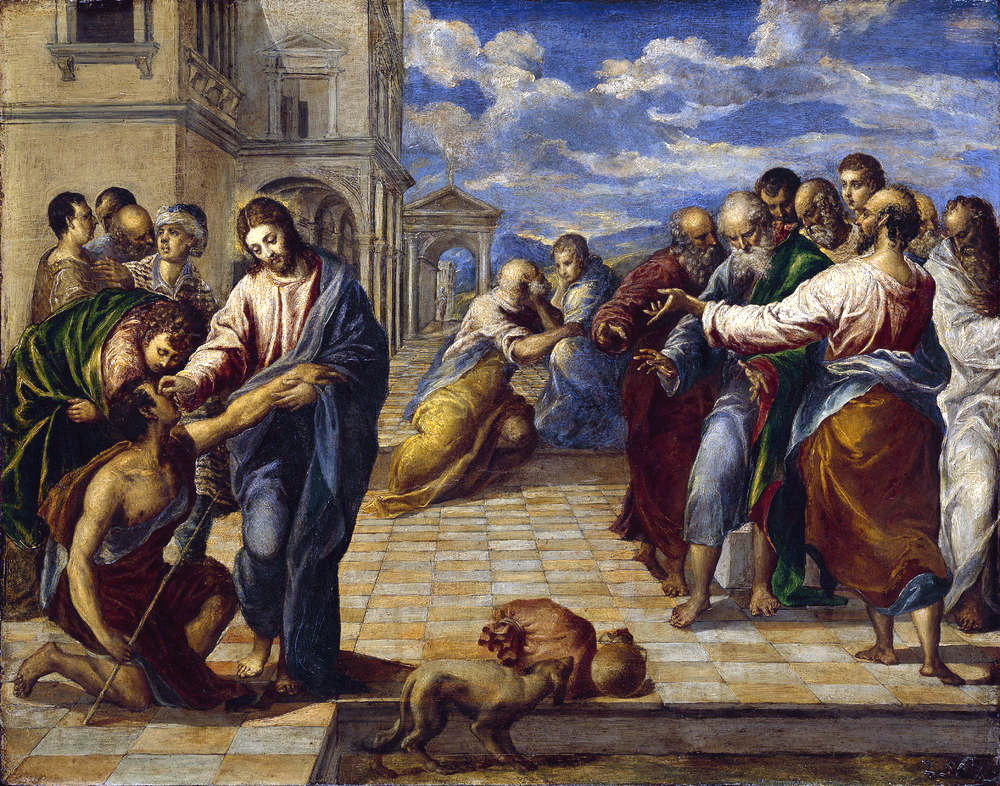
SEEING THROUGH GOD'S EYES
Our human experience teaches us how vital the sense of sight is for our daily lives. Not being able to see well, or not at all, due to the absence of light or to a defect of our eyes is a powerful hindrance and handicap.
There are people who have been born blind, and also those who have lost their sight at some point in their lives. With the advances of medicine, most eyesight deficiencies can now be cured, but unfortunately not all of them can.
Due to the significant role that seeing plays in our knowledge of the world which surrounds us, seeing has often been likened to knowing in our minds, and being enlightened is the expression we normally use to refer to inner spiritual awakening or revelation.
What we also have come to understand is that the way we perceive the world with our physical eyes is totally conditioned. It is not only conditioned by the physical laws of optics, which teach us how light does not always give us accurate perceptions of the objects around us, but also by the conditioning of our minds.
The way young children see the world, for instance, is quite different from the perception of adults. Children see with virgin eyes. They notice more, and they are in awe when they discover something new. Most adults, on the other hand, are so focused on their self-centered busyness, that they hardly notice the wonder that surrounds them. Unfortunately, with the increasing use of intelligent phones and tablets, even young children are now failing to notice the real world surrounding them.
What does it mean, then, to truly see? To see though God’s eyes?
In the reading from 1 Samuel this Sunday, the writer points out that God does not see people as we do, but He sees “with the eyes of the heart”, meaning that He can perfectly discern our true character and intentions, our true being, not based on physical appearance, but on the nature of our true self.
In his letter to the Ephesians, St. Paul calls Christ’s followers “children of light”, as opposed to the darkness in which they lived before they knew Christ. For St.Paul, living in the light is equivalent to doing what is pleasing to God, and the fruits of the light are to be found in “all that is good and right and true.”
This Sunday’s Gospel reading brings us the narrative in which Jesus heals the man who had been blind since birth. This narrative takes us through a battle between darkness and light in a deep spiritual sense.
The Pharisees, blinded by their narrow preconceptions about who can or cannot come from God, try by all means to discredit Jesus’ healing of the blind man, and even reject this person when he refutes their arguments and acknowledges that only one coming from God can do what He did.
It is significant to notice how this man who was born blind had more light in him that those who claimed to see, not only physically, but also with their minds.
Then Jesus summarizes the truth of this contradiction in these words, addressed to the spiritually blind Pharisees, “If you were blind, you would have no sin. But now that you say, ‘We see’, your sin remains.”
Seeing through God’s eyes, then, is essentially, as the Collect for this Sunday highlights, opening our hearts and minds to receive “the true bread of life which gives life to the world, that He may live in us, and we in Him.” In this mutual living we find the true life, and this life, as St. John clearly states in his prologue to his Gospel, “is the Light of the World.” May we always have this light and see.
Fr. Carlos Expósito, Rector
|
RETURN TO TOP
With Humility and Trust Comes Grace
This Sunday's Reflection - March 8, 2026
Get it in PDF form with calendar
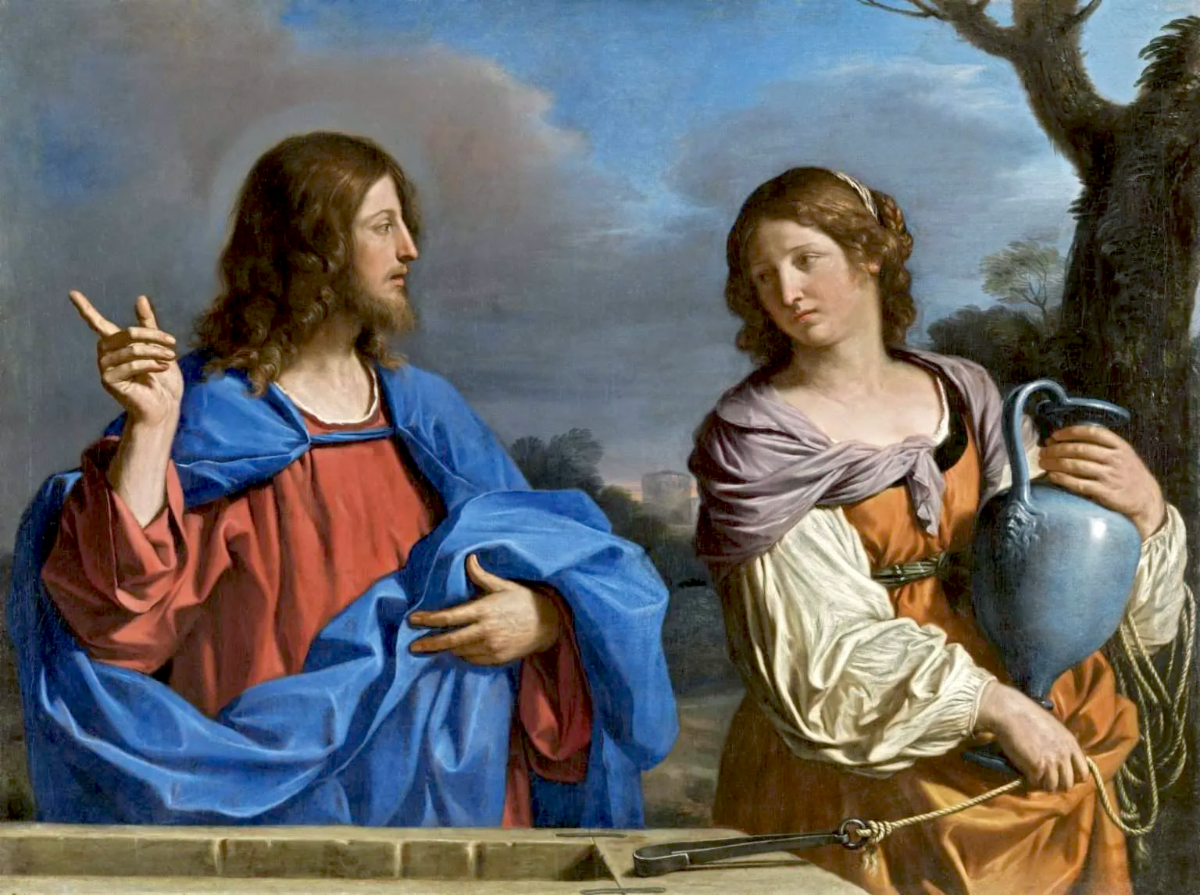
HOPE THAT DOES NOT DISAPPOINT
This coming Sunday invites us to sit with one of the most quietly revolutionary passages in all of Scripture: St. Paul’s Epistle to the Romans 5:1–11. In the midst of a season that calls us to self-examination and repentance, St. Paul speaks words that feel less like admonition and more like steady ground beneath our feet: “Since we are justified by faith, we have peace with God through our Lord Jesus Christ.” And then, even more daringly, he tells us that hope “does not disappoint.”
Those words sound differently depending on the kind of week we have had. Lent can sometimes feel like a spiritual endurance test. We examine our lives. We notice where we are dry, impatient, distracted, or afraid. We try to pray more honestly. We attempt to fast from habits that dull us. Yet St. Paul does not begin with our effort. He begins with what has already been given: peace with God. This is the peace that flows from being reconciled, embraced, justified by grace.
St. Paul insists that in Christ we are no longer negotiating with God. We stand, he says, “in grace.” The image is almost architectural: grace as the space in which we live and move. And yet, St. Paul does not pretend that suffering disappears. Instead, he weaves it into the story of hope. “We boast in our sufferings,” he writes. Suffering produces endurance, endurance produces character, character produces hope. This is not a glorification of pain. It is a testimony that nothing, not even hardship, falls outside the redemptive arc of God’s love.
As Christ’s followers in our own time, we know something about uncertainty. We live in a culture that often confuses hope with optimism. Optimism depends on favorable outcomes. Hope, in St. Paul’s vision, depends on God’s character. “God’s love has been poured into our hearts through the Holy Spirit.” Hope is not wishful thinking; it is participation in a love already at work within us.
The other readings this week echo this deep current of trust in the midst of dryness. In Exodus 17:1–7, the Israelites quarrel with Moses in the wilderness, crying out for water. Their thirst quickly becomes accusation: “Is the Lord among us or not?” It is a question that surfaces whenever we feel abandoned, whenever prayers seem unanswered. Yet water flows from the rock, reminding us that God’s faithfulness does not evaporate simply because our trust does.
Psalm 95 continues the theme, warning against hardening our hearts “as in the rebellion.” The psalm holds together two postures: exuberant praise and sober self-awareness. “Today, if you hear his voice…” The invitation is always present tense. Lent, perhaps, is mainly about softening what has grown hard, about allowing hope to irrigate dry places within us.
And then there is the luminous encounter in the Gospel of John 4:5–42, where Jesus meets the Samaritan woman at the well. Here thirst becomes a metaphor. Jesus speaks of “living water” that becomes in us “a spring gushing up to eternal life.” The woman arrives at the well alone, carrying the weight of her complicated history. She leaves as a witness, carrying good news to her community. Something in her has shifted from defensiveness to testimony.
In each of these texts, thirst, whether physical or spiritual, exposes vulnerability. The Israelites thirst in the desert. The psalmist thirsts for attentive hearts. The Samaritan woman thirsts for dignity and truth. And St. Paul reminds us that beneath all our thirst runs a deeper reality: “While we were still weak, at the right time Christ died for the ungodly.” God’s love precedes our response. It meets us before we tidy ourselves up.
What might it mean, this Lent, to live as though hope truly does not disappoint?
Perhaps it means trusting that the slow work of endurance in our own lives is not wasted. The patience we practice in strained relationships, the prayers we offer when words feel thin, the faithfulness of showing up, are not small things. They are the shaping of character. They are the soil in which hope grows.
Perhaps it also means loosening our grip on self-reliance. If hope is rooted in God’s poured-out love, then we are not its engineers. We are its recipients. The Collect for this Sunday asks God, who sees that we have no power in ourselves to help ourselves, to keep us both outwardly and inwardly. It is a prayer of humility and of trust. We acknowledge our limits, not as a confession of defeat, but as an opening through which grace flows.
So we continue our Lenten journey, not pretending we are never thirsty, not denying the desert places, but listening for water in unlikely rocks, watching for grace in conversation at unexpected wells, and daring to believe that the hope placed in us by the Spirit will not, in the end, disappoint.
Fr. Carlos Expósito, Rector
|
RETURN TO TOP
Placing Faith in His Help
This Sunday's Reflection - March 1, 2026
Get it in PDF form with calendar
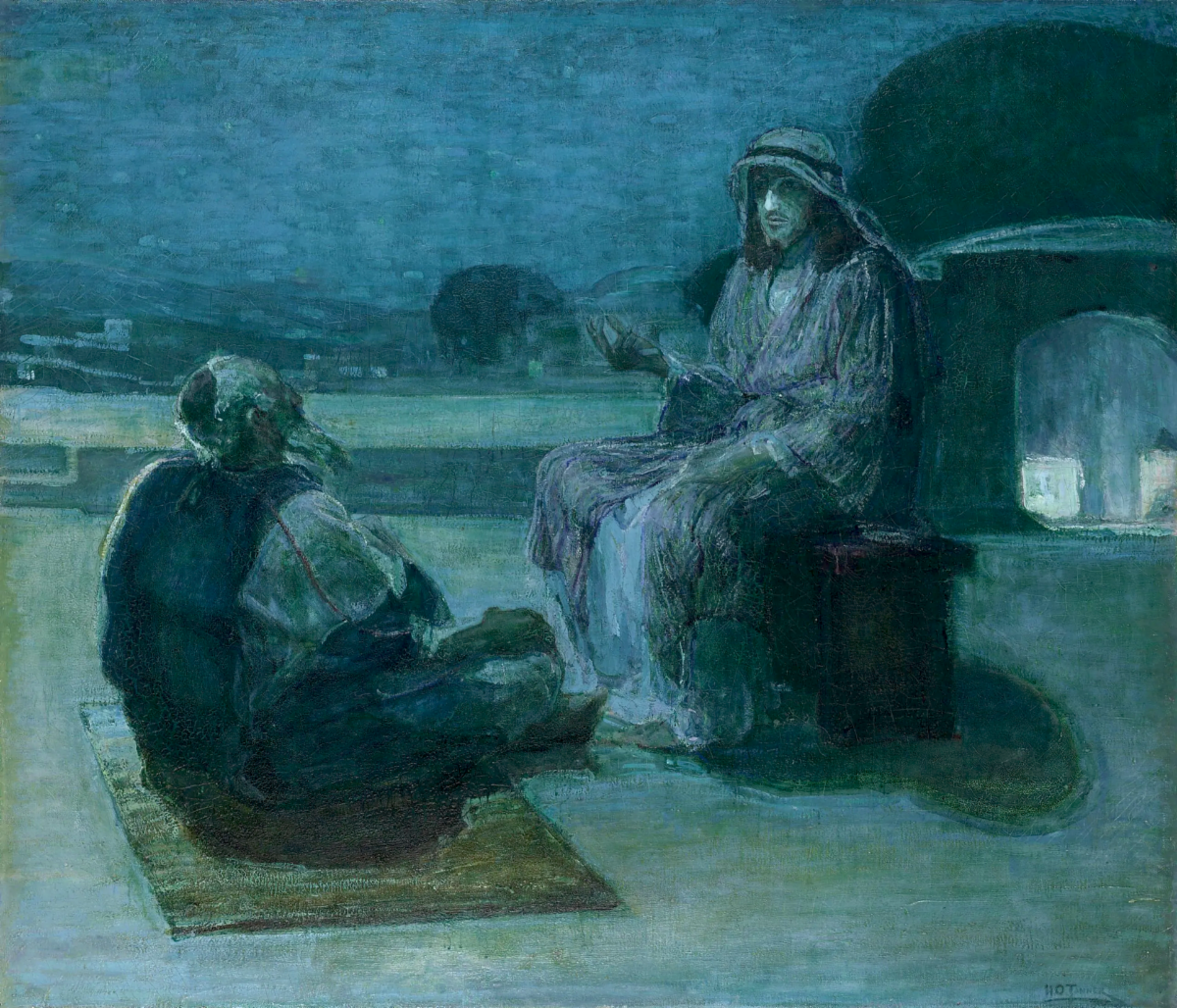
BELIEVING THE PROMISE
On the Second Sunday in Lent, the Collect in the Book of Common Prayer asks God to “deliver us from all our sins,” to “comfort us in all our adversities,” and to keep us in “perpetual joy and felicity.” It is a bold prayer. It assumes that we need deliverance, that we will face adversity, and that joy is not something we manufacture but something God preserves in us. That prayer provides a thread that runs through this Sunday’s readings: righteousness is not something we achieve for God; it is something we receive by trusting God.
In the Epistle to the Romans, chapter 4, Paul refers to Abraham and makes a startling claim: Abraham was reckoned as righteous, not because of what he accomplished, but because he believed God. Paul contrasts wages and gift. Wages are earned; they are owed. A gift is freely given. Paul insists that Abraham’s righteousness belongs in the second category.
That can be unsettling. We are used to earning things. We measure performance at work, at school, and even in our relationships. It is not surprising that we sometimes carry that same logic into our life with God. “If I pray more, perhaps God will be more pleased.” “If I serve more, perhaps I will finally feel secure.” Lent can quietly become a season of spiritual wages, like an attempt to prove something to God or to ourselves.
But Paul gently pulls that scaffolding away. Righteousness begins not with our effort, but with trust. God “calls into existence the things that do not exist.” The initiative belongs to God. Our part is to believe the promise.
That promise first comes to us in this week’s reading from the Book of Genesis, chapter 12. Abraham is told to leave his country, his kindred, and his father’s house. There is no detailed map, no five-year plan but only a promise: “I will bless you.” And Abraham goes. His righteousness looks very ordinary at first. It looks like packing up; like saying goodbye, or stepping into uncertainty. But faith, in this story, is not a feeling of certainty; it is movement in response to God’s word.
Many of us know what that feels like. A change in work. A shift in family life. A diagnosis. A new responsibility we did not seek. We rarely receive full clarity before we are asked to move. Like Abraham, we often walk with only a promise in hand. Trusting God in those moments may be closer to righteousness than any spiritual accomplishment we can list.
Psalm 121 deepens that posture of trust. “I lift up my eyes to the hills; from where is my help to come?” The answer is simple and profound: “My help comes from the Lord.” The psalm repeats the word “keep.” The Lord will keep you; The Lord will watch over you, The Lord will preserve you.
We know how easily our eyes drift to other hills. The headlines. The markets. The test results. The state of the world. We look for stability wherever we can find it. The psalm does not deny danger or difficulty. Instead, it redirects our gaze. We are not the ultimate keepers of our lives. God is. That, too, is an expression of righteousness in Paul’s sense: trusting the keeper more than our own vigilance.
In the Gospel, we meet Nicodemus in Gospel of John 3. He comes to Jesus at night. He is curious, cautious, perhaps a little confused. He is a serious and faithful man, yet he struggles to understand what Jesus means by being “born from above.” Jesus speaks of new birth, of the Spirit’s movement, and then of love: “For God so loved the world…”
Nicodemus represents many of us. We may be committed and thoughtful. We may know the tradition well. Yet when it comes to grace, we still find ourselves puzzled. We are more comfortable with effort than with gift. We understand improvement better than rebirth.
But new birth is not something we accomplish. It is something we receive. Just as Abraham received a promise and trusted it, just as the psalmist entrusted himself to the Lord’s keeping, so Nicodemus is invited to trust a love that precedes his understanding.
Taken together, these readings suggest that Lent is less about proving our devotion and more about deepening our trust. The disciplines of this season: prayer, fasting, generosity, are not wages we offer to God. They are ways of loosening our grip on self-sufficiency. They remind us that we are not saved by our performance, but by God’s promise.
Perhaps the invitation of this Sunday is simple. Why are we trying to earn what has already been given? Where might God be calling us to take one faithful step without having the whole journey mapped out? What hills have captured our gaze? And what would it mean, today, to lift our eyes again and say, “My help comes from the Lord”?
Fr. Carlos Expósito, Rector
|
RETURN TO TOP
Trust, Obedience, and Grace
This Sunday's Reflection - February 22, 2026
Get it in PDF form with calendar
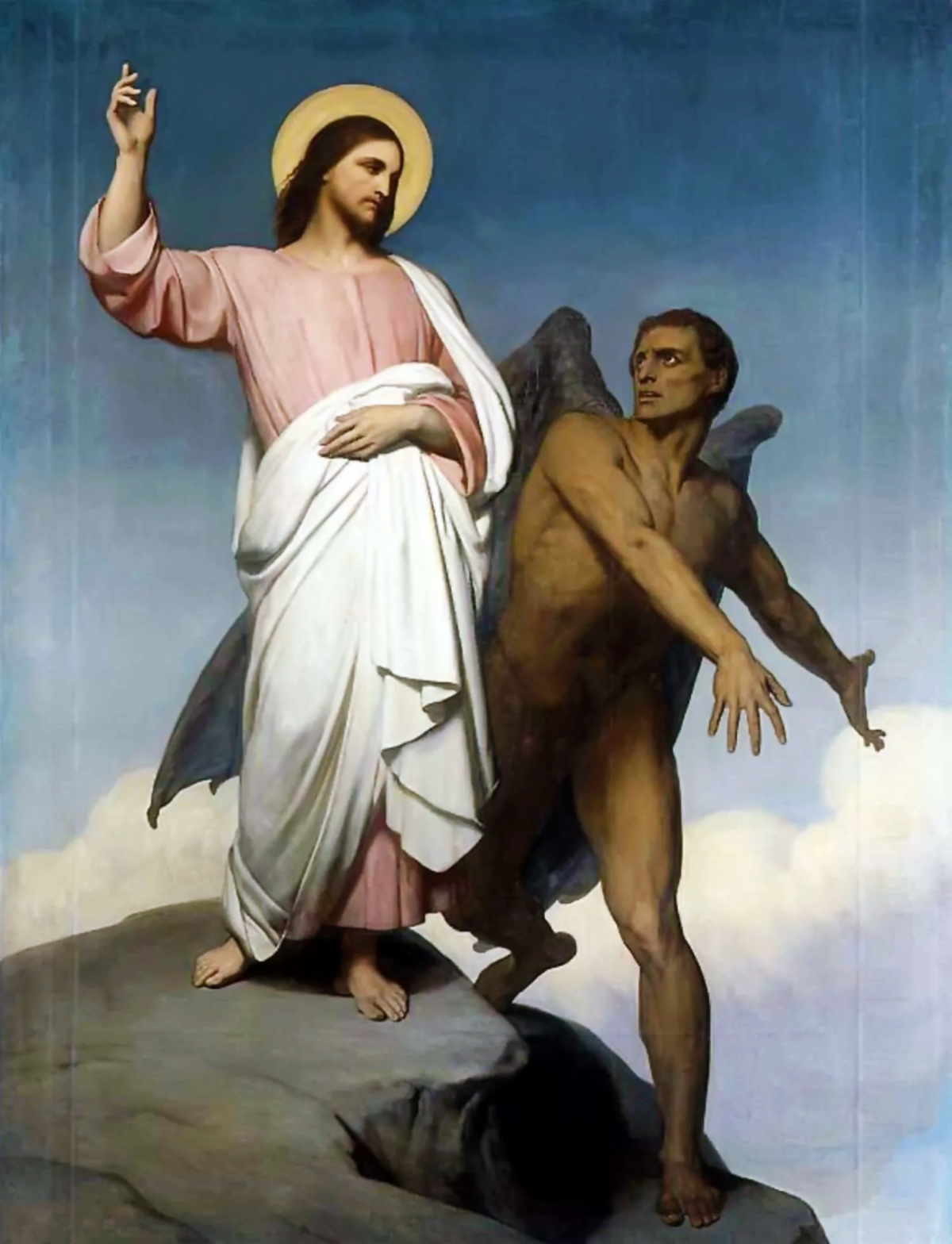
MIGHTY TO SAVE
Lent begins not with triumph, but with testing. It does not begin with certainty, but with vulnerability. And yet we pray to discover that God is “mighty to save.”
In the Gospel of Matthew, Jesus is led by the Spirit into the wilderness. That detail matters. The wilderness is not an accident; it is part of the journey. Jesus is tempted in three fundamental ways: to turn stones into bread, to throw Himself down for spectacle and divine protection, and to grasp power over the kingdoms of the world. In each case, the temptation is not simply to do something “bad,” but to define His identity apart from trusting obedience to the Father.
The story from Book of Genesis echoes this pattern. The first humans are not tempted with obvious evil. They are tempted with a distortion: “You will be like God.” The serpent plants the suspicion that perhaps God is withholding something good. Temptation begins when trust is eroded. The fruit is attractive; the logic seems plausible. The deeper issue is not hunger or curiosity, but the desire to secure life on our own terms.
St. Paul, writing in his Epistle to the Romans, frames this drama in sweeping terms: through one man’s disobedience many were made sinners; through one man’s obedience many will be made righteous. Lent reminds us that temptation is not a minor moral inconvenience. It is woven into the human story. And yet grace is greater still.
So what is a true understanding of temptation?
First, temptation is not sin. Jesus was tempted and yet did not sin. To be tempted is to be human. We are “assaulted by many temptations,” as the Collect for this Sunday says, not because we are uniquely weak, but because we live in a fractured world. In our time, temptations often come dressed in respectable clothing: relentless consumerism, the illusion of self-sufficiency, the craving for attention and validation, the quiet despair that whispers nothing will ever change. We are tempted to reduce life to comfort, faith to private opinion, and neighbor to competitor.
Second, temptation often appeals to something good but twists it. Bread is good. Safety is good. Influence can be good. But when these become ultimate, when they replace trust in God, they enslave rather than free. In a culture that prizes autonomy and control, we are tempted daily to believe we can save ourselves: through technology, through ideology, through accumulation, through denial of our limits.
This is why the Collect’s plea is so urgent: “Come quickly to help us.” Lent is not a season of heroic self-improvement. It is a season of honest dependence. God “knows the weaknesses of each of us.” That line is profoundly personal. Our temptations are not generic; they touch our particular histories, fears, and longings. And yet the promise is equally personal: “let each one find you mighty to save.”
In Christ’s obedience, we see what humanity was meant to be. Where Adam grasped, Jesus trusted. Where suspicion poisoned, obedience healed. Where sin spread, grace abounded all the more. God’s saving power is not abstract. It is embodied in a Son who entered our vulnerability and remained faithful.
As we begin Lent, perhaps the most faithful response is not to make grand promises, but to practice small, steady trust. Fasting may reveal our attachments. Prayer may uncover our restlessness. Almsgiving may loosen our grip on what we thought we needed. These are not ends in themselves; they are ways of clearing space to discover again that God is indeed “mighty to save.”
Fr. Carlos Expósito, Rector
|
RETURN TO TOP
To Become Our Glorious Selves
This Sunday's Reflection - February 15, 2026
Get it in PDF form with calendar
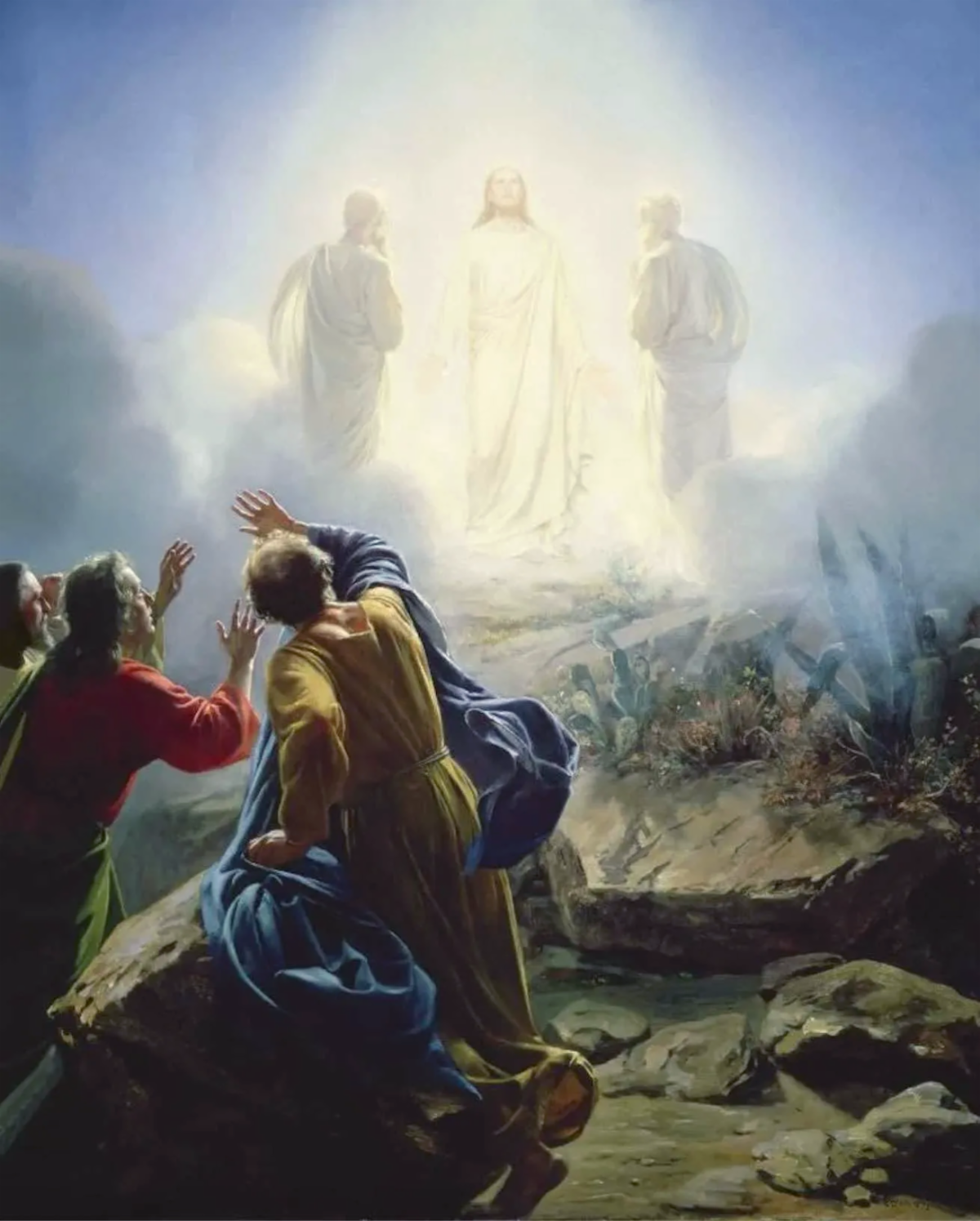
WHY LISTEN
TO HIM?
If a caterpillar had a conscience similar to ours, and had never heard anyone tell it that it would one day be a butterfly, would that caterpillar be easily convinced that is what it would become? Certainly not. Faith would have to enter the equation here.
This is the subject of a story I read several decades ago, and the reason why I am bringing it up is because when we are in the last week of the season after the Epiphany, we always use the readings of the Transfiguration, and this is where we are in the Christian year right now.
The word for Transfiguration in the original Koine Greek is transcribed as metamorphosis, the same term we use to describe the process that a caterpillar undergoes to become a butterfly. The depiction we have in the Gospels about this event, witnessed only by three of the inner circle of the twelve—Peter, James, and John—is of Jesus’ face shining like the sun and His clothes becoming dazzling white.
This image showed these three disciples a glorified Jesus. We could say that Jesus Himself had become the brightest of lights, as if portraying what He had said about Him being “the light of the world.”
But Jesus did not appear alone in this vision. He was accompanied by two well known characters who epitomize the Law and the Prophets for the peoples of Israel—Moses and Elijah. This vision was not only a presentation of Jesus in His ultimate glorified way, but also a visual statement that the Law and the Prophets are recapitulated in His person.
Now the Transfiguration was for these three disciples, not only an awesomely extraordinary visual experience, but an auditory one as well. It was accompanied by a heavenly voice addressed to them, saying, “This is my Son, the Beloved; with Him I am well pleased; listen to Him!”
But let us notice that “listen” in this message is not simply “hear”, but “hear and heed what he says.” But why should the disciples listen to Him?
Was this a command from a King who wants the ones He rules over to do His Son’s will, simply because that pleases Him? Why should we listen to Jesus?
Let us go back to the story of the caterpillar. Why should the caterpillar listen to anyone telling it the “nonsense” that it would one day be a butterfly? Does it make any sense? We know it does make sense, but the supposed caterpillar in this story has not heard of such a thing happening, nor has it witnessed it.
Now the three disciples had witnessed something extraordinary happening to Jesus. They had heard the voice coming from above. But did that give them the certainty that by following Jesus’ Way they would eventually share the same fate? After all, Jesus was God’s beloved Son. He was extraordinary. But were they even deserving of such a wonderful fate?
This is the question we keep on asking ourselves, even when Scripture and our faith tell us to believe that we will share in Jesus’ glory if we follow His Way. Is it easy to believe that we, with our faults, our petty selfishness, even our cruelty sometimes, may one day become pure light? Isn’t it unthinkable? But what if we are not becoming something we are not, but simply becoming what we already are?
If we believe what the First Book of the Bible tells us, that we have been created in God’s image and likeness, then it should follow that we are beings of light, just as He is light. Just as the caterpillar and the butterfly are not really two distinct species but two different stages of the same species, so this present tainted stage of our humanity and the luminous stage belong to one and the same humanity that God created in His image.
But just as the caterpillar needs to enter the cocoon and undergo a rather painful process to become the butterfly, so must we die to our old sinful self before our resurrected glorious being can be manifested in our lives.
Fr. Carlos Expósito, Rector
|
RETURN TO TOP
Liberty to be True, Generous, and Sincere
This Sunday's Reflection - February 8, 2026
Get it in PDF form with calendar
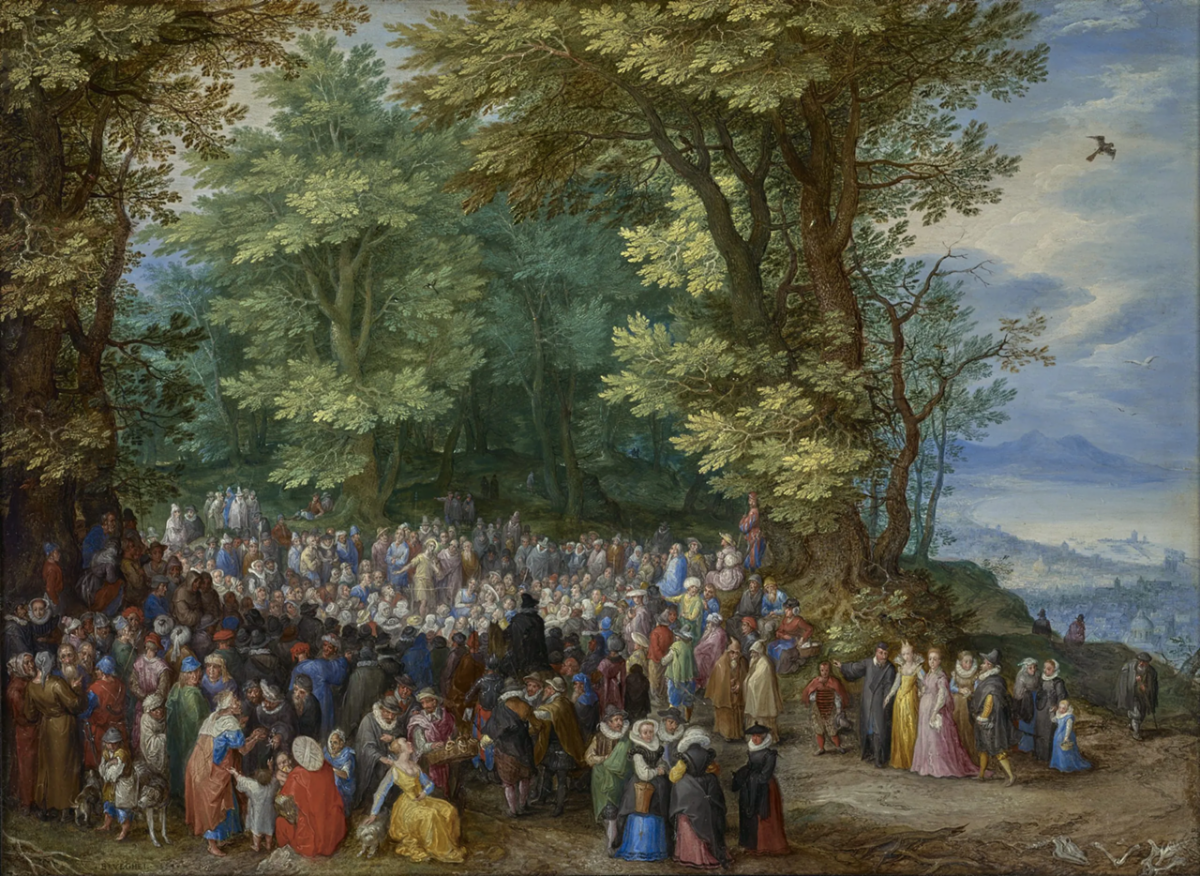
FREEDOM FOR
AN ABUNDANT LIFE
The Collect for this Sunday asks for something both daring and deeply practical: “Set us free, O God, from the bondage of our sins, and give us the liberty of that abundant life…” It assumes two things we do not always like to admit. First, that we are bound by habits, fears, patterns of self-protection, ways of seeing the world that diminish our souls. And second, that freedom is not merely the absence of constraint, but the presence of a life so full it can only be duly called abundant.
St. Paul, writing to the Corinthians, knows how easy it is to miss that kind of freedom. When he first came to them, he says, he did not arrive with eloquence or philosophical brilliance. He came in weakness and fear, speaking simply of Jesus Christ, and Him crucified. Paul is not rejecting intelligence or learning; he is rejecting the temptation to make faith into a performance, or a system we can master. If the gospel depends on our cleverness, our moral polish, or our persuasive skills, then it is no longer Good News. It becomes just another arena in which we try to prove ourselves.
Instead, Paul insists that true wisdom comes as a gift, revealed by the Spirit. It is “God’s wisdom, secret and hidden,” not because God enjoys keeping secrets, but because it cannot be grasped through control or self-assertion. It is known only through trust. And that is where freedom begins.
Bondage often looks respectable. It can sound like competence, certainty, or religious correctness. The Corinthians were tempted to measure spiritual life by impressive speech and visible strength. We are tempted to measure it by productivity, by being right, by keeping everything running smoothly. Even our faith can become another thing we manage. But Paul reminds us that the heart of Christian life is not mastery but surrender; not passivity, but a willingness to let God define what really counts as wisdom, power, and success.
Isaiah gives this surrender a concrete shape. The prophet speaks to people who look serious about religion: they fast, they pray, they seek God’s will. Yet God tells them their worship rings hollow because their daily lives remain unchanged. True devotion, God says, looks like loosening the bonds of injustice, feeding the hungry, sheltering the homeless. Freedom from sin is never only about personal morality; it is about being released from the self-centered life that leaves others crushed under our indifference.
Psalm 112 shows us what this liberated life looks like when it takes root. The righteous are described as generous, steady, unafraid. Their hearts are firm because they trust in the Lord. This is not a portrait of anxious rule-keeping, but of a person whose inner life has been reordered. When we are no longer consumed with protecting ourselves, we become free to give, to act justly, to stand in the world without fear.
Jesus brings all of this into sharp focus in the Sermon on the Mount. “You are the salt of the earth… You are the light of the world.” He does not say, “Try harder to become salt and light.” He says that, by belonging to Him, we already are. The danger is not that we are inadequate, but that we forget who we are and hide it. When faith is reduced to private belief or moral anxiety, its light dims. When it is lived as trust in God’s self-giving love, it shines naturally—often without our even noticing.
The abundant life promised in the Collect is not a life without struggle. Paul himself knew fear and weakness. Jesus speaks of light in a world that often resists it. Isaiah names injustice that does not disappear overnight. Freedom, in the Christian sense, is not escape from difficulty; it is release from the lie that we must save ourselves.
In daily practice, this freedom may look small. It may be the courage to speak honestly when we would rather impress. It may be the decision to listen instead of defending, to give instead of hoarding, to rest instead of proving our worth through constant activity. It may be the quiet trust that God’s Spirit is already at work, even when we feel inadequate or unsure.
As we move through this season after Epiphany—a season of light—these readings invite us to notice where we are still enslaved, and to ask God not simply for forgiveness, but for liberty. Liberty to live truthfully. Liberty to love generously. Liberty to let our lives, imperfect as they are, bear witness to a wisdom deeper than our own.
Fr. Carlos Expósito, Rector
|
RETURN TO TOP
The Authentic Way of Love
This Sunday's Reflection - February 1, 2026
Get it in PDF form with calendar
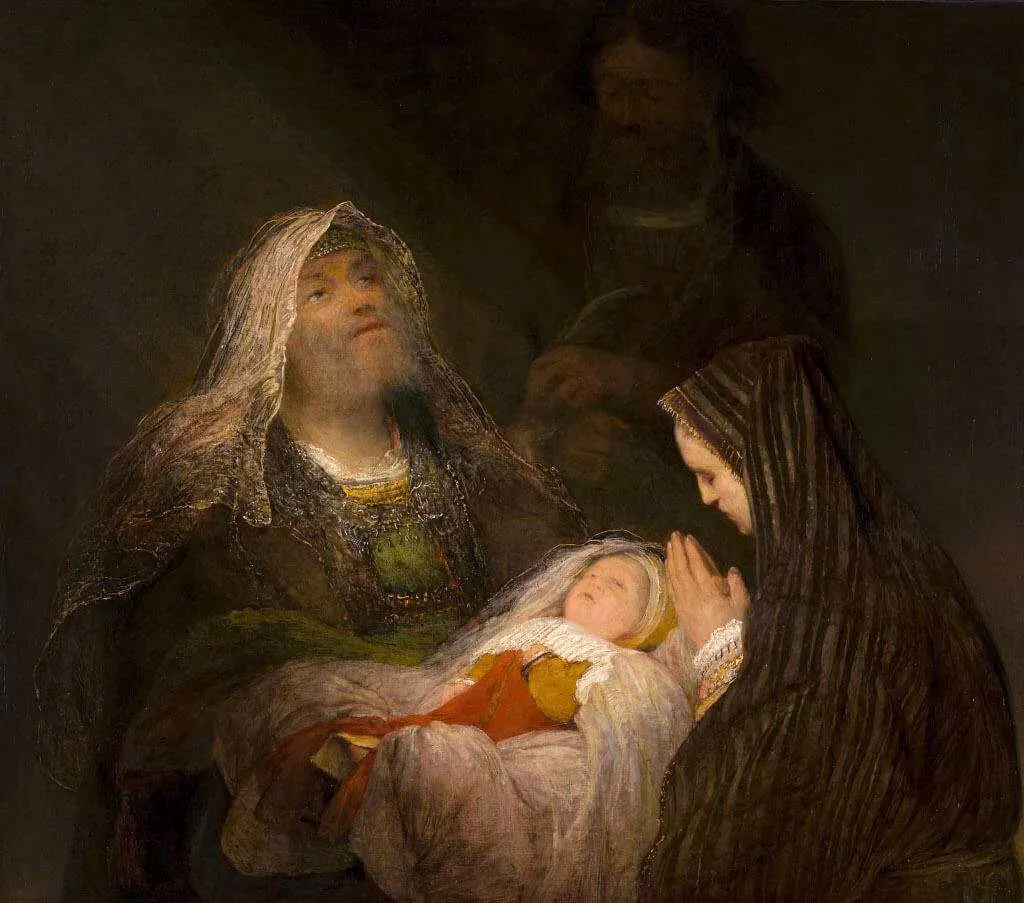
BEING PRESENT
In this world of global communication, it would seem that today we can all be present to one another much more easily and readily than decades ago. However, are we really present when we rely more and more on electronic communication as a substitute for face-to-face presence? Something to ponder on.
It would be unfair to downplay the undeniable usefulness of distance communication that telephony brought about in the last century, and that has been greatly enhanced with the advancement of mobile phones, personal computers, tablets, and other devices. All this has enabled us to communicate instantly with our family, friends, coworkers, and people living on the opposite end of the earth.
Electronic social media has practically made it available for most people on the planet to become communicators, and we now meet people online whom we will probably never meet in person. Influencers count the rising number of online followers proudly, knowing it will give them financial profit, and call them “friends”. But how authentic is this sort of communication?
Are we really present when we follow someone online? Is this person by our side in our moments of need of a real presence, or the other way around? What does real presence actually mean?
Being present involves a real and vulnerable relationship with the other person. And relationships imply personal connection. It means gradually getting to know (always respecting the other person’s privacy and the extent to which they allow us to interact with them) how the other person actually lives, what they feel, what makes them happy or sad, what they have or lack, what they look like at different times of the day—not what they decide to show on a screen, but the real person they are.
This is what Jesus meant when He told those who asked them where He was staying, “come and see.” He did not mean to take a peep at the place where He was staying, and notice how messy or tidy it looked. He meant to share real time with Him, to do things together, to listen to His teachings, and watch Him interact with people. To be really present to Him, and Him to them.
Being present to our Creator also implies a personal relationship with Him. It means being attentive to the ways in which God communicates with us, and responding to this communication. We should not necessarily expect to hear God’s voice speaking to us, although this can never be totally discarded. But we can find His voice in Holy Scripture, in what the Saints throughout the centuries have written about their experience with God, in the inspiration we receive when we pray or when we dream, in the insights we get when we interact with other believers, in the way Jesus is shown to us in the face of the needy and the oppressed, in the wonder of nature, and in so many other unpredictable ways.
In this week’s celebration of the Presentation of Our Lord in the Temple we talk about Jesus being presented to the Father. But we should also notice Joseph and Mary being present to the Lord. We should notice Simeon and the prophet Anna being present to this unique moment, and how this presence made the greatest of differences in their lives.
The writer of Hebrews reminds us that what makes Jesus a unique and real high priest is His presence among us, in the flesh, as a human being, partaking our fragility and our humanness, even to the point of suffering the cruelest of deaths on a cross. “Because He Himself was tested by what He suffered, He is able to help those who are being tested,” he states.
Being really present can be uncomfortable because it implies “rejoicing with those who rejoice, and crying with those who cry.” Being present is not being there for others as an attentive spectator, or as a scrutinizer with psychological curiosity, but being in the other person’s shoes, sharing their joy and their sadness, their gains and their losses, and showing compassion in a concrete way, the authentic Way of Love that Jesus showed us in His person.
Fr. Carlos Expósito, Rector
|
RETURN TO TOP
Know That God is At Work
This Sunday's Reflection - January 25, 2026
Get it in PDF form with calendar
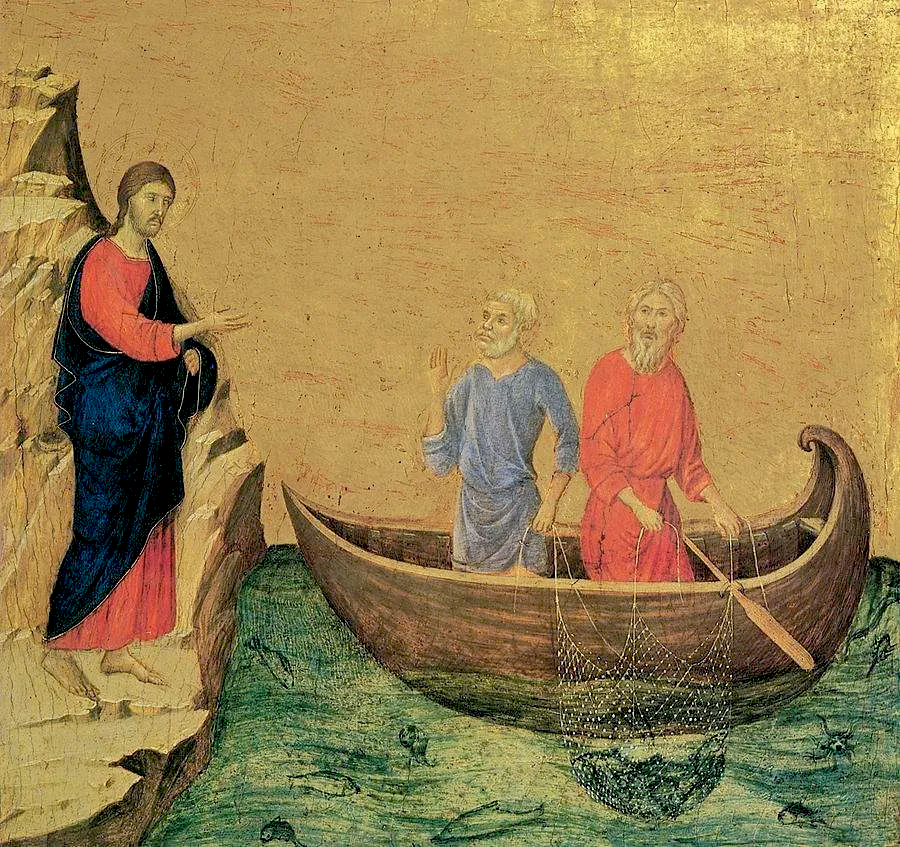
TOO MUCH LEAVES
TOO LITTLE—BUSYNESS KEEPS US FROM FAITH
This text comes from an article originally written by Marcia Hotchkiss for The Living Church’s journal, The Covenant.
Being in a rush and trying to do too many things at once seems to be a common complaint in contemporary culture. Recent Pew Research surveys indicate that 52 percent of Americans report trying to do more than one thing at a time and 60 percent say they are too busy to enjoy life. And when parents of children age 18 and under are surveyed, 74 percent report that their busyness keeps them from enjoying life. In 2016 the World Health Organization and the International Labour Organization estimated that because of working 55 hours a week or more, 398,000 people died from strokes and 347,00 died from heart disease each year.
In a 2024 article in The Atlantic, Arthur Brooks points out that in America busyness confers social status and importance. Furthermore, work performance and busyness are positively correlated. Think of a simple social interaction when someone asks another, “How are you?” If the response is “I’m very busy,” we assume the person is also productive, which is not necessarily true. In 2021 the University of Pennsylvania and UCLA researchers found that the optimal free time in a working day is 9.5 hours, which amounts to almost half of one’s waking hours. Granted, most modern people neither have that much free time nor aspire to have that much. Still, this statistic at least hints at the need our body and mind have for rest.
Over 50 years ago the American Trappist monk Thomas Merton wrote, “There is a pervasive form of contemporary violence to which the idealist most easily succumbs: activism and overwork. The rush and pressure of modern life are a form of violence, perhaps the most common form of its innate violence. To allow oneself to be carried away by a multitude of conflicting concerns, to surrender to too many demands, to commit oneself to too many projects, to want to help everyone in everything, is to succumb to violence.” Most would agree that Merton’s words are even more poignant now than when he originally wrote them.
Perhaps most tragic of all is how the modern American church has bought into this worldly notion that busyness connotes productivity. In an article about church busyness, consultant Tony Morgan says the message often given by these churches is that they value participation over relationships, both with fellow churchgoers and with the God they say they want to worship.
Staying busy is often a way one can avoid clearly looking at oneself—who I am, what I value, what I fear, and to whom I ascribe worth. Morgan adds that pastors and other ministry leaders often stay busy because it gives them cover for exposure of their shortcomings.
One of the early leaders and founders of the contemplative ministry Renovare, Dallas Williard, was asked by a young minister for advice at the beginning of a new ministry. Willard told the young man three times to ruthlessly eliminate hurry. Dallas added that hurry is the great enemy of the spiritual life.
The Great Commission given by the Lord himself in Matthew 18 is to “Go and make disciples.” Many churches do not have time to focus on discipleship, which is transformation that takes place slowly and is difficult to enumerate. Instead, these churches concentrate on worldly metrics like attendance, buildings, and cash, which do not necessarily indicate changed lives.
Four years ago, when we launched the Abbey on Lovers Lane, Bishop Michael G. Smith blessed our space. I remember joking at the time that I was so busy setting up a contemplative ministry that I was no longer a contemplative. I fear that my priorities at that time were dangerously imperiled.
After we began our urban abbey in Dallas, one of my husband’s college friends contacted Tom for help. The friend, a recently retired pastor of a large church on the West Coast, said he would like to speak with Tom about the contemplative’s goal of intimacy with God. He added that this type of union with God was always something he was interested in, but he had been too busy all these years at his church to “look up.” How tragic!
An ADHD mentality also happens in parachurch ministries. Several years ago, we were considering joining a missionary group on a trip overseas. We were frustrated with the group’s lack of communication with us and other volunteers. They had only two U.S. staff members and were planning 17 overseas mission trips in that calendar year. When we suggested that the group had overcommitted, the senior staff told us, “No, God is at work.”
I believe that God is always present, even when human efforts muck up the effort. The Holy Spirit still moves, despite our flaws and weaknesses. Isn’t the message of the cross that even when our efforts fail, God is sufficiency himself? Christ’s offering is a full, perfect, and sufficient sacrifice.
It seems to me that God is far more interested in being with us, as opposed to our doing things for him. “Abide in me and I in you,” Jesus says in John 15:4. The definition of “abiding” is to “endure, to last a long time.” Popular author John Mark Comer makes the point that “love” and “hurry” never go together. The ministry at our urban abbey has indeed shown us a loving God who never seems to be in much of a hurry. Carolyn Arends, Renovare’s director of education, wrote in a song, “We need to slow down to catch up to God’s speed.” Psalm 46:10 says it simply: “Be still, and know that I am God.”
These great truths remind us that God often works more slowly than we would like. Lord, teach us to ruthlessly eliminate hurry so that our spiritual lives may catch up to your speed.
|
RETURN TO TOP
Dispelling Darkness, Around Ourselves and Others
This Sunday's Reflection - January 18, 2026
Get it in PDF form with calendar
SHINING WITH?
THE RADIANCE OF
CHRIST'S LIGHT
The season after the Epiphany is a constant reminder of Christ as the Light of the World for those who already follow Him, and those who will be brought to Him as new followers.
Light is what dispels the darkness. Even the smallest of lights can shine powerfully in total darkness, and make the greatest difference, making the invisible visible, allowing us to walk with safety where we used to stumble and fall.
This is the reason why light has been used a symbol for revelation, for real knowledge as opposed to ignorance or confused knowledge, for emancipation from the dark powers of sin that keep us enslaved to our own petit self-serving motives, for true and abundant life lived in God’s all-embracing love.
Life and light are closely linked. Plant life on our planet cannot survive without the sunlight, which enables the photosynthetic process that energizes all plant life on the earth. If plant life disappears, the rest of the living creatures on this planet cannot survive. This happens at a really literal biological/chemical level.
True and abundant life, the one that God has given us, which goes beyond our mere biological existence, is based on our spiritual connection with the source of all creation. The revelation of this truth, which unfortunately may remain unknown to many, has come to humanity through different means.
It is somehow intuited by all because our true being is of God. It is also revealed through the observation of nature and its wonders, which leads many to think that such grandeur can only be the result of a loving Creator. It has been revealed to humankind through inspiration by the Holy Spirit, which has been put down in writing throughout the centuries. But it has been ultimately revealed to all in the person of Jesus Christ our Lord, He Himself being the Word made flesh.
In his prologue to his Gospel, St. John the Evangelist declares, “In Him (Jesus Christ) was life, and that life was the light of men…” Here again we see the identification of true light with the real spiritual life which has been meant for us all since the beginning of creation. And we can also see the identification of God’s incarnate Word with this true light.
Right after this, the Evangelist declares, “The light shines in the darkness, but the darkness has not overcome it.”
This declaration reminds us that there is darkness in the world that needs to be dispelled, and this darkness can never overcome the true light. Christ’s victory over death and the powers of darkness, both of this world and the invisible ones, is the ultimate proof of the truth of this statement.
But what about us His followers? Jesus Himself said to His disciples, “You are the light of the World.” He knew His passage on this world would be temporary, but His followers throughout the centuries would keep His light shining.
This Sunday’s Collect asks the Creator, “Grant that Your people, illumined by Your Word and Sacraments, may shine with the radiance of Christ’s glory…”
In St. Paul’s Letter to the Corinthians, chapter 1, he writes, “I give thanks to my God always for you because of the grace of God that has been given you in Christ Jesus, for in every way you have been enriched in Him, in speech and knowledge of every kind…”
Let Christ’s light also illumine us that we may shine forth His radiance, and dispel the darkness that surrounds us, so that others may also see the light.
Fr. Carlos Expósito, Rector
|
RETURN TO TOP
In Loving All, We Fulfill Our Covenant
This Sunday's Reflection - January 11, 2026
Get it in PDF form with calendar
CHILDREN OF THE
COVENANT
Christianity is a covenantal faith. It is the direct heir of Judaism, which is also a covenantal faith. Throughout the Old Testament (which means Old Covenant) we read how God took the initiative in several instances throughout His deeds of salvation for His people to establish covenants with them, mainly through chosen leaders like Noah, Moses, and Abraham.
In all cases, it was not human beings summoning the divine to establish a mutual agreement as a way of earning divine favor or forgiveness. It was always God extending His gracious initiative to seek the salvation of His people, by establishing the rules by which they should abide if they freely and responsibly chose to be saved.
Unfortunately, although there were always righteous people who did abide by the rules and were thus favored by God, there were also many others who were not willing to live out the covenants, and preferred to follow their own wrongful ways of life.
When the proper time came, however, God decided that a totally new kind of covenant would be established between Him and those who were willing to be aligned with His loving will. This time the covenant would not be based on a series of commandments or rules. He would send His beloved Son to be incarnate among His people, and He Himself would show them, not in a set of rules, but in His own words and deeds, how to live the only true and abundant life based on an all-encompassing love for all—a self-giving love even to the point of self-sacrifice.
This is why the writings depicting the Good News of Salvation shown through Jesus Christ’s words and deeds, as well as the letters and other documents written by His earliest true followers have been named The New Testament (or The New Covenant).
Jesus Himself instructed His first followers to spread out this Good News of Salvation to the whole world, and He instructed them to make use of an initiation rite that was already well known in His time: baptism. Immersion in water as a sign of cleansing from sins, and a renewed life was already a common practice in Jesus’ time. He Himself was baptized by John in the river Jordan.
John called his baptism “a baptism of repentance”, which pointed to the fact that those who took part in it were willing to change their old ways and begin a new life in God’s righteousness. He also proclaimed that after him one would come that would baptize them “with the Holy Spirit”. He was clearly pointing to Jesus, whom he later baptized.
The baptism that Jesus prompted his followers to take would include repentance, of course, but it would also infuse them with the power of the Holy Spirit to transform their lives, to align them with God’s loving will, and to sustain them on the right path. This is the Christian baptism that we continue to perform to this day, and through it we are reborn as true children of God, and members of His Holy Assembly: the Church.
Through the waters of baptism we become children of the New Covenant, the one God has made with us by His grace through His incarnate beloved Son, Jesus Christ, who was willing to give His own physical life that we might have abundant and true life.
As part of His Covenant, we are bound to Him by love. There are no lists of commandments to follow, although we do not discard the commandments given by God to His people, but, as Jesus Himself stated, we follow the rule of love. If we love our Creator with our whole being, and love our fellow human beings and the rest of creation as part of ourselves (which is strictly true, by the way), then we are fulfilling the Covenant we enter into when we are baptized. Then, the words Jesus heard from His Father are also addressed to each of us: “You are my beloved child in whom I am well pleased.”
Fr. Carlos Expósito, Rector
|
RETURN TO TOP
All Experiences to Bring His Kingdom Near
This Sunday's Reflection - January 04, 2026
Get it in PDF form with calendar
CHRISTMAS MESSAGE FROM PRESIDING BISHOP
SEAN ROWE
The following is a short message from the Presiding Bishop, Sean Rowe.
Dear people of God in The Episcopal Church,
If you imagine yourself as a character in the Gospel Nativity readings, you’ll soon realize that the first Christmas was not about staying home by a warm hearth with chestnuts roasting and stockings hanging. Everyone in these passages is on the move, mostly without warning and against their will. Joseph and Mary are summoned from Nazareth to Bethlehem for a census. Shepherds, at the behest of an angel, leave their sheep in the fields to see what all the fuss is about. And the three Magi, my favorites, are just sitting there minding their own kingdoms when a star intrudes on their lives and leads them on an unplanned and uncomfortable trip far away from home.
The Anglican poet T.S. Eliot wrote a poem about that arduous journey from the perspective of one of the Magi, recounting, among other things, the difficulty of getting camels to do as they are told. The three kings’ encounter with the newborn son of God was hard, disruptive, and unsettling. And when they returned home—by a different road to elude capture by Herod—it no longer felt like home. In Eliot’s retelling, the first Christmas turned the Magis’ lives upside down, and they had mixed feelings about the whole experience.
You might be greeting Christmas this year with the awe of the shepherds or the wariness of the Magi. Either way, the Gospel reminds us that Jesus came both to experience all of the joy, uncertainty, and brokenness of our humanity, and to bring God’s kingdom near. The birth of the Christ Child heralds a new reality in which the last shall be first, the hungry will be fed, and the stranger among us shall be welcomed as a beloved child of God.
This Christmas, I hope that you will join me in proclaiming these good tidings by supporting the most vulnerable among us with a donation to one of these Episcopal Church ministries:
Episcopal Migration Ministries, which works with dioceses and ministry networks to serve migrants and protect their rights.
Good Friday Offering for the Episcopal Church of Jerusalem and the Middle East, which supports lifesaving ministry in Gaza and across the Holy Land.
Episcopal Relief & Development, which works for lasting change in communities affected by injustice, poverty, disaster, and climate change.
I am grateful to be on the journey of faith with you. May God bless you and all those you love this Christmas and always.
The Most Rev. Sean W. Rowe
Presiding Bishop
The Episcopal Church
|
RETURN TO TOP
To Become as He Is
This Sunday's Reflection - December 28, 2025
Get it in PDF form with calendar

GOD HIMSELF HAS ARRIVED
The following is an article from December 14, 2025, originally written by Fr. Will Brown, rector of All Saints’, Thomasville, for the Living Church/“The Living Word”.
A very Merry Christmas to everyone. I hope everyone took a copy of the little booklet containing the great O Antiphons, short prayers which Christians traditionally recited daily beginning on December 17 and ending the day before Christmas. They are, as the introduction to the booklet says, very ancient prayers, and very beautiful. The introduction also mentions that – by a propitious coincidence, or by divine providence, or perhaps by the artifice of the anonymous author of these prayers – if you take the first letter of the Latin word for the messianic title in each antiphon, and you write them out in reverse order, they spell out the short Latin sentence: “Ero cras,” which means, “tomorrow I come.”
The antiphon for Christmas Eve, not a part of the sequence of the “Great O Antiphons,” is nevertheless extremely beautiful, and each year on this evening I find myself very moved by it: “Or ever the sun is risen in the heavens, you shall see the King of kings proceeding from the Father, As a bridegroom out of his chamber.”
This night is a very holy night, the commemoration by the disciples of Jesus of an event lying mystically at the very center of the universe, the very center of history, made holy-beyond-telling by the coming of the transcendent, eternal and uncreated God into the middle of his creation, into the middle of human history. This is the night that changed everything for the whole universe, like a nuclear bomb buried in the earth. On this night the indissoluble union of God with his creation, a union that had been hidden inside the womb of the Virgin Mary for nine months, on this night it was made visible, dawning over the horizon of God’s transcendence and man’s expectation, “to shine on those who [dwelt] in darkness and the shadow of death, and to guide our feet into the way of peace.”
We were in trouble, on a trajectory that led to death and total destruction, helpless against the onslaught of the powers of darkness and death arrayed against us, collectively and individually. No one has expressed mankind’s desperation, to my mind, better than WH Auden in his “Christmas Oratorio,” which I quote almost every year:
The Pilgrim Way has led to the Abyss.
Was it to meet such grinning evidence
We left our richly odoured ignorance?
Was the triumphant answer to be this?
The Pilgrim Way has led to the Abyss.
We who must die demand a miracle.
How could the Eternal do a temporal act,
The Infinite become a finite fact?
Nothing can save us that is possible:
We who must die demand a miracle.
A far cry from Jingle-Bells and tinsel and the inflatable Santa Clauses that our culture thrusts upon our consciousness every year, beginning around the end of October. Advent is a really a time to remember the desperate straits into which humanity has steered, and her correlatively desperate need for a Savior.
But on this night we become aware, we remind ourselves, that God himself has arrived – not merely an emissary from the army of angels who, since the beginning of human history had been fighting valiantly on man’s behalf, but who had nevertheless been losing ground against the determined onslaught of Satan’s kingdom. On this night God himself has arrived to fight for us, and therefore the angels break forth into singing. Luke’s Gospel says that when Jesus was born, “suddenly there was… a multitude of the heavenly host praising God and saying, ‘glory to God in the highest, and on earth peace among men with whom he is pleased!’” (Luke 2.13-14).
But as with so many of the mysteries of our faith, there is a disjunction in all of this. God himself has come among us! The angels break forth in a song of victory! The powers of death and hell are shaken! And what is it like? It is like a newborn, lying in the straw. Yet in truth, this is Emanuel: God with us. This is God’s victory and our salvation.
We speak in lofty terms about the salvation of the world manifested at Christmas, but what difference does the mystery of the Nativity make for us as individuals? Or, in other words, how may we appropriate this mystery to ourselves? There has for a long time been a devotion to the infant Jesus among Catholics, and if you pay a visit to our crèche at the back of the church, you will find an instance of it with the devotions on the prie-dieu, but we might be apt to find it all kind of inexplicable or saccharine. So what does our devotion to the Lord’s nativity and infancy really mean?
Expounding the French School of Catholic spirituality, Father Pierre Pourrat, suggests that we consider, in essence, what it meant for the eternal Word of God to become a newborn babe – that is, what humility and abnegation is demonstrated by God’s Son in this most improbable of condescensions. And the magnitude of this humility is truly inconceivable. That is, as Jacques Derrida put it: “…this becoming… Nothing – that is what appears impossible, more than impossible [less than nothing, something other than something], the most impossible possible, more impossible than the impossible if the impossible is the simple negative modality of the possible,” (Sauf le Nom). In the Christmas Crib, the eternal has become a finite fact.
But Father Pourrat (quoting M. de Renty) says:
“The infancy of our Lord is a state in which WE must die to all and in which the soul waits for and receives orders from God in faith, silence, and respect, in innocence, purity, and simplicity, and lives day by day in abandonment, looking in a manner neither before nor behind; but uniting with the holy Child Jesus who, dead to himself, receives every order from his Father…. We must… as it seems to me, follow these footprints of Jesus Christ our model by the grace of his infancy.
We must ask our Lord, at every time, but especially at Christmas time, ‘to fill us with the spirit of his holy Childhood.’ This is the spirit needed by the Christian. Did not the Saviour say: ‘[Truly, I say to you, unless you turn and become like children, you will never enter the kingdom of heaven]’? The virtues of the state of Christian infancy are, in fact, indispensable to those who wish to belong truly to God. It is first of all the renunciation of our own spirit and the total abandonment of self to Jesus in order to let ourselves be led by him, like a child who surrenders itself in all that concerns it to those who have charge of it. Furthermore, these virtues are those which call to mind the special characteristics of the child, complete indifference, simplicity, purity, sweetness, and meekness, and finally innocence.”
Therefore, with the Shepherds, “Let us go over to Bethlehem and see this thing that has happened, which the Lord has made known to us.” But let us look upon it with the eyes of faith and devotion, asking the Lord to make us like his Mother in our love for him, and like himself in our willingness to become as he is, even in his holy infancy.
|
RETURN TO TOP
His Love Never Rejects Us
This Sunday's Reflection - December 21, 2025
Get it in PDF form with calendar

FROM SHAME TO GRACE
Shame is a feeling that has its roots in a sense of inadequacy, of not living up to certain standards or expectations. Society with its agreed upon—but also imposed—norms and expectations can make most of us ashamed in terms of what we have been able to achieve in our material and intellectual lives. It is as if the only way not be ashamed were if we ever managed to attain the fortune of billionaires or the fame of relevant academicians, famous athletes, or movie stars.
Even at the spiritual level it is frequent to feel ashamed, comparing our moral imperfections and limited way of loving to a perfect loving Creator. Shame acts as a constant deterrent in our possibilities of becoming more Christ-like, making us believe that it is an impossible task, and that we will always fall short of what our God wants from us.
Shame and humility are not the same. From a spiritual standpoint, humility is the recognition that we are dependent on God’s grace, and that through His loving grace we can grow and expand our love, and become better images of Him who created us.
When we realize how great God’s love for each of us is, and how dear our lives are before His eyes, shame no longer has a place in our lives. The need for purification, for getting rid of all that stands in the way of our relationship with the Creator, with one another, and with creation itself, is always there, but it no longer makes us feel that we deserve scorn or rejection. God will never reject us.
This Sunday’s Collect reminds us of this need, but also acknowledges how it is through God’s loving grace that we can better be prepared to be in tune with the mind of Christ. It reads, “Purify our conscience, Almighty God, by your daily visitation, that your Son Jesus Christ, at His coming, may find in us a mansion prepared for Himself…”
The God of Holy Scriptures is a redeeming God. Only a God that loves His creatures, not for any so-called merits, but for simply being, acts in the way that His beloved Son showed us, by giving Himself up in love for us.
The stories told in the Bible are human and divine. They were written from a human perspective, so that they engaged us at our very core, but they are always inspired by the Holy Spirit, God’s Spirit of Truth and great love for His creation, and particularly for us human beings.
In the story of how the the incarnation of God’s beloved Son took place, we can notice the interplay of human shame, as a product of what society expects, and God’s healing grace, communicated through His heavenly messenger. Mary’s pregnancy out of wedlock was seen as a disgrace by the society of her time. It would probably be punished by stoning her to death. Joseph felt betrayed and ashamed of being betrothed to a woman who, in his limited human view, could only be pregnant by another man.
However, God in His loving grace puts Joseph at ease by sending His messenger and expounding the truth of Mary’s heavenly conception and mission.
St. Paul was aware that his past behavior as a persecutor of the faithful was something that tormented him, and he himself made this clear in his writings. He was also aware that the new Gentile converts to the faith were not perfect followers of Jesus’ Way of Love.
However, he begins his letters, mostly by mentioning God’s grace to all, as in his Letter to the Romans: “To all God’s beloved in Rome, who are called to be saints: Grace to you and peace from God our Father and the Lord Jesus Christ.”
Grace and peace to us all because our loving God has done away with our shame.
Fr. Carlos Expósito, Rector
|
RETURN TO TOP
Abundance; Our Part in His Promised Kingdom
This Sunday's Reflection - December 14, 2025
Get it in PDF form with calendar
WAITING FOR
?THE PRECIOUS CROP
We come to the Third Sunday of Advent, Gaudete Sunday, or Rose Sunday as it is also known, which reminds us that this is a season for patient and expectant waiting, but also a season for great rejoicing in what is awaited.
Imagine the joyful expectation of someone whose living depends on farming, knowing that when the crops are gathered there will be abundance for them and their family, and even enough to give to those who are lacking. Such joy is great indeed. Nevertheless, the expectant joy of those who await the coming of our Savior into our lives cannot compare to any other kind of joy.
In his letter the Apostle James urges his addressees to “be patient until the coming of the Lord”, and uses the image of the farmer I just referred to above. He also reminds them of how the prophets who spoke in the name of the Lord are the good examples they must heed, and spurs them with these words: “Strengthen your hearts, for the coming of the Lord is near.”
The prophet Isaiah is widely cited by the New Testament writers due to the abundance of references that he makes to the coming of the Day of the Lord, and also to his depiction of the “suffering servant”, a character that most closely resembles the messianic image of Jesus Himself as the Savior.
His images in chapter 35 are really beautiful and joyful, bringing great hope and consolation to his contemporaries, and great inspiration even for present-day followers of Christ: “then the eyes of the blind shall be opened, and the ears of the deaf unstopped; then the lame shall leap like a deer, and the tongue of the speechless sing for joy…for waters shall break forth in the wilderness, and streams in the desert…”
These are images of great comfort. They speak of restoration, of fullness of life and health, of desert places transformed by living waters. The prophet is clearly referring to a future time, but he urges the people to prepare accordingly. He proclaims, “Strengthen the weak hands, and make firm the feeble knees. Say to those who are of a fearful heart, “Be strong, do not fear!”
Psalm 146 gives us images of justice and righteousness based on the Lord’s great compassion, but also makes clear that the greatest blessedness consists in imitating God’s ways. The writer states, “Happy are they who have the God of Jacob for their help! Whose hope is in the Lord their God…the Lord loves the righteous; the Lord cares for the stranger; He sustains the orphan and widow, but frustrates the way of the wicked.”
The prophetic message that runs throughout the Holy Scriptures is always one of full trust and joyful hope in God’s plan for the restoration of our broken relationships, with the Creator, with one another, and with creation itself, but it is also a message that urges us to cooperate, to be active participants in the process, to co-create this restored world with Him.
The farmer who joyfully awaits the crops has done a lot of previous work: sowing, weeding, fertilizing, watering. Farmers know the earth with its nutrients will in due time yield the expected crops. There is a certain degree of certitude in the joyful wait. A storm or some other unexpected event may ruin the crops, but most of the time there will be abundant crops.
In our case, as Jesus’ followers, even if we happen to be “the least among them”, there is total certitude in our joyful wait of the consummation of His Kingdom of Love. We do not believe in a lying Savior, but in one who enfleshes God’s Spirit of Absolute Truth. Still, as in the farmer’s case, we need to do our part. We are active participants. We are urged to enflesh Him in our daily lives, thus aiding to bring about His promised Kingdom of abundant and true life.
Fr. Carlos Expósito, Rector
|
RETURN TO TOP
What It Means To Repent
This Sunday's Reflection - December 7, 2025
Get it in PDF form with calendar
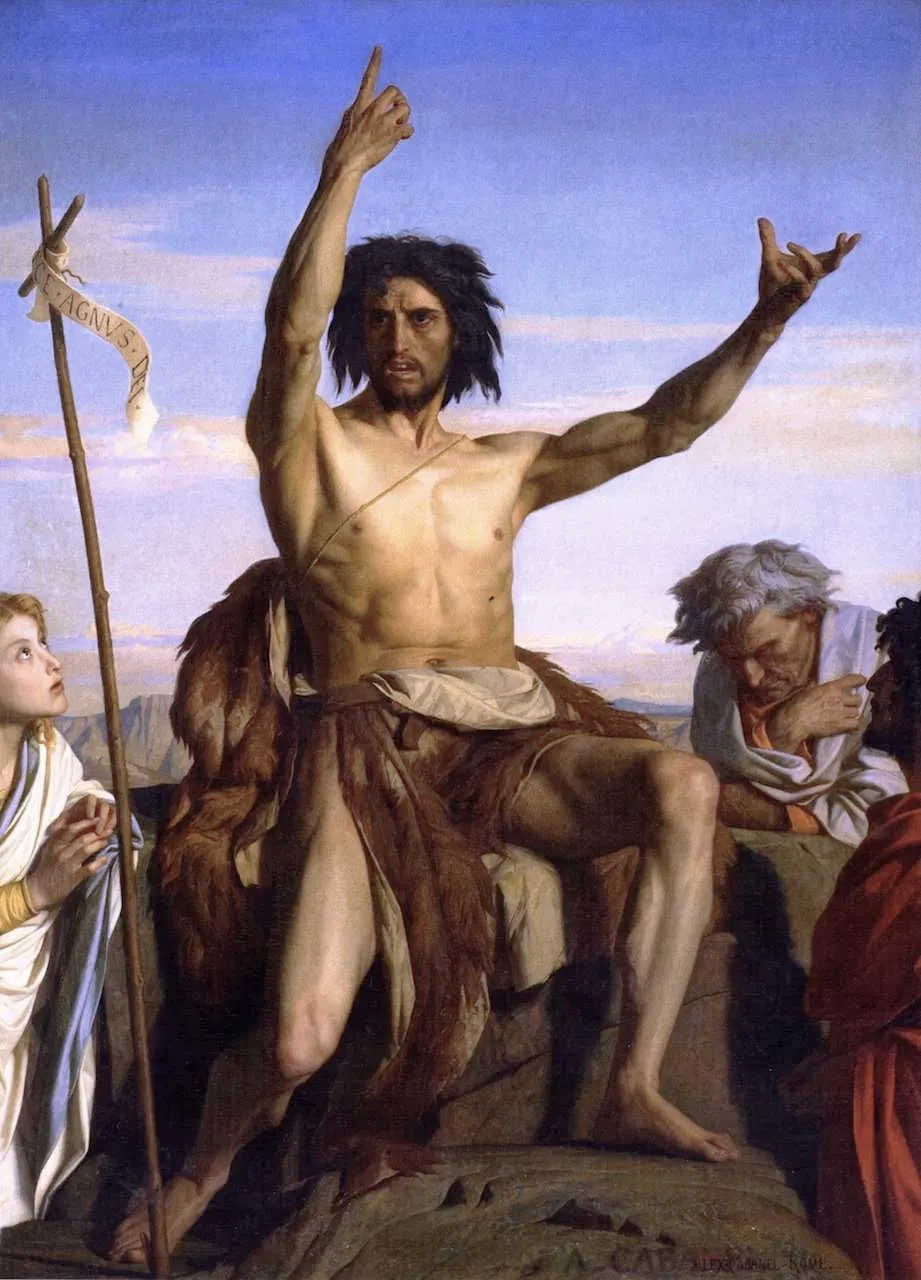
TRUE REPENTENCE
Both the Old and the New Testament speak abundantly of repentance as the starting point for our redemption. However, this term has lately been misinterpreted, “watered down”, we might say, so that it has become a synonym of feeling sorry for our sins.
A true sense of sorrowfulness for what we have thought, said or done wrong, or not said or done right, is a good starting point for true repentance, but if this is all we get, then we wallow in guilt, and that is not what our God intends for us. The sense of wrongdoing must be used as a spur to make a radical change for the better in our lives.
The Collect for this Second Sunday of Advent calls us to “heed their (the prophets’) warnings and forsake our sins, that we may greet with joy the coming of Jesus Christ our Redeemer…” Notice how clear the language is here. The call is not to wallow in guilt, not even to feel deeply sorry for our wrongdoings. It is a call to heed what the prophets warn, to change our ways, to leave our sins behind, so that we can tune our lives with Him who incarnates God’s loving will for the world.
Psychologists all agree that in order to change our way of living, everything starts at the conscious level. Our consciousness is what rules our attitudes, our words, our actions. In this sense, the Greek word used in the New Testament for repentance (metanoia—a change of mind or consciousness) shows us a clear path to redemption.
This change will not take place easily, or by our own efforts only. The way we perceive the world is affected not only by the limitations of our physical senses, but by the socio-cultural context that surrounds us. Apart from what science acknowledges, we Christians acknowledge there are other forces in the invisible world that can also influence our conscience. So we need constant attention to our thoughts, and ceaseless prayer that the Holy Spirit may inspire us and enable us to attune our consciousness to Christ’s mind.
Ultimately, when we come to the realization (not simply at the intellectual level, but at the deep level of our inner consciousness) that we are all one in Christ’s love, then the command to “love our neighbors as ourselves” will become a natural behavior in our lives, and not something we must struggle to fulfill.
This sense of unity, of real harmony in all of creation was hinted by the prophet Isaiah in one of the most beautiful depictions of God’s Kingdom, in chapter 11. “The wolf shall live with the lamb, the leopard shall lie down with the kid, the calf and the lion and the fatling together, and a little child shall lead them…the nursing child shall play over the hole of the asp, and the weaned child shall put its hand on the adder’s den…”
St. Paul, in his letter to the Romans, chapter 15, encourages the converts to the New Way to “welcome one another, therefore, just as Christ has welcomed you, for the glory of God. For I tell you that Christ has become a servant of the uncircumcised on behalf of the truth of God in order that He might confirm the promises given to the patriarchs, and in order that the Gentiles might glorify God for His mercy.”
And St. Matthew the Evangelist, in chapter 3, tells how John the Baptizer’s main message was a radical call to repent “for the kingdom of heaven has come near.” To the Pharisees and Sadducees who came to him to be baptized, he warned them “to bear fruit worthy of repentance.” And he foretold the coming of one who would baptize them “with the Holy Spirit and fire.”
The warnings are clear. Let us pray that in the power of the Holy Spirit we may heed them and truly repent.
Fr. Carlos Expósito, Rector
|
RETURN TO TOP
When One Must Be Ready
This Sunday's Reflection - November 30, 2025
Get it in PDF form with calendar
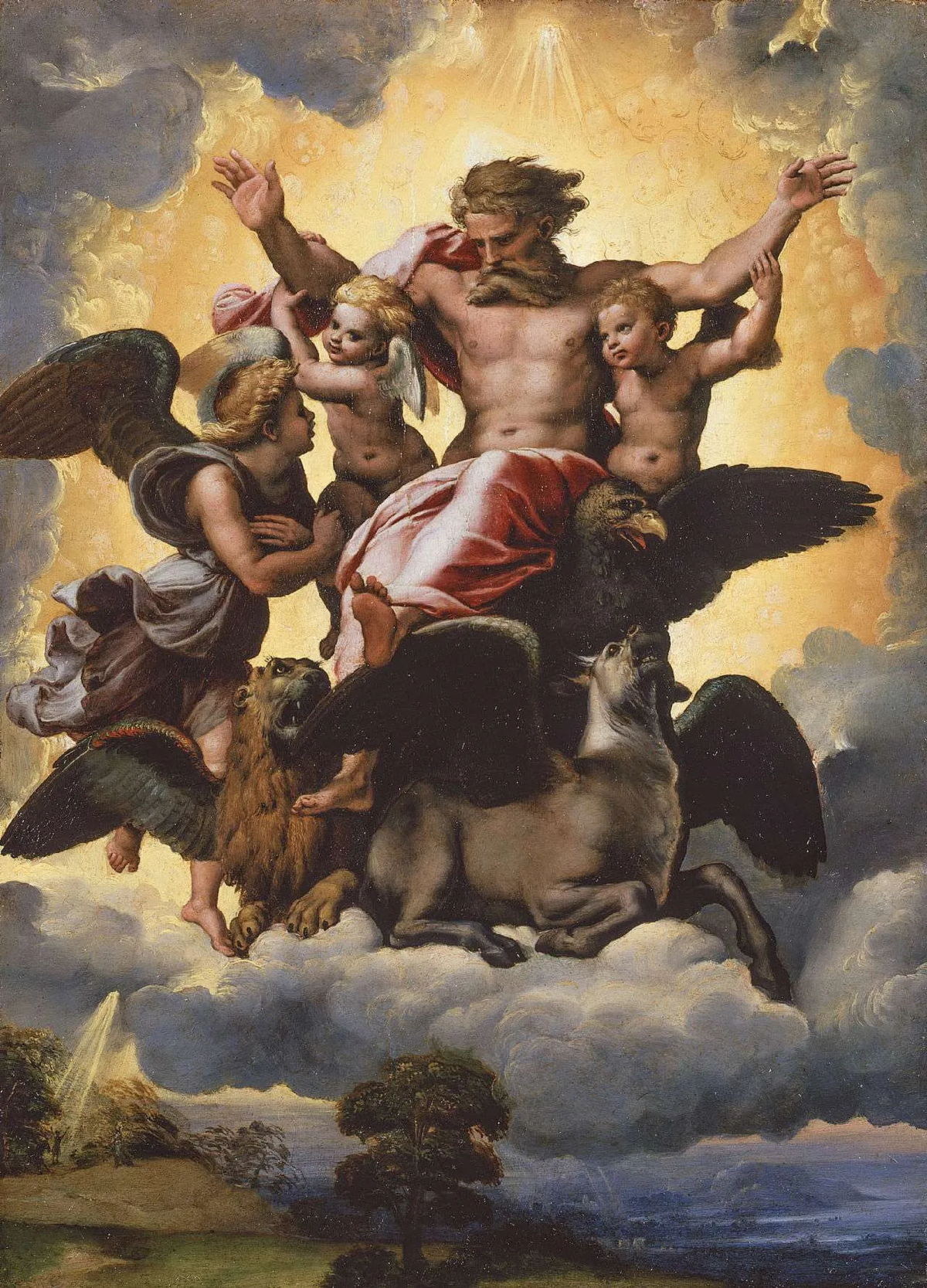
THE TIME IS
ALWAYS NOW
The Advent Season always starts with the message about the end times. And since it is a season pointing to Christmas, we may wonder why.
The fact is that this season of the Christian Year, the first one, lasting four weeks, has a threefold time perspective.
It looks to the past in the sense of reminding us of the time when God became incarnate in Jesus Christ our Lord.
It takes us to the present when it reminds us of the need to prepare to receive our Lord Christ in our own lives here and now.
And it looks to the future when, as in this week’s readings, it makes reference to the consummation of time, when God becomes All in All, and we share in Christ’s glorious resurrected life in all its fullness.
I have always thought that our lives as Christ’s followers should be a perpetual Advent. After all, it should be lived out in such a way that we are constantly reminded of how God became flesh, emptying Himself of all heavenly glory, and not only lived as one of us, but even gave Himself up for us in a shameful and cruel death on a cross, that by His death He might overcome the powers of darkness and death that enslave us.
It should also be lived in such a way that we show forth in our lives that Christ Himself is our Lord and King, as this Sunday’s Collect so aptly puts it, “…give us grace to cast away the works of darkness, and put on the armor of light, now in the time of this mortal life in which your son Jesus Christ came to visit us in great humility…”
Notice it says, “now in the time of this mortal life…” The petition is for our Creator to grant us right now the grace to do away with the works of evil, with the worldly ways of selfishness and undue self-centered greed which keep us enslaved to sin and death, and deprive us from the true abundant and real life based on the authentic joy of sharing and self-giving that Jesus Himself showed us during His earthly life.
The Collect also points to the consummation of time, to the fullness of His reign, when He will be All in All, by stating, “that in the last day, when He shall come again in His glorious majesty judge both the living and the dead, we may rise to the life immortal…”
However, the fact that this second part of the Collect starts with the word “that” clearly shows us that this will be a consequence of what we, through God’s grace, do in the here and now of our lives.
The sense of present, of the now in people’s lives, whether they lived centuries ago, live in the present, or will live in the distant future, is common to most of the readings for this Sunday.
In Psalm 122 we read, “Now our feet are standing within your gates, O Jerusalem…To which the tribes go up, the tribes of the Lord, the assembly of Israel, to praise the name of the Lord.”
In his letter to the Romans, St. Paul states, “You know what time it is, how it is now the moment for you to wake up from sleep. For salvation is nearer to us now than when we became believers.”
And in St. Matthew’s Gospel, Jesus prompts His followers to be always ready, in the now of their lives, with these words, “But about the day and hour no one knows, neither the angels of heaven, nor the Son, but only the Father… Therefore you also must be ready, for the Son of Man is coming at an unexpected hour.”
The time is now. Always now. Let us not procrastinate.
Fr. Carlos Expósito, Rector
|
RETURN TO TOP
|

 Follow us on Facebook